



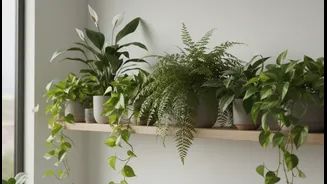




A Note on Monsoon Plant Care
Before we dive into the plants, remember the golden rule of monsoon gardening: watch the water. The high humidity means soil stays damp for longer. Overwatering is the biggest risk, leading to root rot. Always check the soil by sticking your finger an inch
or two deep; if it feels moist, wait a few more days before watering. Ensure your pots have excellent drainage holes and use a well-draining soil mix, perhaps with added sand or coco-peat, to prevent waterlogging. Good air circulation is also key to prevent fungal infections that love damp conditions.
1. Snake Plant (Sansevieria trifasciata)
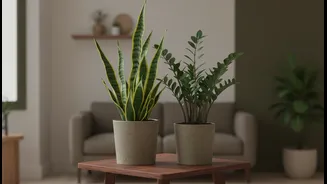
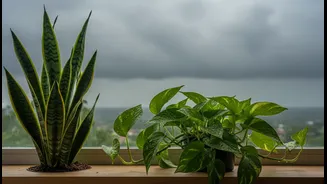
Often called Mother-in-Law's Tongue, the Snake Plant is nearly indestructible and a champion of low-light survival. Its striking, sword-like leaves add a modern architectural touch to any room. It's an excellent choice for beginners and thrives on neglect. During the monsoon, its water needs are even lower than usual. Water it only when the soil is completely dry, which might be as infrequently as every 3-4 weeks. These plants are also famed for their air-purifying qualities, removing toxins and releasing oxygen at night, making them perfect for bedrooms.
2. ZZ Plant (Zamioculcas zamiifolia)
With its wide, glossy, dark green leaves, the ZZ Plant is another low-maintenance hero that is practically built for monsoon conditions. It is exceptionally drought-tolerant thanks to its rhizomatous roots that store water, so it's very forgiving if you forget to water it. In fact, overwatering is its main enemy. During the rainy season, reduce watering significantly and ensure the pot has good drainage. The ZZ plant is perfectly happy in low to medium indirect light, making it ideal for brightening up a dim corner of your home. It is also an excellent air purifier.
3. Money Plant (Epipremnum aureum)
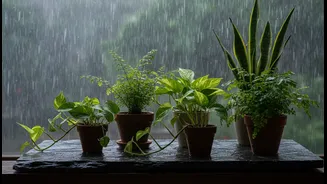
A staple in many Indian households, the Money Plant, or Pothos, is incredibly versatile. Its beautiful trailing vines can be trained to climb or cascade from shelves and hanging baskets. It tolerates low light well, although its variegation might be less pronounced in deeper shade. The high humidity of the monsoon is something this plant loves. As with others on this list, be careful not to overwater; wait for the top inch of soil to dry out. Money plants are also fantastic air purifiers and are incredibly easy to propagate from cuttings, so you can easily share them with friends and family.
4. Aglaonema (Chinese Evergreen)
If you want a splash of colour, look no further than the Aglaonema. Known for its stunning patterned leaves in shades of silver, red, and pink, it’s a vibrant addition to any indoor space. Native to tropical forest floors, it is naturally adapted to thrive in low-light and high-humidity environments, making it a perfect monsoon companion. While it loves moisture, its soil should be allowed to dry out between waterings to prevent root rot. Ensure good air circulation around the plant to keep it healthy during the dampest months.
5. Peace Lily (Spathiphyllum)
For a touch of elegance, the Peace Lily is an excellent choice. It is known for its ability to bloom even in low-light conditions, producing beautiful white spathes that stand out against its glossy dark green leaves. This plant is also great at communicating its needs; it will visibly droop when it needs water, taking the guesswork out of your care routine. Peace Lilies thrive in the high humidity typical of the Indian monsoon. They are also one of the top plants for improving indoor air quality, filtering out common household toxins.