




Our Uninterrupted View of the Sun
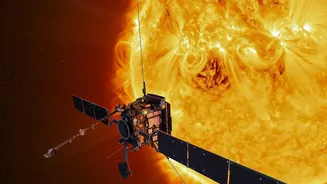
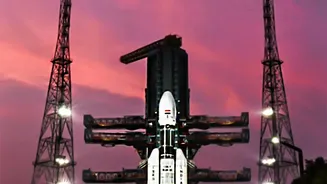
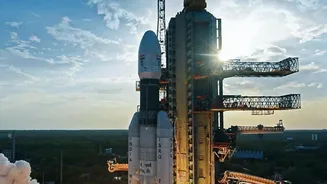
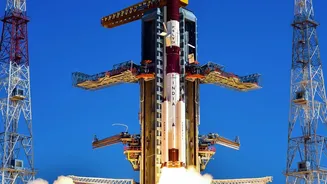
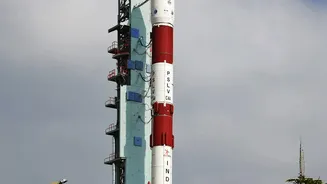
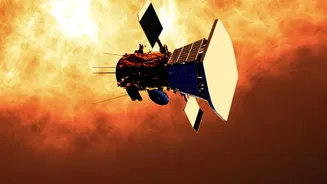
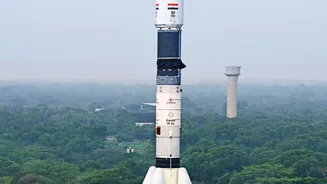
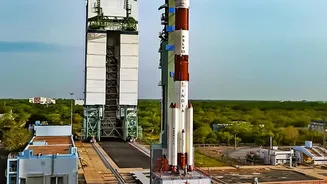
Launched by the Indian Space Research Organisation (ISRO), Aditya-L1 is not just another satellite; it's India's first dedicated solar observatory. Its unique vantage point is a halo orbit around the Sun-Earth Lagrange Point 1 (L1), a spot in space where
the gravitational pulls of the Sun and Earth balance out. This allows the spacecraft to have a continuous, uninterrupted view of the Sun without any eclipses or occultations, which would obscure observations from a lower Earth orbit. From this strategic location, Aditya-L1 can study the Sun's radiation and particle flows before they are distorted by Earth's magnetic field and atmosphere, providing pristine data for scientists.
The Coronal Heating Conundrum
One of the most baffling questions in solar physics is the coronal heating problem. The Sun's visible surface, the photosphere, has a temperature of about 5,500 degrees Celsius. Logic would suggest that its atmosphere should get cooler further away. Instead, the Sun's outermost atmospheric layer, the corona, sizzles at an astonishing one to two million degrees Celsius, hundreds of times hotter than the surface below. For decades, scientists have debated the mechanisms responsible for this extreme heating. Understanding how this energy is transferred and superheats the corona is a primary objective for Aditya-L1.
Chasing the Solar Wind
Flowing out from this superheated corona is the solar wind, a continuous stream of charged particles—mostly electrons and protons—that travels through the solar system at supersonic speeds. While we know this wind exists, exactly how it gets accelerated to speeds of up to 800 kilometres per second is another major puzzle. The processes that kickstart these particles and fling them away from the Sun are not fully understood. Aditya-L1 is designed to investigate what drives the solar wind and how it evolves as it travels from the Sun. This is crucial because the solar wind directly impacts the space environment around Earth.
A Toolkit for Solar Discovery
To tackle these mysteries, Aditya-L1 carries a suite of seven sophisticated instruments, each with a specific job. Four are remote-sensing payloads that observe the Sun, while three are in-situ instruments that measure the local space environment at L1. The primary payload, the Visible Emission Line Coronagraph (VELC), is designed to image the corona closer to the Sun's disk than ever before, observing the very region where many of these phenomena originate. Other instruments, like the Solar Ultraviolet Imaging Telescope (SUIT), will study the lower layers of the Sun's atmosphere, while particle analysers like ASPEX and PAPA will directly sample the solar wind's composition and energy. Together, they provide a comprehensive picture, connecting observations of the Sun itself with the properties of the wind it produces.
Why This Matters for India and the World
Studying the Sun isn't just an academic exercise. The solar wind and violent solar events like Coronal Mass Ejections (CMEs) create what is known as space weather. These events can disrupt satellite communications, damage power grids on Earth, and pose a risk to astronauts in space. By providing crucial data on the origin of these phenomena, Aditya-L1 will help improve our ability to forecast space weather, protecting our vital technological infrastructure. For India, the mission represents a significant leap in its space science capabilities, placing it in a select group of nations with observatories studying the Sun from this unique vantage point.