







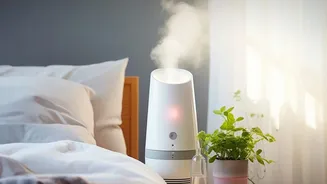
Why Humidity Wrecks Your Sleep
That heavy, muggy feeling in the air isn't just uncomfortable; it actively disrupts your sleep. The main reason is its effect on your body's natural air conditioning system: thermoregulation. To initiate and maintain deep sleep, your core body temperature
needs to drop slightly. Your body achieves this primarily by sweating. In a dry environment, that sweat evaporates, cooling you down. But when the air is already saturated with moisture — as it is during periods of high humidity — your sweat can't evaporate effectively. This leaves you feeling sticky and warm, preventing your body from reaching that crucial lower temperature. As a result, you might experience more wakefulness and spend less time in the most restorative stages of sleep, like deep sleep and REM sleep.
The Ideal Sleep Sanctuary
So, what's the perfect balance? Most sleep experts and environmental agencies agree that the ideal relative humidity for a bedroom is between 30% and 50%. When humidity climbs above 60%, it not only interferes with your body's cooling process but also creates a welcoming environment for mould, mildew, and dust mites. These allergens can trigger respiratory issues, congestion, and other symptoms that further fragment your sleep. Combined with an ideal temperature, generally between 15°C and 19°C, this humidity range creates a sanctuary that supports your body's natural sleep cycle, allowing you to breathe easier and rest more deeply.
Take Control with Technology
If sticky nights are a recurring problem, investing in a dehumidifier is one of the most effective solutions. These appliances work by drawing in moist air, removing the water, and releasing drier air back into the room, helping you maintain that ideal 30-50% humidity level. Running an air conditioner also helps, as the cooling process naturally removes some moisture from the air. For a simpler approach, a well-placed fan can make a big difference. While a fan doesn't lower humidity, the circulating air helps sweat evaporate from your skin, creating a cooling effect that can help you feel much more comfortable.
Natural Ways to Fight the Damp
You don't necessarily need fancy gadgets to combat humidity. One of the simplest strategies is to improve ventilation. Open windows for at least 15-20 minutes a day, preferably during drier parts of the day, to circulate fresh air. Use exhaust fans in the kitchen and bathroom to vent steam directly outside. Some household items can also act as natural dehumidifiers. Placing open bowls of baking soda or charcoal can help absorb excess moisture in smaller spaces like closets or bathrooms. Even your choice of bedding matters. Opt for light, breathable fabrics like cotton or linen, which allow for better airflow and help wick moisture away from your body, rather than trapping it like synthetic fabrics can.
Beyond Humidity: Other Rainy-Season Tips
While humidity is a major culprit, other rainy-season factors can disturb sleep. The sound of a thunderstorm, for example, can be either soothing or disruptive. If loud thunder wakes you, consider using earplugs or a white noise machine to muffle the sound. Conversely, many people find the rhythmic sound of rain relaxing; this is known as pink noise, which can help mask other disruptive sounds and even improve sleep quality. The darkness of a gloomy morning can also make it harder to wake up, as our bodies rely on light to halt the production of the sleep hormone melatonin. When you wake up, open your blinds to get as much natural light as possible to signal to your body that it's time to start the day.