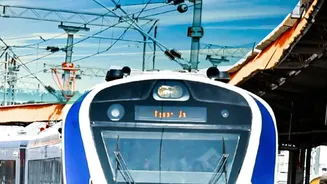






The recent unveiling of India's first Vande Bharat sleeper train has ignited discussions online. While the train promises a new era of travel, one specific design detail has drawn immediate and frequent comparisons to the legendary Rajdhani Express.
The Detail Sparking Debate
At
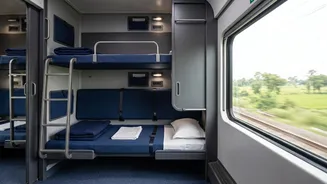
the heart of the recent buzz is a seemingly minor, yet significant, design choice in the new Vande Bharat sleeper coaches. Social media and travel enthusiasts have zeroed in on the layout near the coach entrance. Unlike traditional Rajdhani coaches, where berths can be immediately adjacent to the main passage and doorways, the Vande Bharat sleeper features a more segregated design. An internal sliding door and additional space create a buffer zone between the sleeping area and the high-traffic entrance and toilet area. This is intended to reduce disturbances from passenger movement and doors opening and closing throughout the night, a common grievance on long journeys. Another detail drawing attention is the redesigned ladder for accessing the middle and upper berths, which is sleeker and aims to be more user-friendly than the traditional metal or wooden ladders in older coaches.
A New Benchmark for Comfort
Beyond the entrance layout, the Vande Bharat sleeper aims to set a new standard for passenger comfort. The berths themselves are designed with improved, ergonomic cushioning for a better sleeping experience. The entire train is a self-propelled trainset, which eliminates the need for a separate locomotive and allows for smoother acceleration and deceleration, promising a jerk-free ride. This contrasts with the locomotive-hauled Rajdhani trains. Further enhancements include superior soundproofing, fully sealed gangways to create a quieter and more dust-free environment, and advanced air suspension systems. Even the lavatories have been given an aircraft-style overhaul, featuring bio-vacuum systems and an ergonomic, odour-free design. First AC coaches will even feature a hot water shower, a luxury not standard on the Rajdhani.
The Decisive Factor of Speed
A key advantage for the Vande Bharat platform is its speed. The sleeper version is designed for an operational speed of 160 km/h, with the potential to be tested at 180 km/h. While many sections of the Indian railway network are still being upgraded to support these speeds, this capability can significantly shorten travel times on key routes like Delhi-Mumbai. The current generation of Tejas-Rajdhani trains, which use modern LHB coaches, generally operate at a maximum speed of 130-140 km/h. The Vande Bharat’s distributed power system not only allows for higher top speeds but also quicker turnaround times at terminal stations, as there is a driver's cabin at both ends of the train.
Modern Aesthetics and Enhanced Safety
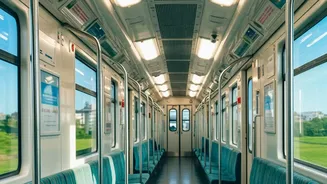
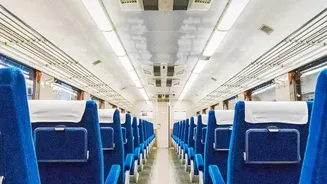
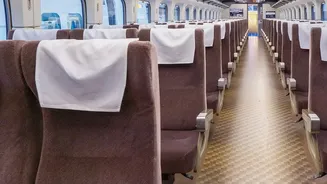
Visually, the Vande Bharat sleeper represents a generational leap. The interiors feature a calm, unified colour scheme, ambient and sensor_based lighting, and integrated reading lights with USB charging points. This creates a modern, hotel_like feel compared to the more functional, albeit upgraded, interiors of the Tejas_Rajdhani coaches. Safety has also been a major focus. The Vande Bharat coaches are built with austenitic stainless steel and meet higher fire safety standards than previous trains. They are also equipped with the indigenous Kavach anti_collision system, CCTV surveillance, and an emergency talk_back facility, offering passengers an enhanced sense of security.
Challenging an Enduring Legacy
For over 50 years, the Rajdhani Express has been the undisputed king of premium overnight travel in India. It is more than just a train; it is an institution, synonymous with prestige, reliability, and a certain nostalgia. The introduction of modern Tejas coaches has kept the Rajdhani fleet updated with features like automatic doors, bio_toilets, and improved interiors. While the Vande Bharat sleeper boasts superior technology and a more modern passenger experience on paper, it has yet to prove itself in terms of network_wide reliability and service consistency. The Rajdhani's vast network, connecting New Delhi to nearly every state capital, is a formidable legacy to challenge. The Vande Bharat sleeper is starting its journey, and matching the Rajdhani's half_century of service will be its ultimate test.