








Why the Monsoon Slows You Down
That feeling of sluggishness and heaviness during the monsoon isn't just in your head. According to Ayurvedic principles, the cool, damp weather of the rainy season, or 'Varsha Ritu', can weaken our digestive fire, known as 'Agni'. This slowdown makes
our bodies less efficient at processing food, leading to common issues like bloating, gas, and reduced appetite. The increased humidity also creates a breeding ground for germs, making a strong immune system more important than ever. The goal during this season is to eat foods that are light, warm, and easy to digest to keep your system running smoothly.
Your Spice Cabinet Pharmacy
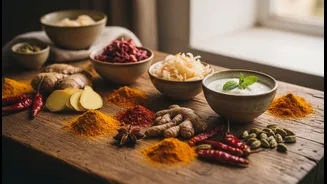
Your spice rack is a powerful arsenal for monsoon wellness. Warming spices are essential for kindling that weakened digestive fire. Ginger is a star player, known for aiding digestion and fighting off colds and flu. Turmeric, with its potent compound curcumin, is a powerful anti-inflammatory and immunity booster. Black pepper not only enhances the absorption of curcumin but also promotes intestinal health. Other key spices include cumin, which aids digestion; asafoetida (hing), which helps reduce gas and bloating; and cinnamon, which possesses antiviral and antibacterial properties. Incorporating these into your daily cooking is a simple, effective strategy for staying healthy.
The Golden Rule: Using Spices Sensibly
While spices are beneficial, the key is moderation. The goal is to gently warm and support the digestive system, not overwhelm it. Adding a pinch of turmeric to your dal, grating fresh ginger into your morning tea, or tempering your vegetables with cumin and asafoetida are all excellent ways to get their benefits. Over-spicing can lead to acidity and heartburn, which would defeat the purpose. Think of spices as a supportive element in your food, not the main event. A simple, home-cooked meal like khichdi, lightly spiced with ginger and cumin, is considered an ideal monsoon meal because it is both nourishing and easy on the gut.
Embracing Friendly Fermentation
Fermented foods are rich in probiotics, the beneficial bacteria that support a healthy gut microbiome. A balanced gut is crucial for both digestion and immunity. During the monsoon, lighter fermented foods are your best bet. Freshly made homemade yogurt (curd) and its more diluted cousin, buttermilk (chaas), are excellent choices. Buttermilk, in particular, is often recommended as it is hydrating and even easier to digest. South Indian staples like freshly made idli and dosa, made from fermented rice and lentil batter, are also considered safe, light, and beneficial during this season. These foods help replenish good bacteria, which can be challenged by seasonal dietary changes.
Fermentation with a Dose of Caution
Just as with spices, the concept of 'sensible use' applies to fermented foods. Overindulging can sometimes lead to bloating and gas, especially if your system isn't used to them. It's best to consume dairy-based ferments like curd and buttermilk during the day when your digestion is strongest. Avoid heavy, rich, or very sour versions. Some individuals with histamine intolerance may find that certain fermented foods trigger reactions, so it's important to listen to your body. The focus should be on fresh, lightly fermented items rather than aged or store-bought pickles that are often high in oil and salt. When in doubt, a simple glass of freshly prepared chaas with lunch is a safe and classic choice.