







The High Cost of Checked Baggage
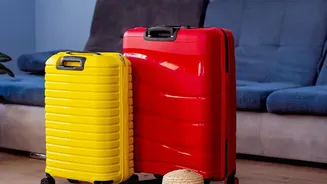
Airlines have become experts at monetising every part of the travel experience, and baggage is a primary revenue stream. For most domestic flights within India, standard economy fares include a 15 kg checked baggage allowance, but only a 7 kg cabin bag.
Exceeding these limits, even by a few kilograms, can result in hefty per-kilo fees at the airport, often ranging from ₹550 to ₹700 per kg. For a four-day trip, where you're unlikely to need more than 10-12 kg of items, paying for checked baggage or excess weight is an unnecessary expense. The entire goal of carry-on-only travel is to bypass the baggage carousel and, more importantly, the payment counter at check-in.
Adopt the Capsule Wardrobe Mindset
The key to packing light for a four-day trip is not bringing less, but bringing smarter. A capsule wardrobe is a small collection of items that can be mixed and matched to create multiple outfits. For a four-day journey, this is surprisingly easy. Start with a versatile pair of trousers or jeans that can be dressed up or down. Add four tops, two bottoms, and one layering piece like a jacket or cardigan. This simple formula can generate numerous distinct looks. Stick to a coordinated colour palette to ensure everything works together. By planning outfits in advance, you eliminate 'just-in-case' items that consume precious space and add weight.
Use Packing Cubes to Compress and Organise
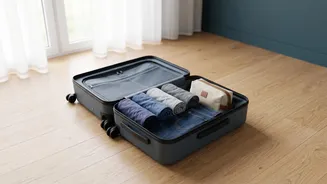
Packing cubes are the secret weapon of savvy travellers. These small, zippered bags allow you to categorise and compress your clothing, saving a significant amount of space. Instead of a chaotic jumble of items, your suitcase becomes a neatly organised set of modules: one cube for tops, one for bottoms, and another for undergarments. Compression cubes are even better, as they feature an extra zipper that squeezes out excess air, shrinking bulky items like sweaters or jackets. This organisational system not only helps you fit more into your bag but also makes it easy to find what you need without unpacking everything. Rolling clothes before placing them in cubes can further maximise space and reduce wrinkles.
Shrink Your Toiletries
Liquids are often the bulkiest and heaviest items in a toiletry bag. All airlines enforce the 100ml rule for liquids in carry-on luggage, so it's time to downsize. Instead of full-sized bottles, purchase travel-sized containers and decant your essential products like shampoo, conditioner, and lotion. Better yet, explore solid toiletries. Solid shampoo bars, conditioner bars, and toothpaste tablets are game-changers for carry-on travel, as they don't count towards your liquid allowance and are completely leak-proof. This single swap can free up considerable space and weight, ensuring you stay well under the 7 kg cabin bag limit.
Wear Your Weight
A simple but highly effective strategy is to wear your heaviest and bulkiest items on the plane. This includes your jacket, sweater, and chunkiest pair of shoes, like boots or sneakers. Airline baggage allowances don't apply to the clothes on your body. A jacket's pockets can also serve as extra storage for small, heavy items like a power bank or phone charger. While it might feel slightly cumbersome during boarding, you can easily remove the extra layers once you're settled in your seat. This trick alone can save one or two kilograms of weight from your carry-on bag, which can be the difference between a smooth journey and a surprise fee at the gate.
Know Your Airline's Rules Before You Pack
Finally, the most crucial step is to check your specific airline's carry-on policy. While a 7 kg weight limit is standard for economy class on most Indian carriers like IndiGo, SpiceJet, and Air India, the dimensional limits for the bag itself can vary. Some low-cost carriers are extremely strict and will measure and weigh bags at the gate. A bag that is even slightly oversized or overweight might be forced to be checked, incurring a significant last-minute fee. Taking two minutes to verify the rules on the airline's website before you start packing is the best way to ensure your smart packing efforts aren't wasted.