


The Science of Flavour
At the heart of passion fruit's distinctive zest is a high concentration of organic acids, primarily citric acid. This is the same compound that gives lemons and limes their sharp taste. As the fruit ripens, these acid levels decrease slightly, but they
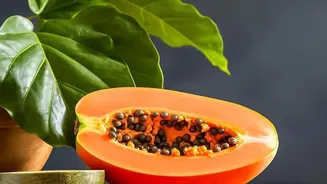
remain prominent, defining its flavour profile as refreshingly tart. In contrast, papaya’s appeal lies in its gentle sweetness, which comes from its natural sugars and a lower overall acidity. Ripe papayas have a flavour often compared to melons, with a soft, buttery consistency that melts in your mouth. The balance between sugars and acids is a critical factor that determines the sensory experience of any fruit, and in this matchup, passion fruit leans heavily towards a bright acidity that awakens the palate.
A Contrast in Texture and Aroma
Beyond taste, the textural differences are striking. A passion fruit's tough rind protects a gelatinous, aromatic pulp filled with crunchy, edible seeds. This combination of slippery pulp and crisp seeds creates a unique mouthfeel. Papaya offers a completely different experience. Its soft, fleshy interior is seed-free (the central black seeds are typically scooped out) and boasts a uniform, almost creamy texture. The aroma also sets them apart. Passion fruit has an intensely fragrant, floral, and tropical scent that is a key part of its flavour. Papaya’s aroma is milder and muskier, contributing to its perception as a more subdued and comforting fruit.
A Nutritional Snapshot
Both fruits are nutritional assets, but their strengths differ. Passion fruit is a fibre powerhouse, offering significantly more dietary fibre per serving than papaya, which aids in digestion. It is also richer in iron. Papaya, meanwhile, is lower in calories and carbohydrates. It is well-regarded for its high levels of Vitamin C and Vitamin A. Furthermore, papaya contains an enzyme called papain, which helps in the digestion of proteins. Passion fruit also provides a good dose of Vitamin C and B vitamins like niacin and riboflavin.
Best Uses in the Kitchen
Their distinct profiles make them suitable for different culinary applications. The bold tang of passion fruit is perfect for cutting through richness in desserts like cheesecakes, mousses, and tarts. Its vibrant flavour also shines in drinks, cocktails, and salad dressings where a sharp, acidic note is desired. Papaya's gentle sweetness and soft texture make it ideal for eating fresh, perhaps with a squeeze of lime to add a bit of zing. It blends beautifully into smoothies, providing a creamy base without overpowering other ingredients. It can also be added to fruit salads, used to make papaya boats for breakfast, or even grilled as a simple, warm dessert.