








The Demographic Dilemma
Across much of Asia, a demographic time bomb is ticking. Fertility rates have fallen dramatically over the past few decades while life expectancy has soared. This means fewer young people are entering the workforce to replace a growing number of retirees.
For some advanced economies like Japan, South Korea, and China, the situation is particularly stark. The IMF projects these nations could see their working-age populations shrink by nearly a quarter by 2050. This isn't just a social issue; it's a profound economic one. A smaller workforce can lead to slower economic growth, reduced productivity, and immense pressure on government budgets due to rising pension and healthcare costs. For decades, Asia's growth was powered by a 'demographic dividend' of a large, young workforce. Now, many countries are entering a 'post-dividend' era where that engine is sputtering.
AI as a Productivity Engine
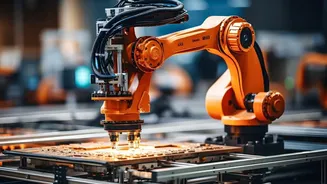
This is where technology enters the conversation. The IMF is pointing to artificial intelligence as a potential game-changer. At the IMF and World Bank annual meetings in Bangkok, Managing Director Kristalina Georgieva explained that AI could significantly boost productivity, helping to counteract the economic drag from a shrinking labour pool. The fund's modelling suggests that widespread AI adoption could lift annual growth by 0.5 to 1 percentage point in advanced Asian economies. If countries can successfully capture these productivity gains, the IMF believes they can more than offset the economic pressure caused by their ageing populations. The idea is not just about replacing workers, but augmenting them and making the entire economy more efficient.
Augmenting, Not Just Automating
The key distinction the IMF makes is between AI that automates jobs and AI that augments them. The most optimistic scenario involves using technology to empower the existing workforce, including older employees. AI-powered tools can take over physically demanding or repetitive tasks, allowing workers to focus on roles that require critical thinking and experience. For example, AI can support decision-making by providing real-time data analysis, or it can help reduce injury risks in manual labour. This augmentation makes jobs more accessible for older workers, potentially extending their careers and keeping their valuable experience in the workforce for longer. The goal is to create a more inclusive work environment where technology helps bridge physical or cognitive gaps that may come with age.
A Solution with Serious Caveats
However, the IMF is clear that AI is not a magic wand. There are significant risks and challenges that must be addressed. A major concern is that the benefits of AI will not be shared equally. Advanced economies like Japan and Singapore, with strong digital infrastructure and highly skilled workers, are better positioned to adopt AI quickly. In contrast, emerging markets may lack the capital and expertise, causing them to fall further behind and widening economic disparities between nations. Within countries, there is also the risk of growing inequality. High-skilled workers who can leverage AI are likely to see their productivity and wages increase, while lower-skilled workers face a greater risk of displacement. Krishna Srinivasan, director of the IMF's Asia and Pacific department, warned that policymakers must carefully balance the pursuit of AI's benefits against these risks.
The Path Forward: Investment and Reform
To harness AI's potential for good, the IMF stresses the need for proactive government policies. Simply waiting for technology to solve the problem is not an option. A crucial step is massive investment in education, digital skills, and lifelong learning programs to prepare the workforce for an AI-driven economy. According to the IMF, reforms that raise skills and productivity can bring forward AI adoption by a decade or more. Furthermore, governments need to strengthen social safety nets to support workers who are displaced during this transition. This includes policies like improving access to affordable childcare and offering more flexible employment options, which can also help boost female participation in the workforce. The journey requires a coordinated strategy of investing in both technology and people.