

India’s Next Great Space Adventure
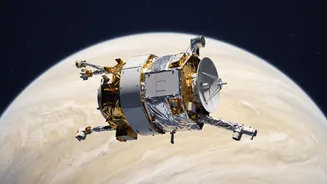
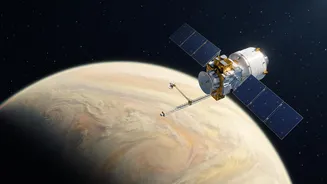
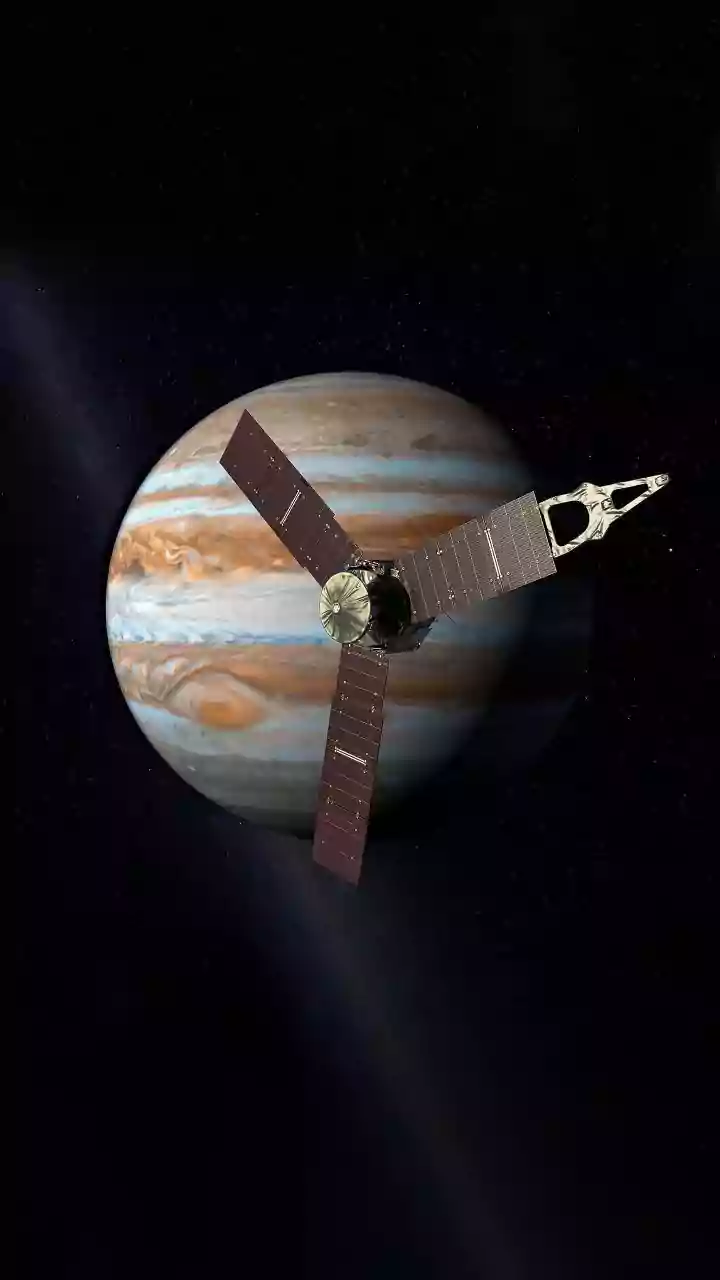
Following the resounding successes of the Chandrayaan missions to the Moon and the Mangalyaan mission to Mars, the Indian Space Research Organisation (ISRO) is embarking on its next interplanetary challenge: Venus. Officially named the Venus Orbiter Mission
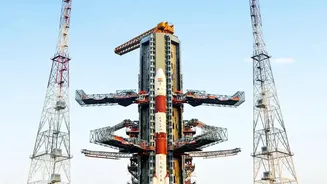
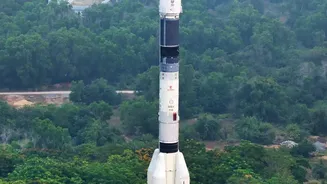
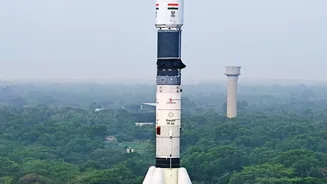
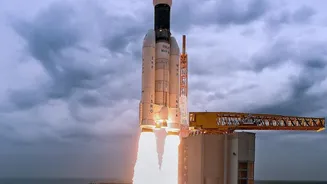
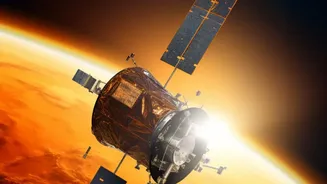
(VOM), and popularly known as Shukrayaan (Sanskrit for 'Venus Craft'), this initiative marks India's first dedicated mission to our closest planetary neighbour. Formally approved by the Indian government in September 2024, the mission has a targeted launch date of March 29, 2028, aboard the powerful LVM-3 rocket. After a 112-day journey, the orbiter is scheduled to arrive at Venus and begin its comprehensive study of the shrouded world. This mission places India in an elite club of space agencies aiming to understand one of the solar system's most enigmatic and inhospitable planets.
Why Venus? Uncovering a Lost Twin
Venus is often called Earth's twin, and for good reason. Both planets are similar in size, mass, and density, and are believed to have formed under similar conditions. However, their evolutionary paths diverged dramatically. While Earth became a haven for life, Venus devolved into a scorching hellscape with a runaway greenhouse effect. Scientists are keen to understand why. Studying Venus can provide invaluable insights into how terrestrial planets evolve, what factors influence habitability, and even offer lessons about climate change processes here on Earth. By investigating Venus, we are essentially looking at a cautionary tale—a glimpse into what can happen when a planet's climate changes catastrophically.
The Challenge of a Hostile World
Exploring Venus is notoriously difficult. Its surface is a crushing, toxic environment. The atmospheric pressure is over 90 times that of Earth's at sea level, equivalent to being nearly a kilometre underwater. Surface temperatures hover around 465°C, hot enough to melt lead. The planet is perpetually shrouded in thick clouds of sulfuric acid, making direct observation of the surface impossible with conventional cameras. This hostile environment means that spacecraft that have landed on the surface have only survived for a couple of hours at most. Shukrayaan, as an orbiter, is designed to study the planet from a safe distance, using specialised instruments to overcome these immense challenges.
Shukrayaan's High-Tech Toolkit
To achieve its ambitious goals, Shukrayaan will carry a payload of around 19 scientific instruments developed both in India and through international collaborations with countries like Sweden, Russia, France, and Germany. The mission's centrepiece is a high-resolution Synthetic Aperture Radar (SAR). Unlike optical instruments, radar can penetrate Venus's thick cloud cover, allowing it to map the surface in unprecedented detail, regardless of weather or time of day. This will help identify volcanic activity, geological features, and understand the planet's surface processes. Another groundbreaking instrument is a ground-penetrating radar, a first for a Venus mission, which will investigate the planet's shallow subsurface stratigraphy.
Peering Through the Clouds
The mission's chemical sensing capabilities are designed to analyse the dense, toxic atmosphere. One key instrument, the Venus InfraRed Atmospheric Gases Linker (VIRAL), is a collaboration with Russia and France. It will study the chemical composition of the atmosphere below the thick sulfuric acid clouds. Other instruments will analyse how the solar wind interacts with the Venusian ionosphere, helping scientists understand how the planet may be losing its atmosphere over time. Together, these tools will provide a holistic view of Venus, from its subsurface geology to the top of its atmosphere, creating a global dataset that previous missions could not.
What Success Means for India
The Shukrayaan mission is more than just a scientific expedition; it is a testament to India's growing stature as a global space power. The mission will demonstrate advanced technologies, including aerobraking—a technique where the spacecraft uses the planet's upper atmosphere to slow down and adjust its orbit, conserving fuel. The enthusiastic participation of international partners underscores the trust and respect ISRO has earned through its cost-effective and highly successful missions. As India pursues its ambitious goals of establishing a space station by 2035 and landing an astronaut on the Moon by 2040, Shukrayaan serves as a critical stepping stone, pushing the boundaries of technology and inspiring a new generation of scientists and engineers.