




A Surge in Freight Movement
In July 2026, Indian Railways reported a significant 9% year-on-year increase in freight loading, moving 141.3 million tonnes of goods. This surge wasn't just in volume; it also translated into an 8% rise in freight revenue, adding over ₹1,100 crore compared
to the previous year. The growth was broad-based, with key commodities like iron ore, coal, foodgrains, and fertilisers all seeing double-digit increases in transportation. This robust performance highlights sustained demand from India's core industrial and agricultural sectors and underscores the railways' critical role in the national supply chain. The jump in coal movement to thermal power plants, in particular, points to the network's importance in ensuring the country's energy security.
The Engine of Railway Finances
The debate around freight rail is intrinsically linked to the financial health of Indian Railways. Historically, passenger fares have been kept low for social and political reasons, leading to significant operational losses in the passenger segment. These losses are traditionally cross-subsidised by profits from freight traffic. Therefore, strong freight performance is not just a sign of economic activity, but a financial necessity for the entire railway system. However, this model creates a dilemma: high freight tariffs designed to cover passenger losses can make rail less competitive compared to road transport, which currently dominates India's logistics sector despite being more expensive and less environmentally friendly per tonne-kilometre.
The Passenger vs. Goods Dilemma
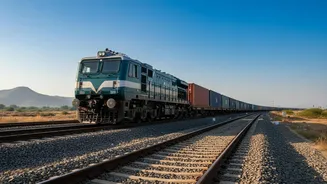
On India's congested rail network, freight trains and passenger services are in a constant battle for priority. Passenger trains are almost always given precedence, forcing goods trains to wait in loops or sidings, which leads to significant delays and operational inefficiencies. This is a major deterrent for businesses that rely on timely logistics. The long-term solution to this problem is the development of Dedicated Freight Corridors (DFCs)—separate railway lines built exclusively for goods transport. The existing DFCs have already shown their potential by enabling faster, heavier, and more efficient cargo movement. Recent performance records on the DFC network, such as the highest-ever gross tonne kilometres achieved in July 2026, demonstrate their growing impact.
Building for the Future
The government is channelling significant investment into expanding this dedicated network, with projects like the new East-West DFC being planned. These corridors are central to the national goal of reducing logistics costs, which are currently estimated to be a high 13-14% of India's GDP, compared to a global benchmark of 8-9%. By shifting more cargo from road to rail, the DFCs promise to decongest highways, reduce carbon emissions, and make Indian industries more competitive. The success of these corridors is seen as a crucial enabler for India's ambition to become a $5 trillion economy.
The Road Ahead
While the recent increase in freight volume and revenue is a positive sign, the underlying debate persists. For industries, the key concerns remain the cost and reliability of rail freight. Any hike in freight tariffs, while beneficial for railway revenues, could increase operational costs for businesses and potentially contribute to inflation. The challenge for policymakers is to strike a delicate balance: investing in modern, efficient freight infrastructure like the DFCs while keeping tariffs competitive enough to attract more traffic from the road network. The continued expansion and optimisation of the DFCs are seen as the most viable path forward to resolve the long-standing conflict between passenger and freight priorities, ultimately strengthening India's economic backbone.