


Gujarat's Steamed Delight: Patra
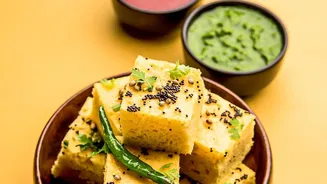
A classic from Gujarati cuisine, patra is the perfect example of a healthy yet indulgent monsoon snack. It involves layering colocasia (arbi) leaves with a spiced, sweet, and tangy gram flour (besan) paste. The leaves are then rolled into tight logs and steamed,
not fried. The steaming process cooks the batter and leaves until tender, creating a beautiful pinwheel effect when sliced. The primary cooking method is steaming, which requires no oil at all, though a minimal amount can be used for an optional tempering of mustard seeds and sesame seeds to garnish. The result is a soft, flavourful roll that is light on the stomach but deeply satisfying.
The Nation's Favourite: Masala Bhutta
Nothing says monsoon in India quite like a roasted corn on the cob, or bhutta. This quintessential street food is enjoyed across the country, especially when it drizzles. Making it at home is simple and requires absolutely no oil. You can roast the corn directly over a gas flame until the kernels are slightly charred and tender. Once roasted, rub it with a slice of lemon dipped in a mix of salt, red chilli powder, and chaat masala. The heat of the corn releases the aromas of the spices, creating a smoky, tangy, and spicy snack that is both rustic and incredibly delicious. It's a healthy, fibre-rich option that captures the essence of the season.
Himalayan Comfort: Steamed Momos
Originally from the Himalayan regions of Tibet and Nepal, momos have become a beloved snack across India, especially on a cool, rainy day. These dumplings are typically filled with either spiced minced vegetables like cabbage, carrots, and onions, or proteins such as paneer or chicken. The magic lies in the cooking method: steaming. The delicate wrappers are filled and then cooked in a steamer for about 10-12 minutes until translucent and soft. This process uses no oil, making momos a wonderfully light and healthy choice. Served hot with a fiery red chilli chutney, they provide a perfect, warming comfort against the monsoon chill.
South India's Special: Kuzhi Paniyaram
Hailing from South India, kuzhi paniyaram, also known as appe, are small, round dumplings made from a batter similar to that used for idli or dosa. They are cooked in a special pan with multiple small cavities. While traditional recipes might use more oil, a modern non-stick paniyaram pan allows you to make these with just a few drops of oil per cavity. The batter is often seasoned with a tempering of mustard seeds, onions, green chillies, and curry leaves, giving the paniyaram a savoury kick. They cook up with a crispy golden-brown exterior and a soft, fluffy inside, making for a delightful texture. It’s a fantastic way to use leftover idli batter for a quick evening snack.
A Modern Twist: Baked Samosas
The samosa is arguably the king of rainy-day snacks, but its deep-fried nature can be a deterrent for the health-conscious. Enter the baked samosa, a brilliant and much lighter alternative. You can prepare the classic potato and pea filling, or experiment with paneer or mixed vegetables. The trick is to bake them in a preheated oven instead of deep-frying. Brushing the samosas with a thin layer of oil before baking helps them achieve a golden, crisp crust that’s remarkably close to the original. This method cuts down the oil content significantly without sacrificing the satisfying crunch and spicy filling that makes samosas so irresistible.