


Why a Busy Brain Means a Better Dog
Physical exercise is essential, but mental stimulation is the other half of the equation for a dog's overall well-being. Activities that challenge a dog's mind can prevent boredom, which often leads to destructive behaviours like chewing or excessive
barking. Engaging their brain provides an outlet for their energy and curiosity, helping to reduce stress and anxiety. For puppies, it helps in cognitive development, while for senior dogs, it can play a role in keeping their minds sharp and slowing cognitive decline. Just a few short sessions of focused mental activity each day can lead to a calmer, more confident companion and a stronger human-animal bond built on communication and trust.
An Introduction to Puzzle Toys
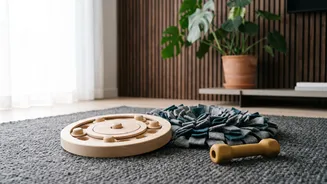
Puzzle toys are a fantastic way to make your dog work for their food, turning mealtime into a stimulating challenge. These toys range from simple treat-dispensing balls to complex boards with sliders and compartments. The goal is for your dog to sniff, nudge, and paw at the toy to release the kibble or treats inside. When starting, it's crucial to make it easy so your dog understands the game and doesn't get frustrated. Use high-value, smelly treats to grab their interest and choose a puzzle with an easy setting. As they get better at solving it, you can increase the difficulty. Classic rubber toys can be stuffed with food and even frozen to provide a longer-lasting challenge.
Unleashing Their Superpower: Scent Games
A dog's sense of smell is incredibly powerful, with up to 300 million olfactory receptors compared to our mere six million. Scent games tap into this natural instinct, providing a deeply satisfying mental workout. A simple start is 'Find the Treats'. Have your dog stay in one room while you hide a few smelly treats around another. Begin with easy, obvious spots and then give them a release cue like 'Find it!'. As they get the hang of it, you can hide treats in harder places. Another fun option is the 'Shell Game', where you hide a treat under one of three cups, shuffle them, and encourage your dog to sniff out the correct one. These games don't just burn mental energy; they build confidence and focus.
DIY Enrichment on a Budget
You don’t need to spend a fortune to keep your dog’s mind busy. Many effective puzzles can be made with items you already have. The 'Muffin Tin Game' is a classic: place treats in a few cups of a muffin tin and cover all the cups with tennis balls or other toys. Your dog has to figure out how to remove the balls to get the reward. You can create a 'Busy Box' by filling a cardboard box with safe items like packing paper, empty paper towel rolls, and old T-shirts, then sprinkling kibble inside for your dog to forage through. Another simple idea is to roll treats up in an old towel, encouraging your dog to unroll it to find the food. Always supervise your dog with DIY toys to ensure they don't ingest any non-food items.
Tips for Safe and Successful Play
To make sure enrichment time is fun and productive, it's important to manage the sessions. Always supervise your dog, especially with new or DIY toys, to prevent them from chewing off and swallowing pieces. Match the difficulty of the puzzle to your dog’s skill level; a challenge that is too hard can lead to frustration, while one that is too easy won't provide much stimulation. Keep sessions short and positive, ending the game before your dog loses interest. This builds their enthusiasm for the next time. Finally, rotate toys and games every so often to keep things new and exciting, preventing your dog from getting bored with the same old puzzle.