
The Psychology of the Curve
There’s a reason we’re drawn to curves. Psychologically, our brains associate them with the soft, organic shapes found in nature, which can evoke feelings of comfort, safety, and calm. Unlike sharp, angular lines that can feel rigid or even subtly threatening,
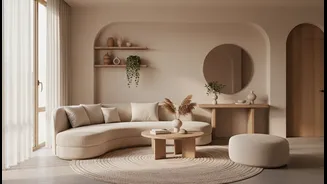
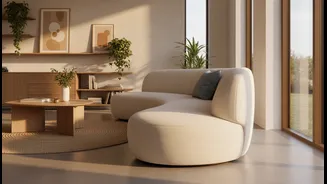
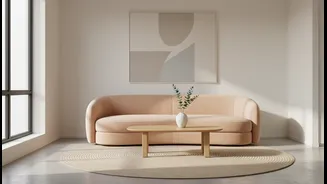
rounded forms guide the eye smoothly around a room, creating a sense of restfulness and flow. In a small, rectangular flat, introducing a piece with a gentle arc—be it a sofa, armchair, or coffee table—can instantly break up the monotony of straight walls and create a more welcoming, dynamic atmosphere. It’s a powerful tool for making a space feel less like a box and more like a home.
The Golden Rule: Prioritise Flow
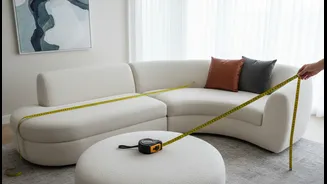
The key challenge in a small space is that every square inch matters. While a curved sofa might look stunning online, its arc can sometimes take up a more awkward footprint than a linear one, especially if pushed against a flat wall. The most crucial step before buying any piece is to consider traffic flow. This is the non-negotiable part of the headline: movement must feel easy. As a rule of thumb, major walkways should have at least 30 to 36 inches of clear space. Before you commit, use painter's tape on the floor to mark out the dimensions of the furniture you're considering. Walk around it for a day or two. Can you move from the kitchen to the sofa without a squeeze? Can you open drawers and doors unimpeded? If the answer is no, the piece is wrong for your space, no matter how beautiful it is.
Choose Your Curves Wisely
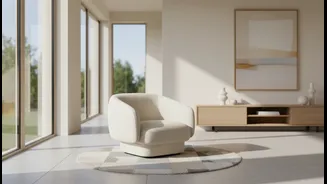
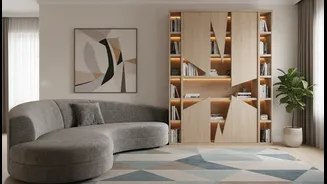
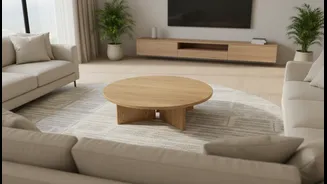
Not all curved furniture is created equal, especially for compact living. A large, sweeping sectional that looks magnificent in a showroom can easily overwhelm a small flat. Instead of going all-in on a massive statement piece, start with smaller, more manageable items. A pair of curved accent chairs can create a cozy conversation nook without dominating the room. A round coffee table or ottoman is a fantastic choice, as it eliminates sharp corners that you can bang your shins on and improves circulation in a tight seating area. For sofas, look for models with a gentle curve rather than a deep, dramatic arc. These pieces can soften the room's geometry while still offering ample seating. Kidney-shaped desks or crescent-shaped sofas can also be surprisingly space-efficient.
Strategic Placement is Everything
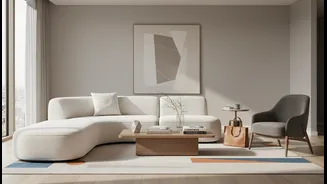
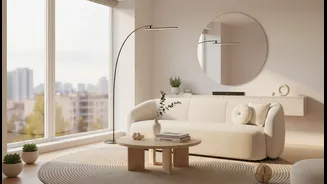
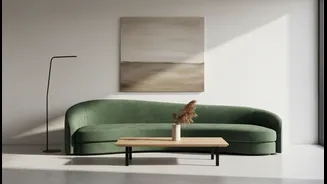
Where you place your curved furniture is just as important as what you buy. A common mistake is pushing a curved sofa flush against a wall, which can create awkward, unusable gaps behind it and negate the beauty of its shape. Instead, try 'floating' the sofa slightly away from the wall. This allows the piece to breathe and creates a more intentional, designed look. You can use the space behind it for a slim console table or a floor lamp. In an open-plan flat, a curved sofa can be an excellent tool for visually separating the living area from a dining or workspace without building walls, maintaining an open feel. Use the curve to your advantage—let it guide movement and define zones naturally.
Find Harmony with Straight Lines
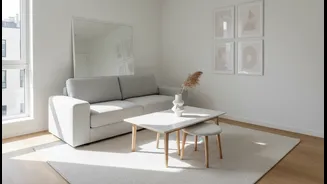
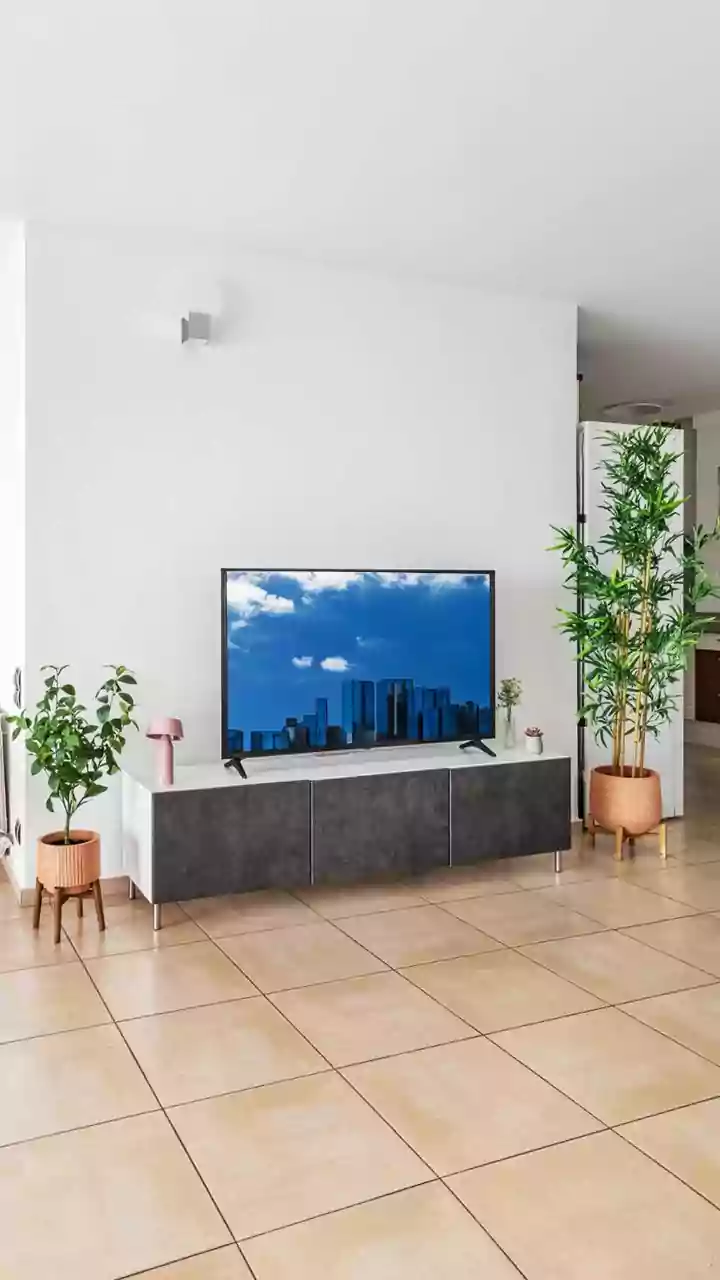
The goal isn't to turn your flat into a room full of bubbles. The most sophisticated interiors create a visual dialogue between different shapes. Contrast is key. A room with too many curves can feel unstructured and chaotic. A popular guideline among designers is the 70/30 rule: keep about 70% of the elements in your room linear (walls, shelves, rectangular rugs) and introduce curves in the other 30%. Pair your soft, rounded sofa with a sleek, linear media console. Place a sculptural, arched floor lamp next to a straight-backed armchair. This balance makes your curved pieces stand out as special focal points while ensuring the entire space feels grounded and harmonious.