




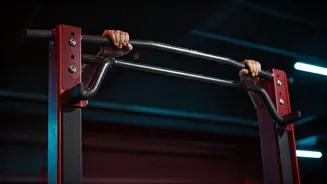


What is a Slow Negative Pull-Up?
A negative pull-up isolates the lowering (or eccentric) portion of the exercise. Instead of pulling yourself up, you begin with your chin already over the bar and focus on lowering your body down as slowly and with as much control as possible. Every lift
has two main phases: the concentric (when the muscle shortens, like pulling up) and the eccentric (when the muscle lengthens under tension, like lowering down). Your muscles are significantly stronger during this eccentric phase, which is why you can control your bodyweight on the way down even if you can't yet pull it up. By slowing this descent to between 3 and 8 seconds, you create a powerful training stimulus.
The Science: Why Eccentrics Build Power
Slow eccentric movements are a game-changer for muscle growth because they maximize two key factors: mechanical tension and time under tension. The extended lowering phase creates significant micro-damage to muscle fibres. This might sound bad, but it’s this controlled damage that signals your body to repair the muscles, making them bigger and stronger. Studies show that the eccentric part of a pull-up activates muscles like the lats and biceps even more intensely than the concentric (pulling) phase. This increased time under tension not only builds muscle and tendon resilience but also improves your body control and coordination, teaching your nervous system how to manage the full pull-up movement pattern safely and effectively.
The Muscles You'll Build
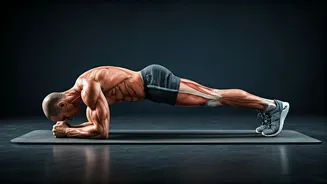
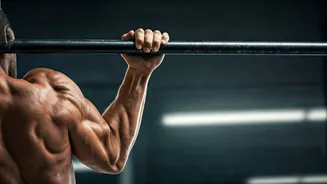
The claim of a "massive upper body" comes from the sheer number of muscles this single exercise engages. Negative pull-ups are a compound movement that targets a huge portion of your back, shoulders, and arms. The primary movers are the latissimus dorsi (lats), the large muscles that give your back its width. However, they also intensely work your biceps, rhomboids, trapezius, rear delts, and forearms for grip strength. Furthermore, to keep your body stable and prevent swinging, your core muscles—including the abs and erector spinae—must remain braced throughout the movement.
How to Perform the Perfect Negative Pull-Up
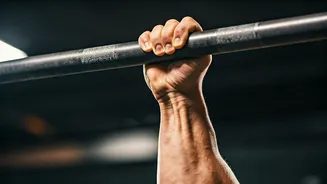
Proper form is non-negotiable for getting results and avoiding injury. One perfect rep is better than ten sloppy ones. 1. Get to the Top: Place a sturdy box or bench under the pull-up bar. Use it to get into the top position, with your chin above the bar. Grab the bar with an overhand grip, slightly wider than your shoulders. 2. Engage Your Muscles: Before you lower, get tight. Pull your shoulder blades down and back, away from your ears. Squeeze your glutes and brace your core as if you're about to be punched. 3. Control the Descent: Step off the box and begin lowering your body. The goal is to fight gravity. Aim for a slow, 3-to-5-second count from top to bottom. Don't just drop. 4. Finish with Full Extension: Continue lowering until your arms are completely straight in a dead hang position. This ensures you work the full range of motion. Then, step back on the box and repeat.
Common Mistakes to Avoid
Executing the move correctly is crucial. The most common mistake is dropping too quickly, which eliminates the time under tension and negates the benefit of the exercise. Another frequent error is allowing the shoulders to shrug up towards the ears, which can strain the shoulder joints instead of working the back. Many people also fail to keep their core engaged, causing their body to swing or their lower back to arch excessively. The movement should be strict and controlled from start to finish, without using momentum or kipping. Remember, the goal is to control the descent, not just survive it.
Integrating Negatives Into Your Routine
How you program negative pull-ups depends on your goal. For beginners aiming for their first pull-up, performing them at the beginning of a workout 2-3 times per week is ideal. Start with 3 sets of 3-5 reps, focusing on a quality descent of at least 3-5 seconds. As you get stronger, increase the lowering time towards 8 or 10 seconds. For more advanced lifters, negatives are a powerful tool to break through plateaus or add volume. Try using them as a finisher after your regular pull-up sets, performing 2-3 sets of slow negatives to failure. You can even add weight with a vest or belt for an advanced overload challenge.