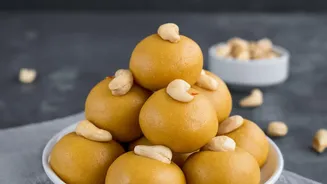


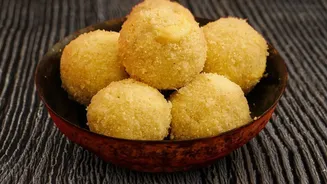

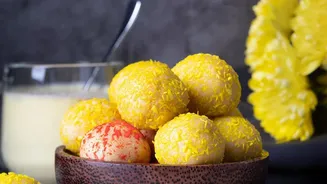
The perfect Besan Ladoo is a fragrant, melt-in-your-mouth marvel. But achieving that ideal softness is often a frustrating dance with moisture, resulting in ladoos that are either too dry or too greasy. Here’s how to master the technique.
The Foundation: Choosing Your Besan
The journey to
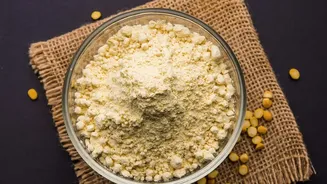
a perfect ladoo begins with the right flour. While standard fine besan (gram flour) can work, many experts recommend using a slightly coarser variety, often sold as 'ladoo besan'. This coarser grind provides a more traditional, grainy texture and can be more forgiving when it comes to absorbing ghee. Fine besan creates a smoother, denser ladoo. If you only have fine besan, some cooks suggest adding a tablespoon or two of fine semolina (rava) to the mix to achieve a similar granular bite. Regardless of your choice, ensure the flour is fresh; old besan can impart a bitter taste.
The Roasting Ritual: Low and Slow
This is the most critical step and where moisture management truly begins. Roasting besan is a test of patience. It must be done on a low to medium-low flame, with constant stirring. Rushing this process on high heat is a common mistake that will cook the outside of the flour particles while leaving the inside raw, resulting in a bitter, unpleasant taste. The goal is to slowly toast the flour until it changes to a beautiful golden-brown colour and your kitchen fills with a rich, nutty aroma. This can take anywhere from 20 to 45 minutes. As you roast, the initial clumpy texture will transform. The flour will loosen, become more fluid, and eventually start to release the ghee, taking on a molten, paste-like consistency. This indicates the besan is perfectly cooked.
The Ghee Equation: More Than Just Fat
Ghee is not just for flavour; it's the primary binding agent and a key player in the final texture. The ratio of ghee to besan is crucial, but adding it all at once can make roasting difficult and lead to a greasy final product. Many successful recipes advocate for adding ghee in stages. You can start by roasting the besan in about half the ghee and adding the rest as you go, or even dry-roasting the besan first and then adding melted ghee. The amount of ghee needed can vary depending on the coarseness of your besan; finer flour generally requires less ghee. If your mixture seems too dry and crumbly while forming the ladoos, you can add a tablespoon of warm, melted ghee to help it bind. If the mixture is too runny, you can refrigerate it for 10-20 minutes to allow the ghee to solidify slightly, which should make it easier to shape.
The Sweet Spot: When to Add Sugar
Timing the addition of sugar is paramount to avoiding a sticky, gooey mess. Never add sugar to the besan mixture while it is still hot on the stove. Adding sugar to a very hot mixture will cause it to melt into a syrup, releasing excess moisture and making it impossible to form firm ladoos. The correct method is to remove the roasted besan from the heat, transfer it to a separate plate or bowl to stop the cooking process, and let it cool until it is lukewarm or just warm to the touch. A good test is when you can handle the mixture without it feeling uncomfortably hot. At this point, mix in your powdered sugar. For the best texture, use finely powdered sugar or a traditional variety like 'boora' or 'tagar', as granulated sugar can leave a gritty mouthfeel.
Troubleshooting Texture Mishaps
Even with careful preparation, things can go awry. If your final mixture is too dry to form balls, the solution is to add a little more warm, melted ghee, one teaspoon at a time, until it comes together. If the mixture is too loose and greasy, you have a couple of options. The quickest fix is to place the bowl in the refrigerator for about 15–20 minutes to firm up the ghee. If it's excessively greasy, you can roast a few extra tablespoons of besan separately (without ghee), let it cool, and then mix it into your ladoo mixture to absorb the excess fat. This technique can save a batch that seems destined to fail, helping you reclaim that perfect, soft consistency.