





The Constant Hunt for Power
Wearable health trackers have become indispensable for millions, monitoring everything from heart rate and sleep patterns to daily activity levels. Yet, they all share a common vulnerability: the need for a battery. The daily or weekly ritual of removing
a device to charge it creates a gap in data collection and a persistent, low-level inconvenience. For continuous medical monitoring, where uninterrupted operation can be critical, battery life is more than just a hassle—it's a significant limitation. This reliance on batteries also carries an environmental cost, contributing to electronic waste. The dream has always been a truly seamless, self-powered device that you can wear and forget, and new advancements in smart fabrics are bringing that dream closer to reality.
Harnessing Your Personal Radiator
The science behind these power-generating fabrics is a 200-year-old principle known as the Seebeck effect. In simple terms, when certain materials are heated on one side and cooled on the other, they generate a small electrical voltage. Your body is a perfect engine for this process. It constantly maintains a stable temperature of around 37°C, while the ambient air is almost always cooler. This natural temperature difference is the fuel. Researchers are now creating thermoelectric generators (TEGs) that are flexible, lightweight, and efficient enough to capture this waste body heat and convert it into a steady stream of micro-power. Think of it as a solar panel for heat, using you as the sun.
Weaving Power into Clothing
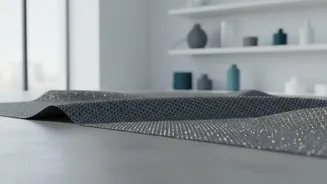
The real innovation lies in integrating these thermoelectric capabilities directly into textiles without sacrificing comfort or durability. Early TEGs were often rigid and bulky, making them impractical for clothing. Today, scientists are developing novel solutions. One approach involves creating thermoelectric 'threads' or 'fibers' made from semiconductor materials, which can then be woven or knitted into a normal fabric. Another method involves printing or coating flexible thermoelectric polymers onto existing textiles, like silk or cotton. These advanced materials, including carbon nanotubes and specialized polymers, are designed to be highly conductive for electricity but poor conductors of heat, maximizing the temperature difference and, therefore, the power output. The result is a fabric that feels like fabric, but has a power-generating grid hidden within its very structure.
From Lab Prototypes to Lifestyle Tech
So, how much power can a shirt actually generate? Current prototypes can produce up to 20 or 35 microwatts of power per square centimeter of fabric. While that doesn't sound like much, it's a significant leap from earlier efforts and is approaching the level needed to operate low-power sensors and microelectronics found in many health trackers. Researchers at institutions like Purdue University, NC State University, and Queensland University of Technology have demonstrated experimental devices that can power small LEDs or continuously operate medical sensors. The key is that this power is generated constantly, as long as you are wearing the garment. This continuous trickle-charge could eliminate the need for batteries entirely in some devices or dramatically extend the life of batteries in more power-hungry gadgets.
The Road to a Battery-Free Future
Despite the exciting progress, several challenges remain before you can buy a self-powered smart-shirt at your local store. The primary hurdles are manufacturing cost, scalability, and long-term durability, including the ability to withstand repeated washing. The conversion efficiency of these materials is still relatively low, meaning a lot of the potential energy is lost. However, researchers are rapidly innovating, developing new materials and fabrication techniques that are both more efficient and compatible with traditional textile manufacturing. The ultimate goal is to create sustainable, reliable smart textiles that not only monitor our health but also power themselves by simply being a part of our daily lives. The future of wearable technology may not be in a charging cradle, but in your closet.