



The Monsoon River Challenge
Navigating a major Indian river like the Brahmaputra is a challenge at the best of times. During the monsoon, it becomes a different beast entirely. The river can swell dramatically, transforming from a defined channel into a vast, horizon-spanning body
of water. This surge carries immense volumes of silt, which constantly reshapes the riverbed, creating new sandbanks and shallow patches overnight. For traditional boats with deep hulls and exposed propellers, this is a treacherous environment. The risk of running aground on an unseen sandbar or damaging the propulsion system is constant, making vast stretches of the river inaccessible just when the surrounding landscape is at its most vibrant and alive.
Engineered for the Shallows
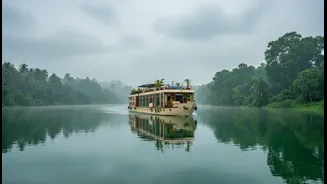
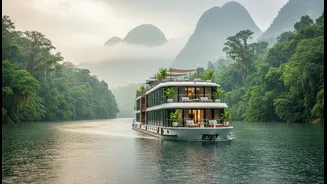
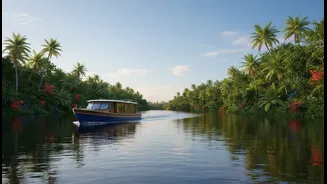
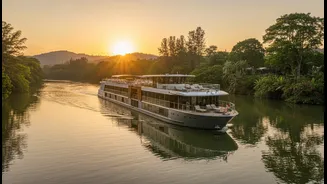
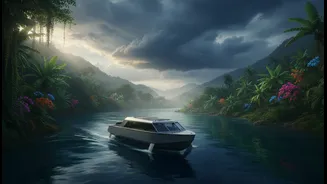
Enter the shallow-draft vessel, a boat designed specifically to conquer these difficult conditions. The key is in the name: 'draft' refers to the depth of water a boat needs to float without hitting the bottom. These innovative boats have a very low draft, often thanks to a flat or nearly flat bottom. Instead of conventional propellers, many use water-jet propulsion systems. These jets suck water in and then expel it at high velocity to move the vessel forward, eliminating the risk of an external propeller striking a submerged sandbank or debris. The hulls are often built from lightweight but strong materials, allowing them to sit higher in the water. This combination of features enables them to glide over areas that would be impassable for conventional cruise boats.
Forging New Routes to Nature
This technology is not just about safer navigation; it's about unlocking entirely new possibilities for tourism. With shallow-draft vessels, tour operators can now chart courses through previously unexplored tributaries and channels, especially in regions like Assam. These routes lead away from the main, heavily trafficked parts of the river and into areas teeming with undisturbed wildlife and authentic local culture. Passengers can find themselves visiting remote Mishing tribal villages built on stilts, exploring the world's largest river island, Majuli, or getting up close to the shores of national parks like Kaziranga from a unique riverine perspective. The journey becomes as much about discovery as the destination itself.
An Immersive, Low-Impact Experience
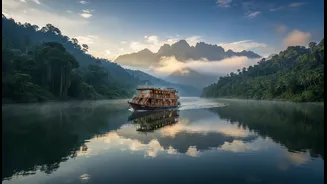
The experience aboard these cruises is one of intimate connection with nature. Because the vessels can navigate closer to the banks and into quieter waters, the wildlife viewing opportunities are extraordinary. Imagine spotting a one-horned rhino at the water's edge in Kaziranga National Park or watching a flock of migratory birds take flight from a newly formed sandbank, all from the comfort of the deck. Furthermore, this form of tourism is inherently lower-impact. The design of shallow-draft vessels, particularly those with water-jet propulsion, minimizes disturbance to the riverbed and fragile aquatic ecosystems. It represents a more sustainable way to access and appreciate these pristine environments without causing undue harm, offering a quiet, respectful alternative to mass tourism.
The Future of Riverine Ecotourism
The success of shallow-draft vessels on rivers like the Brahmaputra points to a promising future for ecotourism across India. As the technology becomes more widespread, it could be adapted for other river systems that face similar seasonal challenges, from the vast Gangetic plains to the backwaters of Kerala. The Government of India has already identified numerous national waterways with potential for river cruise tourism, and the development of suitable, low-impact vessels is key to this vision. By providing access to remote areas, these tours can also bring economic benefits to local communities through employment and the promotion of handicrafts, weaving, and unique cultural experiences, creating a model where conservation and commerce can coexist.