




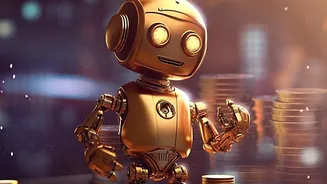

The New Digital Study Buddy
From solving complex math problems to brainstorming essay ideas, Artificial Intelligence (AI) tools have become a go-to resource for students. Platforms like ChatGPT, Claude, and specialized apps like Photomath can function like an ever-present tutor,
offering step-by-step explanations and breaking down difficult concepts. For many students, these tools are not about finding a quick fix but about getting unstuck. They use AI to understand the 'how' and 'why' behind a problem, review their work, or generate practice questions to test their knowledge. This responsible use can transform AI from a simple answer-provider into a powerful learning partner.
Helpful Guidance or Harmful Shortcut?
The core dilemma lies in the user's intent. Using an AI tool to summarise a dense chapter for better understanding is a learning strategy. In contrast, copying an AI-generated essay wholesale is plagiarism. The risk is that over-reliance on these tools can erode critical thinking and problem-solving skills. Studies have shown that students who excessively use AI to complete tasks may exhibit poorer reasoning and analytical skills. The cognitive struggle of working through a problem is essential for deep learning; when AI provides an instant answer, that crucial process is bypassed. The line is crossed when the tool stops being a guide for thinking and starts doing the thinking for the student.
The Educator's New Challenge
For teachers, the rise of AI presents a two-fold challenge: upholding academic integrity and adapting teaching methods. Many are designing 'AI-resistant' assignments that require personal reflection, in-class knowledge, or complex, multi-step processes that AI alone cannot easily replicate. However, many educators are also embracing AI as a teaching aid. They use it to create lesson plans, differentiate instruction for students with varying needs, and generate creative classroom activities. The focus is shifting from banning AI to teaching students how to use it ethically and effectively, a sentiment echoed by global bodies like UNESCO, which has called for a regulatory framework for AI in Indian education.
A New Chapter for Parents
Parents play a vital role in navigating this new terrain. The conversation at home should be about responsible use, not outright prohibition. Experts recommend setting clear ground rules: AI is a tool to help you learn, not a replacement for your own work. Encourage your child to try their homework independently first before turning to AI for help when they are truly stuck. Afterwards, have a conversation. Ask them to explain the concept in their own words or show you the steps they took after getting a hint from the AI. This reinforces the idea that AI is a support tool, much like a calculator, which aids but doesn't replace the need to understand mathematics.
Building Skills for an AI-Powered Future
Ultimately, proficiency with AI is becoming a critical skill for the future workplace. Banning these tools may put students at a disadvantage. The more productive approach is to cultivate a culture of academic integrity and digital literacy. Schools and families can work together to establish clear policies on when and how AI can be used. The goal is to teach students to become discerning users who can leverage AI to enhance their knowledge, while still developing the independent critical thinking skills that are irreplaceable. Learning to use AI as a co-pilot, rather than an autopilot, is the key to navigating the future of education.