


A New Era of Cooperation
The foundation for this burgeoning partnership is built on strategic agreements that go far beyond space. Initiatives like the U.S.-India Transforming the Relationship Utilizing Strategic Technology (TRUST), announced in 2025, have created a framework
for deep collaboration in high-tech fields. A pivotal moment came in 2023 when India signed the Artemis Accords, a U.S.-led set of principles for peaceful and transparent lunar exploration. By joining the now 70-nation coalition, India signaled a strategic shift towards collaborative global engagement, aligning itself with a shared vision for humanity's return to the Moon and beyond. This alignment was further solidified during the ninth India-U.S. Civil Space Joint Working Group (CSJWG) meeting in August 2026, which focused on expanding these ties.
The Flagship: NISAR Mission
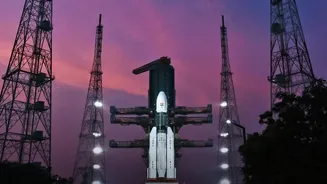
The most tangible outcome of this partnership to date is the NASA-ISRO Synthetic Aperture Radar (NISAR) mission. Launched successfully in July 2025, this billion-dollar Earth-observation satellite is a testament to the powerful synergy between the two agencies. It is the first satellite to use dual-frequency radar (NASA's L-band and ISRO's S-band) to systematically map changes on the Earth's surface with unprecedented detail. NISAR is already providing crucial provisional data on everything from glacial melt and volcanic activity to agricultural monitoring and disaster management. This mission serves as the cornerstone of the collaboration, proving that the two agencies can successfully develop and operate highly complex, integrated space hardware.
Human Spaceflight: To the ISS and the Moon
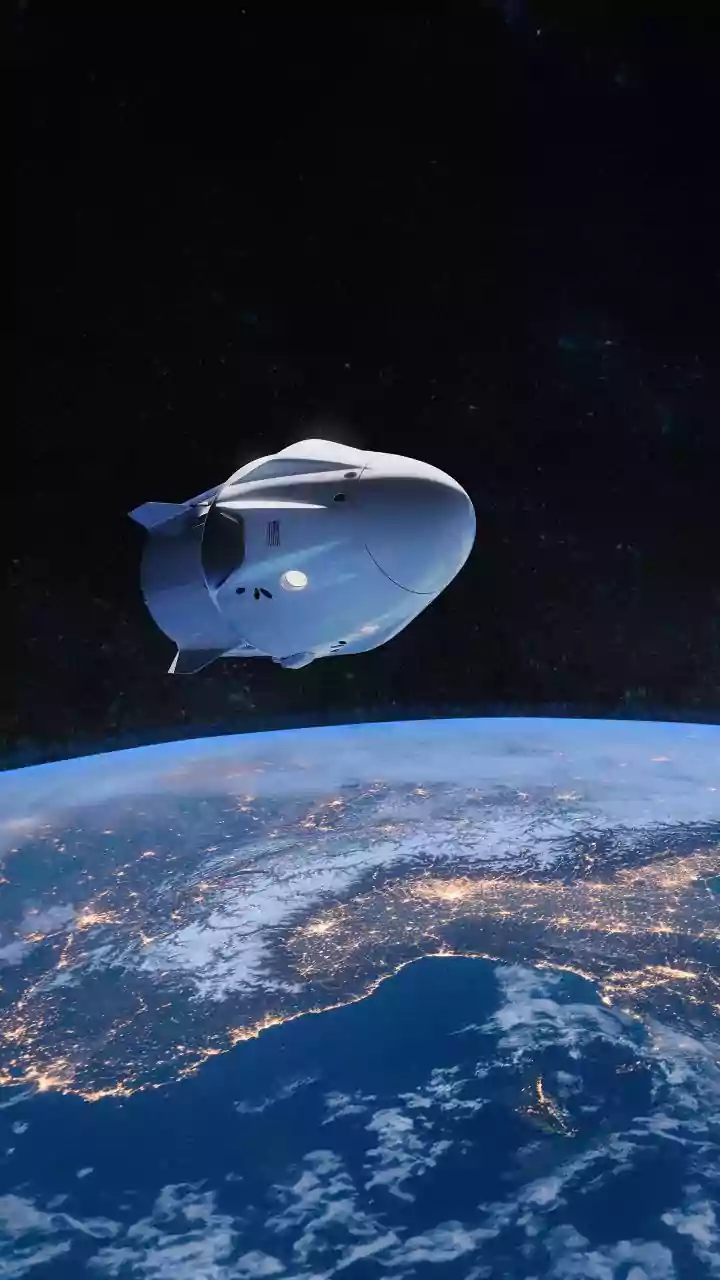
The partnership is now rocketing towards human spaceflight. A landmark agreement will see an Indian astronaut travel to the International Space Station (ISS). ISRO selected Group Captains Shubhanshu Shukla and Prasanth Balakrishnan Nair for training at NASA's Johnson Space Center. This culminated in Shukla becoming the first Indian to visit the ISS as part of a privately organised mission in July 2025, marking a historic moment. Looking further, NASA has formally invited ISRO to participate in its Artemis Moon Base program, an ambitious plan to establish a permanent human outpost near the lunar South Pole. This invitation follows India's own lunar successes, including the historic Chandrayaan-3 landing in 2023, and aligns with its long-term goal of sending an astronaut to the Moon by 2040.
The Next Frontiers: Lunar and Commercial
Participation in the lunar base could involve ISRO contributing expertise or hardware, potentially leveraging its experience from the Chandrayaan program. Future collaborations might include joint robotic missions, such as the planned lunar sample-return mission by India and a joint drilling mission with Japan to explore water-ice deposits. India's inclusion in the Moon Base program would likely require a project-specific bilateral agreement, moving beyond the non-binding principles of the Artemis Accords. Beyond government agencies, the partnership aims to foster greater commercial space collaboration. With India liberalising its space sector, there are growing opportunities for private Indian companies to participate in ventures like NASA's Commercial Lunar Payload Services (CLPS) program, which uses private landers to deliver payloads to the Moon. This opens up avenues for Indian industry in supply chains, satellite manufacturing, and launch services.
More Than Just Science
This deepening space alliance is not happening in a vacuum. It is a key component of the broader strategic partnership between the world's two largest democracies. The collaboration is seen by many as a geopolitical move to create a democratic counterweight to the space ambitions of nations like China and Russia, who are not part of the Artemis Accords. By working together, India and the U.S. are not only advancing science but also establishing shared norms for responsible behaviour in space. This cooperation on cutting-edge technology reinforces mutual trust and intertwines their strategic interests, ensuring that their partnership remains a defining feature of 21st-century geopolitics, both on Earth and beyond.