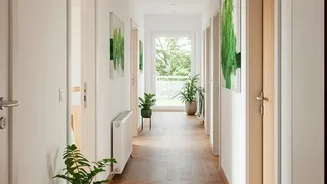



The humble hallway is often overlooked—a long, narrow passage that feels more like wasted space than a welcoming part of your home. The challenge is making it useful without creating a cluttered obstacle course. Here’s how to do it.
Master the Illusion of Space with Mirrors
It’s a classic for
a reason: mirrors make any space feel larger and brighter. In a narrow hallway, a large mirror is your best friend. Placing a full-length mirror at the far end of the hall creates an illusion of depth, drawing the eye forward and making the corridor seem longer. Alternatively, hanging a large mirror on one of the long walls can visually double the width of the space. For maximum effect, position it opposite a light source, like a doorway to a brighter room or a wall sconce, to bounce light around and illuminate dark corners. This not only brightens the hall but also fakes a sense of openness without taking up any floor space.
Think Vertically with Wall-Mounted Solutions
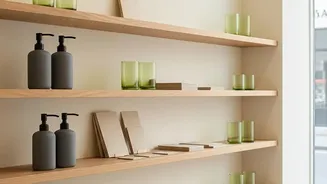
When floor space is at a premium, the only way to go is up. Your walls are your greatest asset in a narrow corridor. Instead of a bulky coat rack, opt for a series of sleek wall hooks or a peg rail to handle coats, bags, and hats. This keeps daily essentials organised without obstructing the path. For storage, consider floating shelves or shallow, wall-mounted cabinets. These provide a place for keys, mail, or decorative items while keeping the walkway clear. By drawing the eye upward, you shift the focus away from the hallway's narrowness and create a sense of height and purpose.
Choose Ultra-Slim Storage
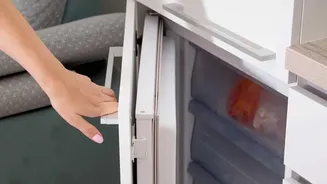
While the goal is to avoid filling the hall with furniture, some extremely slim pieces can add function without creating a bottleneck. Look for shallow console tables, often less than 30 cm deep, which provide a much-needed landing strip for keys and mail. Glass or acrylic tables are excellent choices as their transparency makes them seem to take up less visual space. Another game-changer is a tilt-out shoe cabinet. These slim units are specifically designed for tight spaces, keeping footwear tidy and out of sight without jutting into the walking area. The key is to always prioritize a clear path, ensuring any piece is shallow enough to not impede movement.
Harness the Power of Lighting
Good lighting can completely transform a narrow, tunnel-like hallway. A single, central ceiling light often leaves the ends in shadow, exaggerating the confined feeling. Instead, layer your lighting. A series of recessed downlights or sleek, flush-mount fixtures spaced evenly along the ceiling provides consistent, even illumination. Wall sconces are another fantastic option, as they wash the walls with light, making the space feel wider. Choose flat or slim-profile sconces to avoid obstructing the passageway. You can even use LED strips hidden along the ceiling line to create a 'wall wash' effect that visually pushes the walls outward.
Guide the Eye with Runners and Art
Visual tricks can be just as effective as physical changes. A long runner rug draws the eye down the length of the hall, creating a clear pathway and making the space feel more intentional. Choose a light-coloured or subtly patterned runner to avoid overwhelming the space. When it comes to wall decor, be deliberate. Instead of scattering many small pictures, hang a single, large piece of horizontal art to stretch the sight lines. Alternatively, a disciplined gallery wall with consistent frames and spacing can create a pleasing rhythm. By hanging art on just one wall, you add personality without making the space feel closed in.
Use Paint to Open Up the Space
Never underestimate the impact of paint. Light, neutral colours like off-white, soft grey, and pale beige are excellent choices for narrow hallways because they reflect light, making the area feel more open and airy. Painting the walls and ceiling in similar light shades can blur the boundaries of the space, enhancing the expansive feeling. For a more advanced trick, you can paint the walls a cool, receding colour like a pale blue or green, and then paint the ceiling a crisp, bright white to create the illusion of more height. Another strategy is to paint the wall at the very end of the hall a slightly darker or warmer shade; this can make the corridor feel a bit shorter and less like a tunnel.