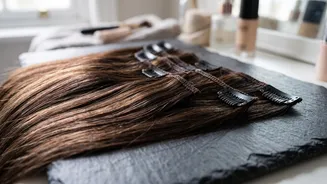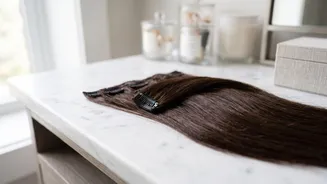






For those with fine hair, clip-in extensions promise instant volume but often come with a frustrating problem: they slip. The secret to all-day hold isn't tight clips or damaging products, but a gentle technique to give them something to grip.
The Fine Hair Challenge
Fine hair
strands are naturally smoother and silkier than other hair types. While lovely, this texture offers little for the metal clips of extensions to hold onto. Freshly washed fine hair is especially slippery, causing wefts to slide down or even fall out throughout the day. The goal isn't to fight your hair's texture but to work with it by creating a small, stable anchor point for each clip. This is where a modern, gentle approach to teasing comes in.
Rethinking 'Teasing'
Forget the dramatic, tangled backcombing of the past. Modern teasing for extensions is a precise, gentle method focused on creating a small, dense 'cushion' of hair right at the root. The technique involves pushing hair towards the scalp in a few short strokes to create a patch of texture. This matted base provides the friction needed for clips to lock onto securely without needing to be snapped shut so tightly that they cause breakage or discomfort. Done correctly, it's a damage-free way to guarantee your style lasts.
Your Essential Toolkit
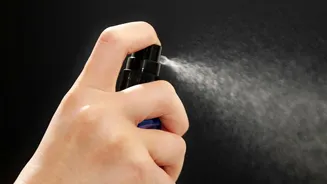
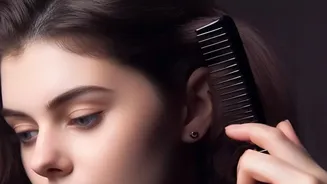
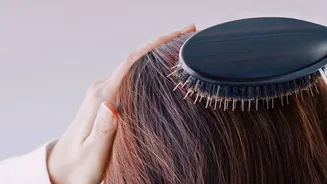
You only need a few simple tools for this technique. The most important is a teasing comb or brush; a rat-tail comb with fine teeth is perfect for both sectioning and backcombing. A teasing brush with dense boar or nylon bristles also works exceptionally well for fine hair. You will also want a light-hold hairspray or, even better, a dry texturizing spray or volumizing powder. These products add grit to the hair before you even start, making the tease hold better.
A Step-by-Step Guide to a Secure Hold
First, ensure your hair is completely dry. This technique works best on hair that isn't freshly washed, as day-old hair has more natural grit. 1. Section Your Hair: Create a clean, horizontal part where you intend to place the first weft. Clip the rest of your hair up and out of the way. 2. Prep the Roots: Lightly spray a texturizing product or dry shampoo directly onto the roots of the sectioned-off hair. This creates an ideal, non-slippery base. 3. Tease Gently: Take a small subsection of hair where a clip will go. Hold it taut and perpendicular to your scalp. Place your comb about two inches from the roots and gently push the hair down toward the scalp in two or three short, deliberate strokes. You should feel a small, firm pad of hair forming at the base. 4. Place the Clip: Open the extension clip and slide it securely over the teased cushion of hair. The clip should feel snug and flat against your head, not painful or bulky. 5. Repeat as Needed: Continue this process for each weft, working your way up your head. Always ensure you leave enough of your own hair on top to fully conceal the final row of extensions.
Common Mistakes to Avoid
The biggest mistake is being too aggressive. Avoid a frantic sawing motion with the comb, as this creates knots and causes breakage. Use short, controlled strokes. Another common error is applying hairspray only after teasing. Using a texturizing spray before you backcomb gives the hair the necessary grip to form a solid base in the first place. Finally, don't overload your head with too many wefts. For fine hair, fewer, strategically placed extensions often create a more natural and comfortable result.
Blending for a Flawless Finish
Once all your clips are securely in place, the final step is blending. Let down the top section of your natural hair and gently brush it over the wefts. A soft-bristled or loop brush is ideal for extensions, as it won't snag. If needed, you can lightly smooth over the very top layer of your teased sections to hide any fuzziness, but be careful not to brush out the volume you created. Adding soft waves or curls can also help to seamlessly merge your natural hair with the extensions, making any lines disappear.