


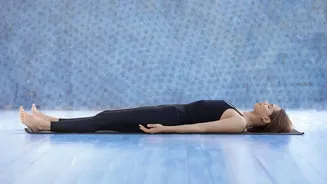
In a world of constant screen time and daily stress, our shoulders often bear the brunt, leading to tightness and discomfort. But what if relief could be found in a simple, grounding yoga pose? Enter Apanasana, a restorative posture for release.
Understanding Apanasana
Apanasana,
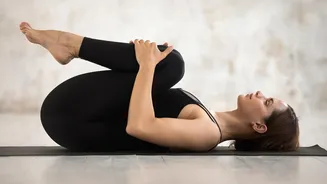
often called the Knees-to-Chest Pose or Wind-Relieving Pose, is a gentle, beginner-friendly posture performed while lying on your back. In Sanskrit, 'Apana' refers to the body's downward-moving energy, which governs elimination. As its name suggests, the pose is renowned for its ability to aid digestion and release trapped gas in the abdomen. However, its benefits extend far beyond the digestive system. By gently stretching the lower back, hips, and thighs, Apanasana encourages a state of deep relaxation that can have a ripple effect throughout the entire body.
The Surprising Shoulder Connection
While Apanasana primarily targets the lower back and abdomen, its profound calming effect is key to releasing tension in the upper body. When you hug your knees to your chest, your entire spine lengthens and presses into the floor. This posture encourages you to consciously relax your shoulders, letting them feel heavy and grounded on the mat. The gentle compression in the abdomen and the focus on deep, steady breathing help to activate the parasympathetic nervous system, also known as the 'rest and digest' system. This physiological shift slows the heart rate, calms the mind, and allows tense muscles, including those in the neck and shoulders, to let go.
A Step-by-Step Guide
Performing Apanasana is simple and accessible for most people. Lie comfortably on your back on a mat or a soft surface. Take a moment to let your body settle. On an exhale, gently draw both knees toward your chest. Clasp your hands around your shins, just below the knees. If this is uncomfortable, you can hold the backs of your thighs instead. It's important to keep your head and the full length of your back resting on the floor. Try to avoid lifting your hips. Gently tuck your chin to lengthen the back of your neck. Hold the pose for five to ten deep breaths, feeling your lower back release into the floor with each exhale. You can also introduce a gentle rocking motion from side to side to massage the spine. To release, simply extend your legs back down to the floor on an exhale.
Common Mistakes to Avoid
To get the most out of Apanasana, be mindful of common errors. Avoid pulling your knees in so forcefully that your hips and tailbone lift off the floor; the goal is to lengthen the lower back, not round it excessively. Pay close attention to your shoulders and neck. It is common to tense up in these areas while holding the pose. Consciously drop your shoulders away from your ears and ensure they remain relaxed on the mat. Also, be sure not to strain your knees by pulling directly on the joint. Instead, interlace your fingers over your shins or behind your thighs for a safer grip.
Integrating Apanasana Into Your Routine
The beauty of Apanasana lies in its versatility. It can be a wonderful way to start your day, gently waking up the spine before you even get out of bed. It also serves as an excellent cool down posture after a more vigorous workout, helping to calm the nervous system and release muscular tension. Many find it particularly beneficial as part of a bedtime routine. Performing the pose for a few minutes before sleep can help quiet the mind and prepare the body for a restful night. Consider practicing the one legged variation (Ardha Apanasana) by hugging one knee in while the other leg is extended, which provides a great stretch for the hip flexors before doing the full pose.