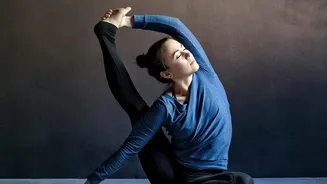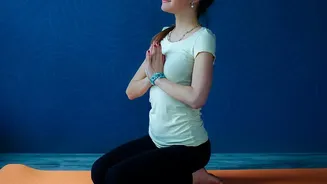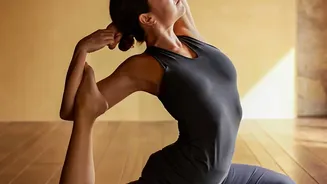



More Than Just Stretching
One of the most celebrated benefits of yoga is improved flexibility. But how does it work? It's a multi-layered process. When you hold a yoga pose, you are doing more than just pulling on a muscle. You are applying gentle, sustained pressure that helps
lengthen not just the muscle fibres but also the surrounding connective tissue, known as fascia. Over time, this consistent practice can reduce overall muscle stiffness. Furthermore, yoga works with your nervous system. Deep, mindful breathing, a core component of yoga, activates the body's relaxation response, which can help muscles release tension and stretch more effectively.
The Power of Consistency and Breath
Flexibility isn't built overnight or in one intense session. The real magic happens through a consistent, gentle practice. Even 10-15 minutes a day can signal to your body that it's safe to release tightness. Combining movement with conscious breathing (pranayama) is key. As you inhale, you create space in the body; as you exhale, you can often deepen into a stretch. This rhythmic connection calms the mind and allows the body to open up more willingly, making the process of gaining flexibility a mindful journey rather than a forceful effort.
Cat-Cow Stretch (Marjaryasana-Bitilasana)
This gentle, flowing sequence is a perfect warm-up for the spine. Start on your hands and knees in a 'tabletop' position, with wrists under shoulders and knees under hips. As you inhale (Cow Pose), drop your belly towards the mat, lift your chest and tailbone, and look forward. As you exhale (Cat Pose), round your spine toward the ceiling, tuck your chin to your chest, and press the mat away. Flow between these two poses for 5-10 breaths, letting your breath guide the movement. This simple action improves spinal flexibility and relieves back tension.
Downward-Facing Dog (Adho Mukha Svanasana)
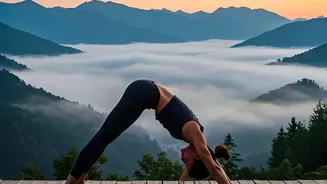
A foundational pose in yoga, Downward-Facing Dog stretches the entire back side of the body, particularly the hamstrings and calves. From your hands and knees, tuck your toes, lift your hips up and back, forming an inverted 'V' shape. Spread your fingers wide and press firmly into your palms. Beginners should keep their knees generously bent to focus on lengthening the spine. Let your head hang heavy between your upper arms. You can gently 'pedal' your feet, bending one knee and then the other, to deepen the stretch in each hamstring.
Seated Forward Bend (Paschimottanasana)
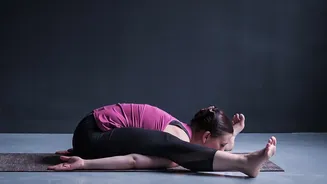
This pose provides an intense stretch for the hamstrings and lower back. Sit on the floor with your legs extended straight in front of you. You can sit on the edge of a folded blanket to help tilt your pelvis forward if your hamstrings are tight. Inhale to lengthen your spine, and as you exhale, hinge forward from your hips, not your waist. Walk your hands forward along your legs, stopping wherever your flexibility allows without rounding your back excessively. Bending your knees is a great modification for beginners.
Triangle Pose (Trikonasana)
Triangle Pose is excellent for stretching the hamstrings, hips, and side body while building stability. Start by standing with your feet wide apart, about 3 to 4 feet. Turn your right foot out 90 degrees and your left foot in slightly. Inhale and extend your arms parallel to the floor. Exhale and hinge at your right hip, reaching forward before bringing your right hand down to your shin, an ankle, or a yoga block. Extend your left arm toward the ceiling, opening your chest. Keep both legs straight but not locked. Hold for several breaths before repeating on the other side.
Bridge Pose (Setu Bandhasana)
A gentle backbend, Bridge Pose helps open the chest and stretch the hip flexors and spine. Lie on your back with your knees bent and feet flat on the floor, hip-width apart. Your arms should be alongside your body with palms facing down. On an inhale, press through your feet to lift your hips off the floor. You can keep your palms flat or interlace your fingers underneath your back, rolling your shoulders under to create more space in your chest. Hold for a few breaths, then exhale as you slowly lower your spine back to the floor.