








The Deception of Averages
When the India Meteorological Department (IMD) declares a 'below-normal' monsoon, it refers to the seasonal rainfall total averaged across the entire country over four months. However, this single number can be dangerously misleading. A season can have
less overall rain, but the nature of that rainfall might be more volatile and destructive. Long dry spells can be punctuated by sudden, ferocious downpours that deliver a month's worth of rain in just a few hours or days. This pattern of erratic, intense rainfall is a key reason why a statistically 'drier' monsoon can still trigger severe flooding in specific regions.
Intensity Trumps Volume
The heart of the paradox lies in the difference between total volume and rainfall intensity. A healthy monsoon often provides steady, moderate rain that allows the ground to absorb water, replenishing aquifers and sustaining crops. A weak or erratic monsoon, increasingly influenced by climate change, behaves differently. It often features fewer rainy days overall, but when it does rain, it's a deluge. This high-intensity rainfall quickly overwhelms the natural absorption capacity of the ground, leading to rapid surface runoff. Instead of gently soaking in, the water rushes across the landscape, swelling rivers and causing flash floods with terrifying speed. Studies have shown a threefold increase in widespread extreme rain events over central India, even as the overall monsoon circulation has shown signs of weakening.
The Urban Concrete Trap
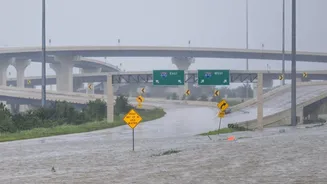
In India's rapidly growing cities, this problem is magnified tenfold. Urban areas are particularly vulnerable because concrete and asphalt have replaced permeable soil and natural water bodies like lakes and wetlands. When an intense downpour occurs, the water has nowhere to go. Drainage systems, often old, poorly maintained, and clogged with waste, are quickly overwhelmed. Cities like Mumbai, Bengaluru, and Delhi can experience severe waterlogging and flash floods after just a few hours of heavy rain, regardless of whether the overall monsoon season is considered strong or weak. This 'urban flood' phenomenon is a direct consequence of unplanned expansion meeting more erratic weather patterns.
When Dry Ground Can't Drink
Ironically, a preceding dry spell—a common feature of a below-normal monsoon—can make subsequent flooding worse. After weeks without rain, the ground becomes hard and compacted, losing its ability to absorb water effectively. When a sudden, intense burst of rain finally arrives, the water runs off the hardened surface instead of soaking in. This is especially true in areas with clay soils or rocky terrain. Furthermore, topography plays a crucial role. In hilly regions, rapid runoff can trigger devastating landslides and flash floods in downstream valleys.
The Climate Change Signature
Scientists widely agree that climate change is making the Indian monsoon more erratic. A warming planet and warmer oceans are altering atmospheric patterns, leading to an increase in the frequency and intensity of extreme rainfall events. The monsoon is becoming less of a predictable, season-long phenomenon and more of a series of volatile weather events. We are seeing a pattern of long dry periods followed by short, intense bursts of rain. This means that even in years when the total seasonal rainfall is below average, the risk of flood disasters remains high, and in some cases, is even increasing.