
What is the Suneung?
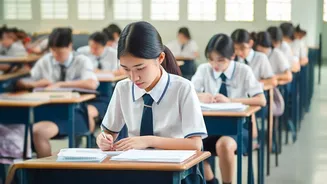
The College Scholastic Ability Test, or 'Suneung' as it's known in Korean, is an eight-hour marathon exam held annually on the third Thursday of November. For over half a million high school seniors and graduates, this single day is the culmination of more
than a decade of intense study. Its primary purpose is to assess academic aptitude for university admissions, with the final score being the most critical factor for entry into South Korea's top universities. The test covers multiple subjects, including Korean, mathematics, English, Korean history, and various electives. Success on the Suneung is widely seen not just as an academic achievement but as the gateway to a successful career, social standing, and even a prosperous marriage, making it arguably the most important day in a young South Korean's life.
A Nation on Pause
To ensure absolute fairness and concentration for every student, the entire country mobilizes in a way that is unparalleled globally. The most dramatic measure is the nationwide grounding of flights for a 35-minute period during the English listening comprehension test. During this window, no planes can take off or land, and those already in the air must maintain an altitude of at least 3,000 meters to prevent engine noise from disrupting students. This affects scores of international and domestic flights, which are all rescheduled. On the ground, government offices and many private businesses, including the Korea Exchange stock market, open an hour later to clear morning traffic. Police are on standby to provide motorcycle escorts for students running late, ensuring no one misses the exam due to traffic.
The High Stakes of a Single Score
The immense societal focus on the Suneung stems from the belief that it is a fair, meritocratic system in a highly competitive society. A high score can secure a spot at one of the prestigious 'SKY' universities (Seoul National University, Korea University, and Yonsei University), which is seen as a ticket to lifelong success. This intense pressure has deep historical roots, evolving from ancient civil service exams where a test could determine one's entire social standing. For families, the day is filled with anxiety and hope. Many parents spend the day praying at temples and churches, while younger students gather at school gates to cheer on their seniors with banners and songs. The exam is so ingrained in the culture that there are even food superstitions, like avoiding slippery seaweed soup so that students don't 'slip up' on the test.
The Human Cost and Modern Challenges
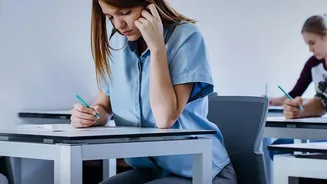
While the Suneung is a symbol of fairness, it is also a source of immense stress and criticism. The pressure to succeed contributes to high rates of anxiety and depression among students, who often spend years in expensive private tutoring academies called 'hagwons'. Critics argue the system stifles creativity by promoting rote memorization over critical thinking. In recent years, authorities have also had to contend with modern forms of cheating. New rules for the 2026 exam cycle include strict bans on all electronic devices, including smart glasses and watches, with proctors even inspecting eyeglass frames and covering clothing buttons with stickers to prevent hidden cameras. The government has even sent nationwide emergency mobile alerts during the test to detect any phones that were not surrendered.