

Seeing the Invisible
Imagine trying to watch a baby being born inside a delivery room with the lights off and the curtains drawn. That's the challenge astronomers have faced for decades when trying to observe star formation. Stellar nurseries are vast clouds of gas and dust
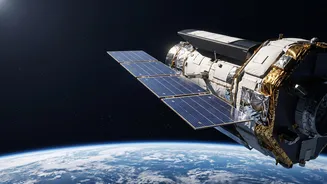
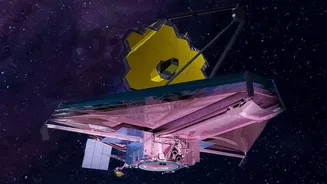
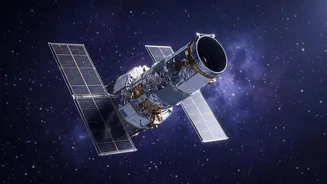
so dense that they block visible light, shrouding the process in mystery. This is where the James Webb Space Telescope's technological genius comes into play. It is designed to see the universe in infrared light, which has longer wavelengths that can penetrate these obscuring dust clouds. This allows JWST to effectively see the 'invisible,' capturing the intricate processes of star birth that were previously hidden from view. The result is a series of images that are not just visually stunning but are packed with unprecedented scientific data.
Inside the Cosmic Cradles
So, what exactly is a stellar nursery? Think of it as a cosmic maternity ward. These are enormous, cold, and turbulent clouds of molecular gas and dust. Within these clouds, gravity begins to pull clumps of matter together. As these clumps get denser and hotter, they form protostars—the embryonic stage of a star. JWST's instruments are so sensitive they can detect the faint heat from these nascent stars, still wrapped in their dusty cocoons. In some of the most active regions, like the Carina Nebula or Sagittarius B2 near our own galaxy's core, JWST has revealed thousands of previously unseen young stars, some in the earliest stages of development. It can even spot the tell-tale jets and outflows of material that young stars eject, which slam into the surrounding gas and cause it to glow.
A Look Back in Time
The headline's mention of "deep galaxies" is crucial. In astronomy, looking farther away means looking further back in time, because light from distant objects takes billions of years to reach us. When JWST images a galaxy that is billions of light-years away, it's seeing that galaxy as it was billions of years ago. This makes the telescope a powerful time machine. By observing stellar nurseries in these very distant, early galaxies, scientists can study how the first generations of stars formed when the universe was much younger. Recent findings from JWST have even challenged existing models, revealing that early galaxies may have been much more massive and formed stars more prolifically than previously thought, forcing a rethink of how galaxies evolve.
Connecting Dust to Desktops
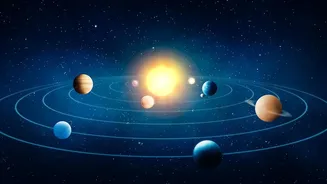
While these cosmic cradles are unimaginably far away, the processes happening within them are fundamentally linked to our own existence. The star at the center of our solar system, the Sun, was born in a similar stellar nursery about 4.6 billion years ago. The dusty, gassy disk that surrounded our infant Sun eventually coalesced to form Earth and the other planets. By studying star formation in other parts of the universe, we gain invaluable insights into the origins of our own solar system. As scientists analyze the chemical composition of these distant nurseries, they are piecing together the story of how the ingredients for life are distributed across the cosmos. JWST’s data helps astronomers map how stellar activity, like powerful winds from massive stars, can shape the environment and potentially affect the development of new planets.