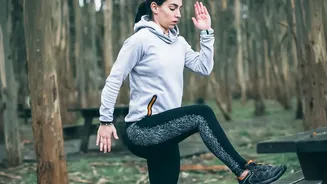








Embrace the Season's Benefits
Before you even lace up your shoes, take a moment to appreciate why October is such a great month for outdoor fitness. The cooler temperatures mean you're less likely to feel drained by heat and humidity, which can lead to better performance and endurance.
Mentally, exercising outdoors can boost self-esteem, reduce anxiety, and even improve your attention span and memory. The changing leaves and crisp air provide a sensory boost that you just can't get on a treadmill. Framing your workout as a chance to enjoy the season, rather than a chore, is the first step toward building a routine that lasts.
Master the Art of Layering
The key to comfort during fall workouts is layering. Instead of a single heavy jacket, think in terms of three layers you can adjust. Start with a base layer made of a moisture-wicking synthetic fabric or merino wool to pull sweat away from your skin; avoid cotton, which holds moisture and can leave you feeling cold. Add a middle layer, like a fleece, for insulation. Top it off with a light, windproof or water-resistant outer shell that you can easily remove and tie around your waist if you get too warm. Don't forget a hat and gloves, which are easy to shed as you heat up.
Find Your Autumn Activity
Sustainability comes from enjoyment, so pick activities you genuinely like. Fall is an ideal time for trail running or hiking, where varied terrain challenges your balance and coordination while offering beautiful scenery. Cycling is another great option, allowing you to cover more ground and see the autumn colours. Local parks often have free-to-use equipment like pull-up bars and benches that are perfect for a bodyweight circuit. Even a simple, brisk walk can significantly improve your physical and mental health. Consider joining a local recreational sports league or an outdoor bootcamp to add a social element to your routine.
Schedule Your Workouts and Stay Consistent
With daylight hours shrinking, planning becomes essential. Look at your weekly schedule and block out specific times for your workouts, treating them as non-negotiable appointments. If mornings are too dark, a lunchtime walk or run can be a great way to break up the day. As routines settle after summer, it's often easier to find a consistent rhythm. Don’t let a single missed workout derail you; the goal is progress, not perfection. Have a plan for getting back on track and focus on building a long-term habit.
Prioritise Safety in Lower Light
As it gets dark earlier, visibility is crucial for your safety. Wear bright or light-coloured clothing so you are more visible to others. Adding reflective gear or carrying a flashlight is a smart move for early morning or evening sessions. If you're running or walking, move against the flow of traffic so you can see oncoming vehicles. Stick to familiar, well-lit routes and let someone know where you're going and when you expect to be back. If you listen to music, keep the volume low enough to remain aware of your surroundings.
Keep Your Motivation High
Motivation can wane when the initial excitement fades or the weather turns chilly. To stay engaged, find a workout buddy or join a group to hold yourself accountable. Set small, achievable goals, like a certain number of workouts per week, and reward yourself for consistency. Create an energising playlist that makes you want to move. Focusing on how much better you feel after a workout—more energised, less stressed—can be a powerful motivator to keep going, even on days you don't feel like starting.