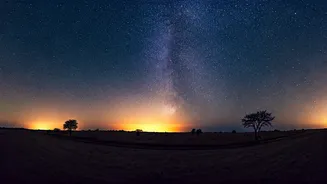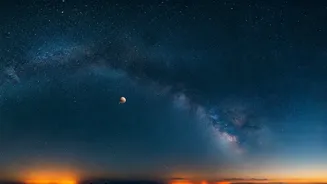




Why the Solstice Is Special
The solstice, occurring twice a year in June and December, marks the longest and shortest days of the year. For stargazers, this is more than just a date on the calendar; it's a celestial marker that heralds a change in the night sky. The winter solstice brings
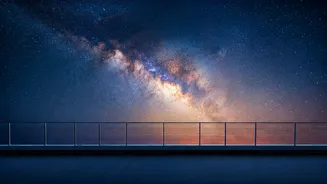
the longest nights, offering an extended canvas for observation. The summer solstice, while having shorter nights, reveals a different set of cosmic treasures. These periods are excellent gateways for beginners because they provide a fixed point to begin learning the constellations and tracking planetary movements. As Earth orbits the Sun, our window into the cosmos changes, and the solstices are key moments in this annual journey, bringing different star fields into prime viewing position after dusk.
Your Simple Balcony Stargazing Kit
You don't need a fancy, expensive telescope to start this journey. The beauty of balcony astronomy lies in its simplicity. Your essential kit is likely already in your possession. First, download a good stargazing app on your smartphone. Apps like Stellarium, SkyView, or Star Walk 2 use your phone's GPS and compass to show you a real-time map of the sky. Simply point your phone upwards, and it will identify stars, planets, and constellations. Second, a comfortable chair is a must for patient observation. Third, consider a pair of basic binoculars. Even a standard 7x50 or 10x50 pair can reveal the moons of Jupiter, the rings of Saturn (as a tiny elongation), and the breathtaking detail of star clusters that look like mere smudges to the naked eye.
Tracking the Planets
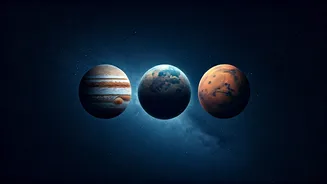
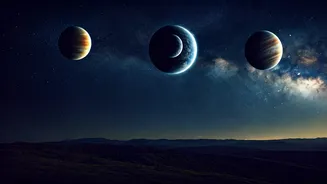
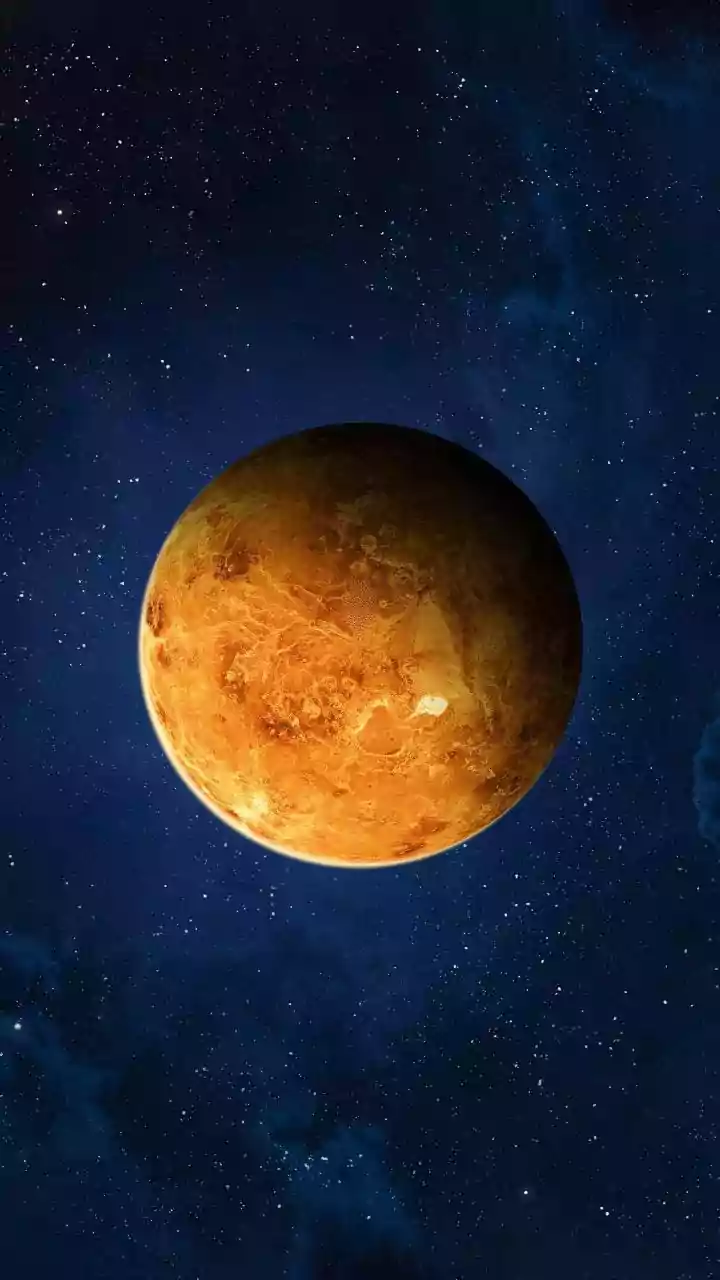
The "interplanetary trends" mentioned in the headline refer to the visible dance of the planets in our solar system. Unlike stars, which twinkle, planets shine with a steady, solid light. This is the easiest way to tell them apart. Venus is the brightest object after the Moon, appearing as a brilliant beacon in the west after sunset or in the east before sunrise. Jupiter is also exceptionally bright, outshining all the stars. Mars is recognizable by its distinct reddish hue. Saturn, fainter than Jupiter, has a calm, yellowish-white glow. Use your stargazing app to find out which planets are currently visible from your location and at what time. Watching them shift their position against the background stars over weeks and months is a rewarding experience.
Finding Your First Star Cluster
Star clusters are groups of stars bound together by gravity, and they are some of the most beautiful sights in the night sky. A perfect target for beginners in India is the Pleiades, also known as the Seven Sisters or Krittika in Indian astronomy. Visible during the winter months, it looks like a tiny, misty patch of light to the naked eye. Through binoculars, this patch explodes into a stunning cluster of dozens of glittering blue-white stars. Another excellent target is the Beehive Cluster (Pushya) in the constellation of Cancer, which appears as a faint, fuzzy cloud but is resolved into a rich swarm of stars with binoculars. Your app can guide you to these celestial jewels.
Tips for City Stargazers
Observing from a city balcony comes with the challenge of light pollution. However, don't let it discourage you. First, give your eyes time to adapt. Turn off all the lights on your balcony and avoid looking at your bright phone screen for at least 15 minutes. Many stargazing apps have a 'red light' mode to preserve your night vision. Second, try to observe from the darkest part of your balcony, using the building itself to block out nearby streetlights. Third, the best viewing times are often late at night, after 11 p.m., when some city lights are turned off and atmospheric turbulence settles. Even with light pollution, the Moon, planets, and the brightest star clusters remain accessible.