




The Persistent Peril of Dust
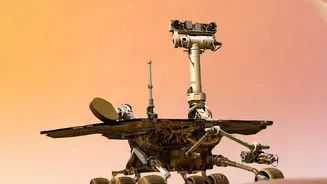
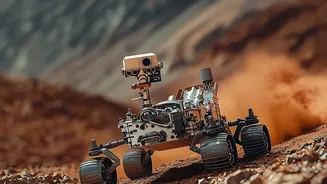
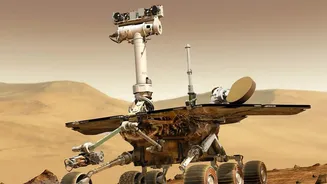
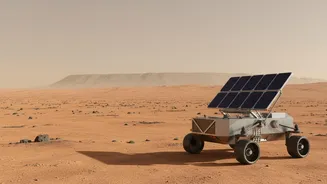
Mars is an incredibly dusty place. Its thin atmosphere allows fine, reddish-brown particles to be kicked up by winds, eventually settling on every surface. For a solar-powered rover, this is a death sentence delivered slowly. As dust accumulates on its
solar panels, the amount of sunlight reaching the photovoltaic cells decreases daily. This leads to a gradual reduction in available power, forcing mission controllers to be increasingly selective about which scientific instruments and operational systems they can run. Eventually, the power levels can drop so low that the rover cannot operate its heaters to survive the frigid Martian nights, leading to mission failure. This exact fate befell NASA's InSight lander in 2022 and contributed to the end of the Opportunity rover's mission in 2018 after a planet-encircling dust storm blotted out the sun entirely.
An Unexpected Cleaning Service
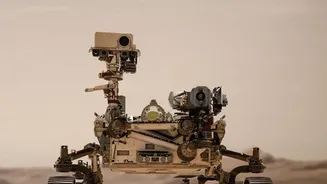
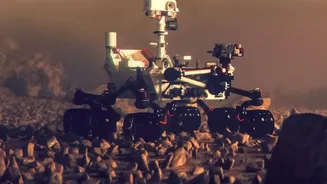
Early in the missions of the Spirit and Opportunity rovers, which were designed to last only 90 days, engineers noticed a surprising phenomenon. After weeks of steadily declining power, a rover's energy levels would suddenly jump, sometimes significantly, overnight. They dubbed these phenomena "cleaning events." The cause was the Martian wind itself. Passing gusts, often in the form of small whirlwinds known as dust devils, were blowing the accumulated dust off the solar panels, effectively giving the rovers a new lease on life. These random cleaning events were a key reason why rovers like Spirit and Opportunity were able to function for many years, far exceeding their planned mission durations.
From Random Luck to Predictable Science
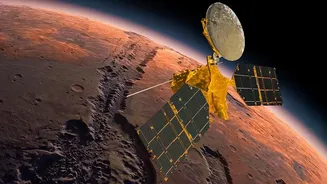
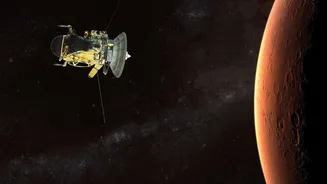
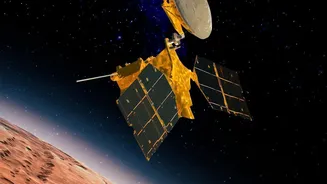
For years, these cleaning events were treated as strokes of good luck. Mission planners couldn't count on them, but they were a welcome bonus. However, as our understanding of the Martian climate has deepened, so has our ability to study these events. Scientists now actively monitor and attempt to forecast Martian weather, including the wind patterns that can lead to panel clearings. By combining data from orbiters like the Mars Reconnaissance Orbiter (MRO) with on-the-ground measurements from rovers and landers, a more complete picture of atmospheric dynamics is emerging. The MRO can spot the tracks left by dust devils from space, while landers like InSight were equipped with sensitive weather instruments that could detect passing vortexes even if they weren't visibly carrying dust. A recent effort even cataloged over a thousand dust devils to map wind patterns across the planet.
The Survival Strategy of Forecasting
This ability to forecast moves dust pulses from the realm of luck to strategy. If mission controllers have a reliable forecast indicating a high probability of cleaning events in the coming weeks, they can manage the rover's power budget more aggressively. They can choose to run more power-intensive science experiments or drive longer distances, confident that the solar panels will likely get a 'recharge' from the wind. Conversely, if forecasts predict a long, calm, and dusty period — or a major dust storm — they can put the rover into a low-power hibernation state to conserve energy and ride it out. This predictive power allows for more efficient use of the rover's limited lifespan and maximizes the scientific return on these multi-billion dollar assets. It’s no longer just about hoping for a windy day; it’s about knowing when it might come and planning for it.