

A Historic First at the South Pole
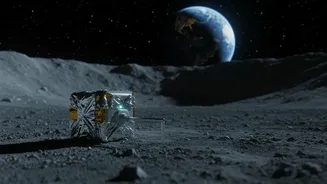
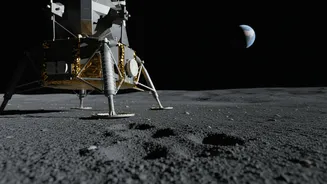
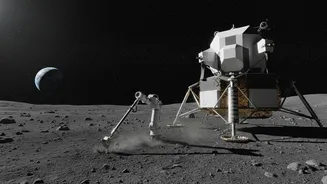
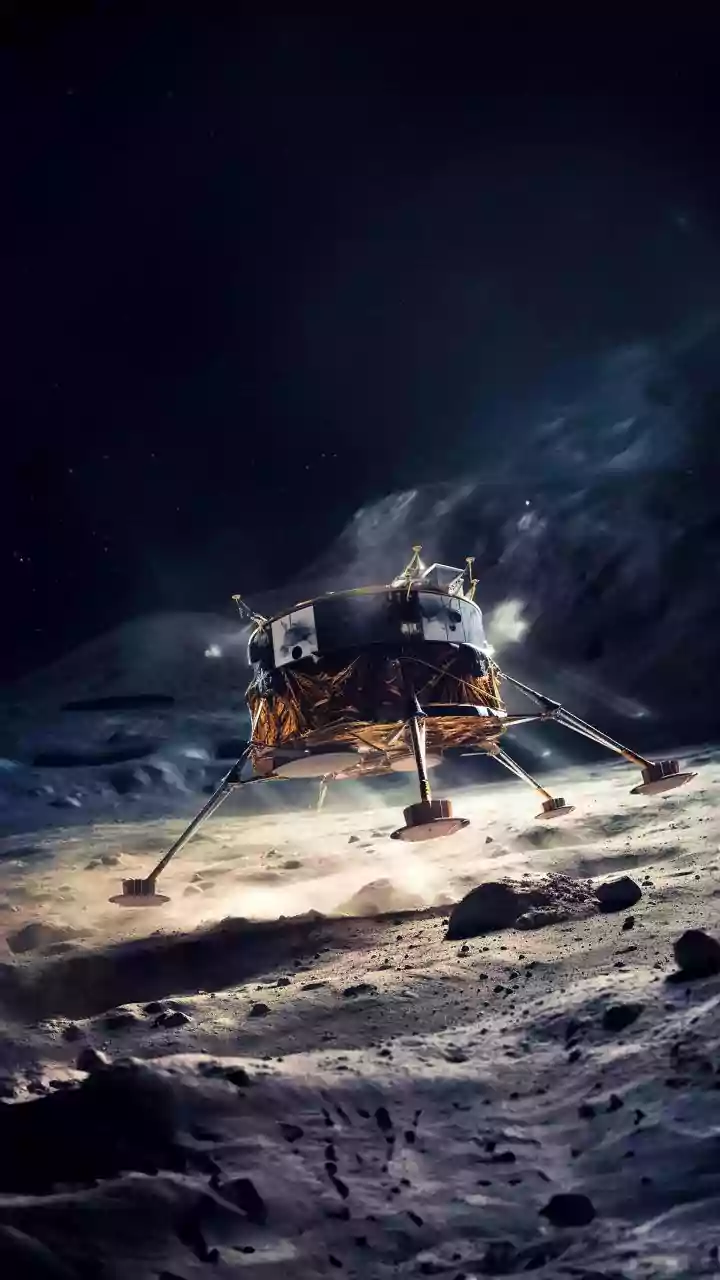
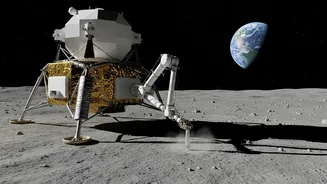
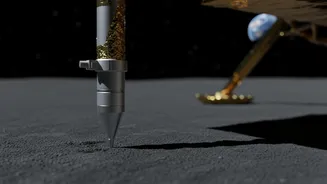
When ISRO’s Chandrayaan-3 Vikram lander successfully touched down near the lunar south pole on August 23, 2023, it carried a unique instrument: the Chandra’s Surface Thermophysical Experiment, or ChaSTE. This was not just another sensor; it was a robotic
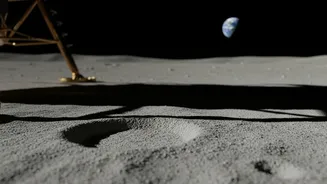
probe designed to do something no mission had ever done before. It physically penetrated the lunar soil to a depth of 10 centimetres to measure the temperature gradient directly beneath the surface in this unexplored region. While previous missions like NASA’s Apollo had taken subsurface readings, they were all near the Moon’s equator. ChaSTE provided the first-ever in-situ thermal profile of the lunar topsoil near the south pole, giving scientists an unprecedented look at the ground truth of this strategically vital area.
The Moon's Insulating Blanket
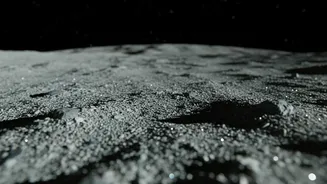
The first results from ChaSTE stunned scientists. The data revealed a dramatic temperature difference between the lunar surface and the soil just beneath it. While the surface temperature could be surprisingly warm, the probe recorded a staggering drop of 50 to 60 degrees Celsius just 10 centimetres down. This huge thermal gradient confirmed that the loose top layer of lunar soil, known as regolith, acts as an incredibly effective thermal insulator. Like a fluffy blanket, it prevents the Sun's heat from penetrating deep into the ground. This discovery was crucial because the stability and presence of water ice on the Moon are dictated almost entirely by temperature. Understanding how heat behaves in the lunar subsurface is the key to predicting where frozen water might be hiding.
Revealing the Hidden Patterns
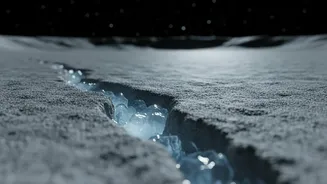
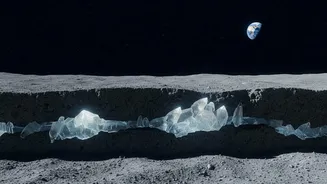
The true breakthrough came when scientists combined ChaSTE’s direct temperature measurements with 3D models of the lunar terrain. They discovered that local topography—even very small hills and slopes—plays a massive role in creating pockets of extreme cold. The analysis showed that any patch of ground with a poleward-facing slope greater than about 14 degrees could create an environment cold enough to trap and preserve water ice, even if it is not in a permanently shadowed crater. This means a sunlit slope might be quite warm, but just a metre or two away, a small, shaded, poleward-facing slope could be cold enough to host shallow subsurface ice deposits. These are the 'hidden patterns'—micro-environments scattered across the near-polar regions that are conducive to water retention, previously invisible to orbiters that could only measure broader surface temperatures.
Expanding the Search for Lunar Water
This finding has profound implications for the future of lunar exploration. For years, the primary targets for finding water ice have been the Permanently Shadowed Regions (PSRs) at the absolute poles. These are craters where the floor has not seen sunlight in billions of years, making them incredibly cold but also extremely difficult and dangerous to land in and operate. ISRO’s discovery suggests that we may not be limited to these treacherous spots. Water ice could be far more widespread and accessible, hiding just tens of centimetres below the surface in countless smaller, more accessible sloped areas in the broader high-latitude regions. This vastly expands the potential real estate for future human missions to land, set up bases, and mine for this critical resource.
Fueling the Next Chapter of Exploration
Finding accessible water is the holy grail of lunar settlement. It can be harvested for drinking water, split into hydrogen and oxygen for breathable air, and crucially, converted into rocket fuel. Being able to produce fuel on the Moon would dramatically lower the cost and complexity of deep-space missions, making the Moon a true stepping stone to the rest of the solar system. While the ChaSTE instrument did not directly detect water, it provided the essential thermal map that shows scientists exactly where to look. This contribution from ISRO not only represents a monumental achievement for Indian science but also provides a vital piece of the puzzle for all space-faring nations planning a return to the Moon.