




A New Era of Celestial Collaboration
The space agencies of India and the United States, ISRO and NASA, have a long history of working together, but recent agreements have elevated this relationship to unprecedented heights. This partnership is now a cornerstone of the broader strategic alliance
between the two nations, moving far beyond simple data sharing. A key moment was India signing the Artemis Accords in 2023, joining a US-led coalition of nations committed to peaceful, transparent, and sustainable civil space exploration. This foundational agreement sets the stage for deep collaboration on some of humanity's most ambitious projects, including returning to the Moon and venturing beyond. For India, this isn't just about joining a club; it's about ensuring its indigenous space program evolves with global standards, avoids technological isolation, and secures a seat at the table where the rules of future space governance are being written.
NISAR: A Landmark Mission Watching Over Earth
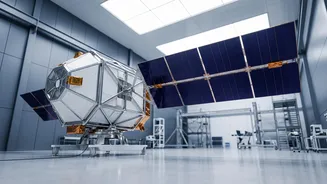
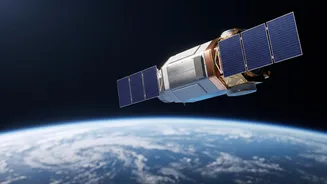
The most tangible outcome of this partnership is the NASA-ISRO Synthetic Aperture Radar (NISAR) mission, which successfully launched in 2025. As the first joint hardware development for an Earth-observing satellite between the two agencies, NISAR is a technological marvel. It is equipped with both L-band and S-band radar systems, allowing it to scan nearly all of Earth’s land and ice surfaces every 12 days with remarkable precision. This capability offers transformative benefits for India. The data gathered helps in managing agricultural resources, monitoring the stability of infrastructure, and offering critical insights into natural hazards like earthquakes, landslides, and volcanic eruptions. Furthermore, NISAR provides invaluable information for tracking the impacts of climate change on glaciers and forests, directly supporting India’s environmental and disaster management goals.
To the Moon and Beyond: The Artemis Opportunity
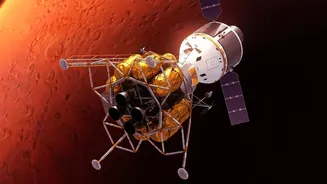
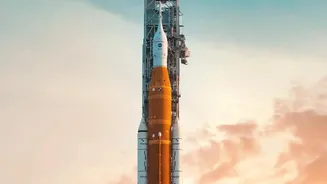
By signing the Artemis Accords, India has positioned itself to be a key player in the next chapter of lunar exploration. The accords provide a framework for cooperation on NASA's Artemis program, which aims to establish a sustainable human presence on the Moon. This collaboration took a significant step forward in August 2026, when NASA formally invited ISRO to participate in its Moon Base program. This invitation aligns perfectly with India's own long-term space ambitions, which include a human lunar landing and eventually establishing its own lunar outpost. Participating in the Artemis program offers India access to advanced technologies, shared scientific data, and operational knowledge from crewed deep-space missions. These learnings are directly applicable to and will significantly de-risk India's own human spaceflight mission, Gaganyaan.
Boosting India's Commercial Space Sector
The partnership extends beyond government agencies, aiming to catalyse India’s burgeoning private space industry. The U.S.-India initiative on Critical and Emerging Technology (iCET) specifically identifies commercial space collaboration as a priority area. This opens doors for Indian startups and established companies to integrate into the global space supply chain, providing services and hardware for international missions. The collaboration fosters networking opportunities and a better understanding of how public-private partnerships can drive innovation. As ISRO focuses on more complex science and exploration missions, a robust domestic industry can take over more routine tasks like satellite manufacturing and launch services, creating a vibrant and self-sustaining space economy in India.
Strategic and Geopolitical Gains
Beyond the scientific and commercial benefits, the India-US space partnership carries significant geopolitical weight. As space becomes an increasingly contested domain, the collaboration between the world’s two largest democracies sends a powerful strategic message. The Artemis Accords, for instance, create a coalition of like-minded nations dedicated to a rules-based order in space, an implicit counterpoint to the space ambitions of nations like China and Russia, who are not signatories. By aligning with the US and other partners, India not only strengthens its technological capabilities but also enhances its stature as a responsible and leading spacefaring nation. This cooperation in a high-tech, high-profile field solidifies the broader strategic partnership, building trust and interoperability for decades to come.