



Meet 'Mechazilla,' The Rocket Catcher
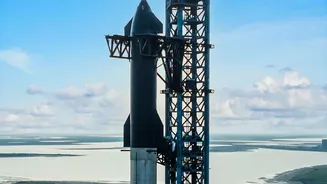
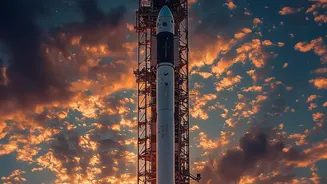
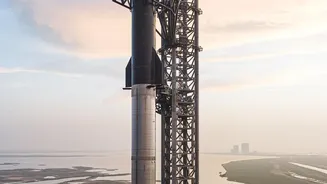
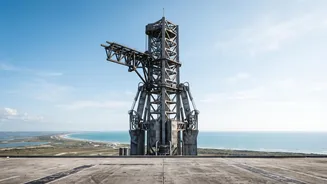
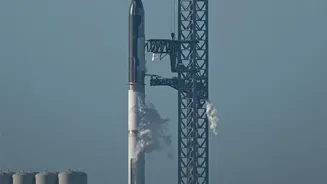
At the heart of this strategy is the launch and integration tower, nicknamed 'Mechazilla' by CEO Elon Musk. This colossal structure serves a dual purpose. Before launch, its massive arms, often called 'chopsticks', lift the Super Heavy booster onto the launch mount
and then stack the Starship spacecraft on top. Its more dramatic role, however, comes after launch. As the first-stage booster separates and flies back to the launch site, these same arms are tasked with catching it in mid-air just before it touches down. This system is an intricate dance of high-strength steel, powerful hydraulics, and advanced control software designed to track and safely secure a booster descending at high speed.
Why Not Just Use Landing Legs?
SpaceX already mastered rocket landings with its Falcon 9 fleet, which uses landing legs to touch down on droneships or landing pads. The decision to omit them from Starship is a classic example of SpaceX's aggressive engineering philosophy. Landing legs, especially for a vehicle as massive as the Super Heavy booster, are incredibly heavy and complex. By removing them, SpaceX strips away mass that doesn't contribute to the primary mission of reaching orbit. This saved weight can be converted directly into carrying more payload—be it satellites, cargo, or eventually, crew—making each launch more efficient and profitable. This approach embraces the idea that perfection is achieved not when there is nothing more to add, but when there is nothing left to take away.
The Need for Speed: Rapid Reusability
The tower-catch strategy is about more than just mass savings; its primary driver is speed. Catching the booster with the launch tower itself eliminates several time-consuming steps. A Falcon 9 booster that lands on a droneship or a separate pad must be secured, transported back to a hangar, have its legs stowed, and then be lifted back onto the launch mount for its next flight. In contrast, Mechazilla can catch the Super Heavy booster and, in theory, place it directly back onto the launch mount within hours, or even minutes. This vision of 'airline-like operations', with the potential for multiple launches per day from the same booster, is fundamental to SpaceX's business model. This rapid turnaround is crucial for deploying the thousands of satellites required for its Starlink internet constellation and for enabling the high launch frequency needed for missions to Mars.
A High-Stakes Engineering Gamble
The maneuver is undeniably risky. The booster, while nearly empty of fuel, still weighs hundreds of tons and must be guided with pinpoint precision between the closing arms. An error of even a few feet could result in a catastrophic explosion, destroying not only the multi-million dollar booster but also the indispensable launch tower. The control systems must account for wind, engine performance, and trajectory in real-time. SpaceX has already successfully demonstrated the booster catch multiple times, proving the concept is viable. As of late 2026, the company is now preparing to take the next monumental step: attempting to catch the Starship upper stage in the same manner, which would mark the first time an entire orbital-class rocket system has been made fully and rapidly reusable.