






When 'Walking It Off' Isn't Working
After an injury, it's normal to experience pain, swelling, and stiffness. A sprain, which is an injury to the ligaments connecting your bones, can often feel just as painful as a break. Most of these soft tissue injuries begin to improve within a few
days with basic home care. However, when the pain doesn't subside or even worsens, it may be a sign that you're not just dealing with a stretched ligament. Distinguishing between a severe sprain and a fracture can be difficult based on symptoms alone, as both can cause significant pain, swelling, and bruising. Listening to your body and recognizing when symptoms are not following a normal healing pattern is the first step toward getting the right diagnosis.
Red Flags That Signal a Doctor's Visit
Certain symptoms should prompt you to seek a medical evaluation. If you're unable to put weight on the injured limb, or can't take more than a few steps, it’s a significant red flag. Other key indicators include pain that is concentrated directly over a bone, severe or rapidly increasing swelling, and any visible deformity where the limb looks bent or out of place. A popping or cracking sound at the moment of injury can also suggest a fracture or significant ligament tear. If the pain hasn't improved after 48-72 hours of rest or if it interferes with your daily activities, it's time to see a healthcare provider.
The Role of the X-Ray
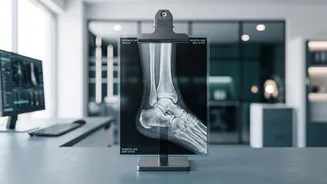
An X-ray is a fast and effective imaging tool primarily used to look at bones. Its main purpose after an injury is to confirm or rule out a fracture, which is a crack or break in the bone. It can identify everything from major breaks to dislocations and joint alignment issues. Sometimes, an injury that feels like a sprain is actually a small or subtle fracture, such as a stress fracture. These are tiny cracks in the bone, often caused by repetitive force or overuse. While some stress fractures don't show up on an initial X-ray, the imaging is still a crucial first step in the diagnostic process to rule out more obvious bone damage.
Understanding an X-Ray's Limitations
While essential for bone issues, an X-ray is not the right tool for every type of injury. X-rays do not clearly show soft tissues like ligaments, tendons, or muscles. This means you can have a severe ligament tear—a significant injury—but your X-ray may come back as 'normal' because the bones are intact. This normal result is still valuable information, as it helps your doctor rule out a fracture. However, it doesn't mean there is no injury. Persistent pain despite a clear X-ray often points to a soft tissue problem that requires a different kind of evaluation.
Beyond the X-Ray: What's Next?
If your X-ray is normal but your pain and symptoms persist, your doctor won't stop there. This is when they might consider other diagnostic tools. An MRI (Magnetic Resonance Imaging) is the gold standard for looking at soft tissues. It provides detailed images of ligaments, tendons, and cartilage, making it excellent for diagnosing sprains, tears, and other issues that X-rays miss. An ultrasound can also be used to examine soft tissues, particularly in smaller joints. Your doctor will use the results of your physical exam and your symptom history to decide if these advanced imaging tests are necessary to get a complete picture of your injury and create the right treatment plan.