
Understanding the Sadya
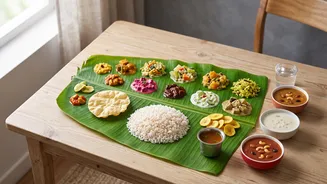
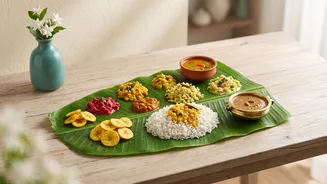
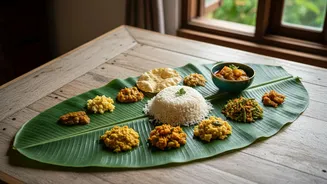
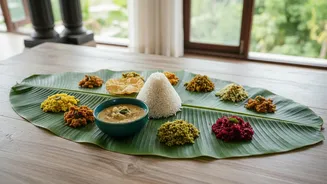
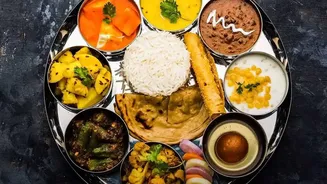
A Sadya, which means banquet in Malayalam, is a vegetarian feast central to Kerala's Onam festival. Served on a banana leaf, it can feature anywhere from a dozen to over 26 dishes, creating a balanced palette of sweet, sour, salty, and spicy flavours.
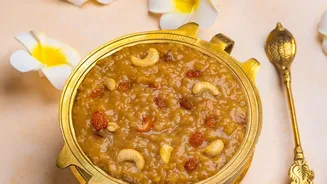
The key is variety, with small portions of numerous dishes served alongside a mound of red rice. The dishes include a range of pickles, dry vegetables, yogurt-based preparations, and several gravies, culminating in a sweet dessert called payasam.
The Essential Dishes
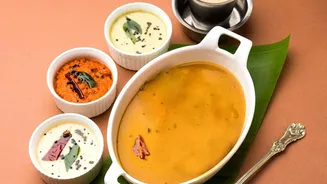
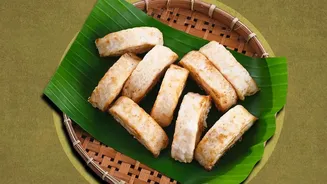
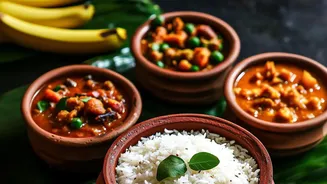
While a Sadya can be extensive, a manageable home version can be built around a few core dishes. Key items include Matta Rice, Parippu (a simple dal curry), and Sambar. No Sadya is complete without Avial, a thick mix of vegetables in a coconut and yogurt gravy. Other staples are Thoran (a dry vegetable stir-fry with coconut), Olan (a mild curry of ash gourd and cowpeas in coconut milk), and Kalan (a sour dish made with yogurt and vegetables like raw banana). Accompaniments like Puli Inji (a sweet and sour ginger pickle), banana chips, and papadam are also must-haves.
Your Three-Day Cooking Plan
The secret to a stress-free Sadya is to spread the work over several days. Don't try to cook everything on Onam morning. Two days before, finalise your menu and do all your grocery shopping for fresh vegetables, coconuts, and other essentials. The day before Onam is for significant prep work. You can chop most of your vegetables and store them in airtight containers. Dishes like Puli Inji and some pickles can be made entirely, as their flavours improve over time. You can also cook the dal for Sambar and Parippu, and prepare the dough for payasam if you're making Ada Pradhaman. On Onam day, focus on the fresh dishes. Start with the ones that take the longest, like Avial and Sambar. Cook the rice last so it can be served hot. The Thoran and other quick stir-fries can be made just before serving. Frying the papadams should be one of the final steps.
A Note on Coconut
Coconut is the star of most Sadya dishes, used grated, ground into a paste, or as coconut milk. To save time, you can grate two or three coconuts the day before and store the shavings in the fridge or freezer. Many dishes like Avial, Thoran, and Pachadi use a similar base paste of coconut, green chillies, and cumin seeds; you can grind this in bulk and divide it among the different preparations to streamline your cooking process.
The Art of Serving
How you serve the Sadya is as important as how you cook it. Traditionally, the meal is served on a banana leaf with the narrow tip pointing to the left of the guest. There's a specific place for each item. Pickles and chips are placed on the top left. The side dishes like Thoran, Avial, and Kalan are arranged across the top half of the leaf from right to left. The main portion of rice is served on the bottom half. The meal begins by pouring Parippu and ghee over the rice, followed by Sambar, and then Rasam. The feast concludes with Payasam, the dessert, which is sometimes mixed with a small banana and crushed papadam.