






The IMF's Core Argument on AI
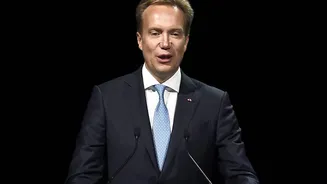
In recent statements, IMF Managing Director Kristalina Georgieva has stressed that without proper safeguards and a strong ethical framework, the risks of AI could outweigh its benefits. Speaking at the annual IMF and World Bank meetings, she framed the issue
as a high-stakes race, comparing the rapid development of AI to a Formula 1 car without safety barriers. The core of the IMF's message is that harnessing AI's immense potential for productivity and growth requires a proactive and collaborative approach. The institution is no longer just observing; it is calling for a global consensus on how to govern a technology that is already creating a major structural shift in the world economy. The IMF warns that if the promised productivity gains from massive AI investments fail to materialize, it could trigger a sharp market correction and financial instability.
Government's Mandate: Guardrails and Safety Nets
According to the IMF, governments have a critical role in setting the 'rules of the road'. This doesn't necessarily mean heavy-handed regulation that stifles innovation. Instead, Georgieva has called for an agile policy approach. The first priority is creating the foundational conditions for AI adoption, which includes investing in reliable digital infrastructure, ensuring access to electricity, and building a skilled workforce. These are areas where developing economies, in particular, risk being left behind, exacerbating global inequality. Secondly, governments must establish strong 'guardrails'. This involves modernizing financial regulations to manage AI-related risks, scaling up cybersecurity defenses, and using existing tools to ensure financial stability. Finally, policymakers must focus on supporting workers through the transition. This means investing in education, reskilling programs, and social safety nets like unemployment insurance to help those whose jobs are displaced by automation.
Industry's Responsibility: Ethical and Collaborative Innovation
While governments set the framework, the tech industry is in the driver's seat of innovation. The IMF acknowledges that public authorities alone cannot keep pace with the rapidly evolving technology, making industry self-regulation a crucial component of governance. This puts the onus on AI developers to embed ethical considerations and safety into their products from the very beginning. This view is shared by some industry leaders, like Anthropic co-founder Jack Clark, who has argued that AI companies should not be the sole arbiters of the technology's future. The IMF's vision calls for a dynamic AI economy where firms can enter and exit the market smoothly, preventing monopolies and fostering competition. This includes private sector collaboration with governments to develop common standards that build public trust and confidence in AI systems.
Forging a United Front for a Stable Future
The ultimate challenge lies in getting government and industry to work in concert. The IMF proposes a hybrid model where industry's deep technical knowledge is paired with government's oversight and public-interest mandate. Georgieva has specifically called for the major AI-producing nations—naming the US, China, and India—to lead the charge in this global conversation. The goal is to create a unified ethical and regulatory foundation before the technology outpaces our ability to control it. This includes everything from bolstering defenses against AI-assisted cyberattacks to reforming tax systems so they don't unfairly favor automation over human labor. The IMF's stance is clear: leaving governance to chance is not an option. A coordinated effort is essential to ensure that AI's economic gains are broadly shared and its risks are effectively managed.