








Building strong, toned thighs doesn't require a gym membership or heavy weights. Two of the most effective exercises—squats and lunges—can be done anywhere using only your bodyweight, forming the foundation of a powerful and sustainable fitness routine.
The Power of Foundational Movements
In the world of fitness, it is easy to get distracted by complex routines and expensive equipment. Yet, the secret to building functional strength often lies in mastering the basics. Bodyweight exercises like squats and lunges are foundational movements that translate directly to daily activities, from lifting groceries to climbing stairs. They are compound exercises, meaning they work multiple muscle groups at once, including the quadriceps, hamstrings, and glutes. This makes them incredibly efficient for strengthening your entire lower body. Furthermore, training with your own bodyweight is accessible, cost-effective, and carries a lower risk of injury, making it a perfect starting point for beginners and a reliable staple for advanced athletes.
Mastering the Bodyweight Squat
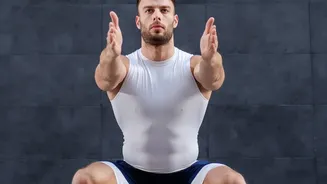
The squat is often called the king of lower-body exercises, and for good reason. To perform a bodyweight squat correctly, start by standing with your feet about shoulder-width apart, with your toes pointing slightly outward. Keep your chest up and your back straight as you begin the movement by hinging at your hips and then bending your knees, as if you are sitting back into a chair. Lower yourself until your thighs are at least parallel to the floor, ensuring your weight is distributed evenly through your feet, not just on your toes. A common mistake is allowing the knees to collapse inward; actively think about keeping them aligned with your feet. Another error is rounding your chest forward, which puts stress on your lower back. Keep your core engaged throughout the entire movement to maintain a stable spine. Push through your heels to return to a standing position.
The Art of a Perfect Lunge
Lunges introduce a unilateral challenge, working one leg at a time. This is excellent for improving balance, coordination, and identifying strength imbalances between your left and right sides. To execute a forward lunge, stand with your feet together. Take a controlled step forward with one leg, lowering your hips until both knees are bent at approximately a 90-degree angle. Your front knee should be directly above your ankle, and your back knee should hover just above the floor. A frequent error is stepping one foot directly in front of the other, as if on a tightrope, which compromises stability. Instead, imagine you are on train tracks, keeping your feet hip-width apart as you step. Keep your torso upright and your core engaged to prevent leaning too far forward or backward. Drive through the heel of your front foot to push yourself back to the starting position.
Progressing to Build Strength
Once you have mastered the basic forms, the key to building stronger thighs is progressive overload. With bodyweight training, this doesn't mean lifting heavier; it means making the exercises more challenging over time. You can do this by increasing your volume—adding more repetitions or sets to your workout. Another method is to manipulate the tempo; try slowing down the lowering (eccentric) phase of a squat or lunge to four seconds, which increases time under tension and builds muscle control. You can also introduce variations. For squats, try a Sumo Squat with a wider stance to target the inner thighs or an explosive Jump Squat to build power. For lunges, a Reverse Lunge is often easier on the knees, while Walking Lunges add a dynamic balance challenge.
How to Build a Consistent Practice
The most effective workout plan is the one you stick with. Building a practice is about consistency, not intensity. Start small and set realistic goals, like committing to 10–15 minutes of exercise three times a week. Research shows that short, regular workouts can be just as effective as longer, infrequent ones. One of the best ways to form a habit is to 'stack' it onto an existing routine. For example, do a set of squats while your morning coffee brews or perform lunges right after you get home from work. Scheduling your workouts like appointments can also increase your commitment. Remember to listen to your body and incorporate rest days. The goal is to build a sustainable habit that feels like a natural part of your life, not a chore.