





From Hours to Seconds
Not long ago, creating a visual prototype—a preliminary model of a website, app interface, or brand logo—was a meticulous, multi-step process. It involved research, hand-drawn sketches, digital wireframes, and sourcing inspiration for mood boards. This
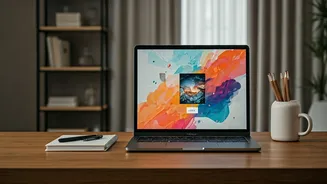
foundational work could take hours, if not days, before a client ever saw a concrete idea. Today, that timeline is collapsing. The rise of generative AI tools like Midjourney, Adobe Firefly, and integrated features within platforms like Figma has introduced the era of the 'instant prototype'. By typing a simple text prompt, a designer can now conjure dozens of high-fidelity visual concepts in seconds. A prompt like, “A minimalist mobile app interface for a sustainable coffee brand, using earthy tones and clean typography,” can yield a wealth of starting points that would have previously required a full day's work.
The New Creative Workflow
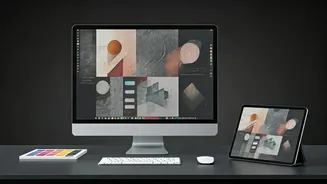
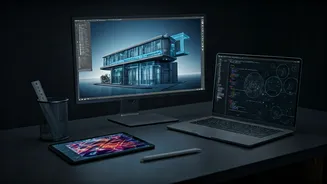
This technological leap is fundamentally reshaping the designer's role and daily workflow. The focus is shifting away from manual execution and towards strategic direction. Instead of painstakingly drawing every element, the modern designer acts more like a creative director, guiding an AI assistant to explore possibilities. Their expertise is now channelled into crafting the perfect prompt, curating the best AI-generated options, and refining those outputs with a trained eye. This new process is less about 'how to make' and more about 'what to make'. The designer's value is increasingly found in their ability to articulate a vision, understand brand strategy, and identify the most effective visual solution from a sea of AI-generated options. The keyboard, armed with a well-worded prompt, is becoming as mighty as the digital pen.
More Than Just Speed
The primary benefit isn't just about saving time; it's about expanding creative horizons. With the ability to generate countless variations rapidly, designers can explore more diverse and unconventional ideas that might have been too time-consuming to pursue manually. This accelerates the feedback loop with clients and stakeholders, allowing for more collaborative and iterative development from the very beginning. For businesses in India's fast-paced startup ecosystem, this is a game-changer. It means getting a product's look and feel tested faster, iterating on user feedback more efficiently, and bringing a polished brand identity to market quicker than ever before. Furthermore, it democratises the initial stages of design, allowing marketing managers or startup founders to visualise their ideas without deep technical design skills, facilitating better communication with their creative teams.
The Irreplaceable Human Element
Naturally, this rapid transformation has sparked anxiety within the creative community about job replacement. However, the consensus among industry leaders is that AI is an augmentation tool, not an autonomous creator. An AI can generate a beautiful image, but it cannot understand a client's business goals, empathise with a target user's needs, or build a cohesive brand strategy. These core skills—critical thinking, problem-solving, storytelling, and taste—remain firmly in the human domain. The AI provides the 'what' (the visuals), but the designer provides the 'why' (the strategy and intent). A machine can create a dozen logos, but only a human designer can discern which one truly captures a brand's soul and will resonate with its intended audience. The tools are powerful, but the wisdom to wield them effectively is what now defines a great designer.
Challenges and the Road Ahead
This new paradigm is not without its challenges. The ethics of AI models trained on vast datasets of existing art without artist consent remain a contentious issue. There's also the risk of stylistic homogenisation, where an over-reliance on popular AI tools could lead to a world of visually similar designs. For creatives, the pressure is on to continuously upskill. Mastering 'prompt engineering' and learning how to integrate AI into a human-centric design process are becoming essential survival skills. The graphic design field isn't disappearing; it's evolving. The designers who will thrive in the coming years will be the ones who embrace these tools as powerful collaborators, using them to amplify their own strategic thinking and creative intuition rather than fearing them as replacements.