






What Exactly Is Cool-Roof Paint?
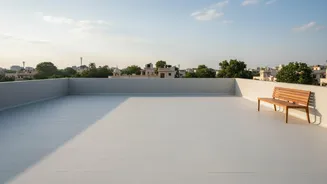
Cool-roof paint, often called reflective or heat-resistant paint, is a specially formulated coating designed to reflect more sunlight and absorb less heat than a standard roof. Think of wearing a white shirt on a sunny day instead of a black one. The
principle is the same. While regular dark-coloured roofs can absorb up to 90% of solar energy, these advanced coatings are engineered with pigments that reflect a high percentage of the sun's rays, particularly the infrared radiation that generates heat. This means the roof surface itself stays significantly cooler, preventing that heat from transferring into the rooms below. Cities like Ahmedabad have pioneered cool-roof initiatives as part of their Heat Action Plans, demonstrating the technology's effectiveness in real-world urban environments.
The Science of a Cooler Home
The effectiveness of cool-roof paint is measured by two key properties: solar reflectance and thermal emittance. Solar reflectance is the ability to reflect sunlight, while thermal emittance is the ability to radiate absorbed heat away. High-performance cool paints excel at both. By bouncing a majority of solar radiation back into the atmosphere, the roof's surface temperature can be drastically reduced—in some cases by up to 30°C compared to a traditional black roof. This dramatic drop in surface temperature is the primary reason for a cooler interior, as there is simply less heat to penetrate through the ceiling into your living space. This makes it a powerful tool in mitigating the 'urban heat island' effect, where cities become significantly warmer than surrounding rural areas.
A Four-Degree Drop: Fact or Fiction?
The headline's claim of a four-degree drop is well within the range of possibilities reported by various studies. Research and real-world applications in Indian cities and globally have shown that cool roofs can lower indoor temperatures by anywhere from 2°C to 7°C. A study in Ahmedabad's urban slums found that solar reflective white paint was effective in reducing indoor temperatures. Similarly, a program in the city demonstrated that cool roofs can lead to indoor temperature drops of 4°C to 6°C. However, the exact reduction depends on several factors, including your home's existing insulation, roof material, local climate, and the quality of the paint used. For top-floor apartments or homes with direct, unshaded sun exposure, the cooling effect is often most noticeable.
Beyond Temperature: The Added Benefits
The advantages of applying cool-roof paint extend beyond just feeling more comfortable. The most significant secondary benefit is energy savings. By lowering indoor temperatures, the reliance on air conditioners and fans decreases, which can lead to a 15-30% reduction in cooling-related electricity costs. This not only saves money but also reduces your household's carbon footprint. Furthermore, by shielding the roof from extreme thermal stress—the expansion and contraction caused by intense heating and cooling cycles—these coatings can protect the roof from developing cracks and extend its overall lifespan. Some variants of these paints also offer excellent waterproofing, providing an additional layer of protection during the monsoon season.
Cost, Application, and What to Look For
The upfront cost of cool-roof paint is higher than standard exterior paint, with prices for a 20-litre bucket generally ranging from ₹2,000 to ₹4,000, depending on the brand and specific technology (e.g., acrylic, elastomeric). However, considering the potential energy savings, many homeowners find that the investment pays for itself within two to three years. When choosing a product, look for its Solar Reflectance Index (SRI) value on the label; a higher SRI (ideally 95 or above) indicates better performance. The application is straightforward and similar to regular painting, but proper surface preparation—cleaning the roof of all dust, debris, and loose material—is crucial for ensuring the paint adheres properly and performs effectively for years to come.