




Sinhagad Fort, Maharashtra
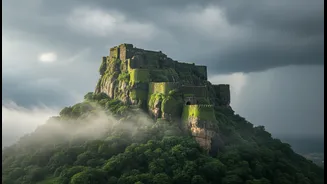
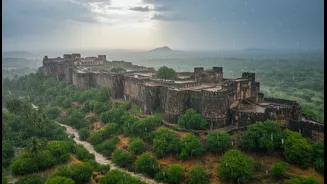
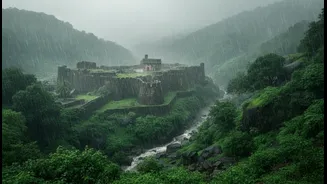
A classic monsoon destination for anyone in or near Pune, Sinhagad Fort becomes a trekker's paradise when the rains arrive. Located about 35 km from the city, the drive itself is a scenic journey past the swelling waters of Khadakwasla Dam. The fort,
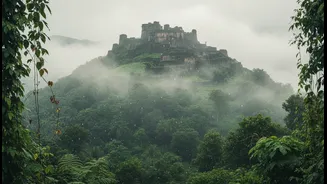
perched 1,312 metres high in the Sahyadris, is often completely enveloped in clouds, making a walk through its historic gates and ruins feel like stepping into another world. The experience is as much about the journey as the destination, with the climb offering spectacular views of the green valley below. Once at the top, the real reward is finding a small stall and enjoying hot Kanda Bhaji (onion fritters) and chai while the wind and mist swirl around you. It’s a quintessential Maharashtrian monsoon experience.
Sajjangarh (Monsoon Palace), Rajasthan
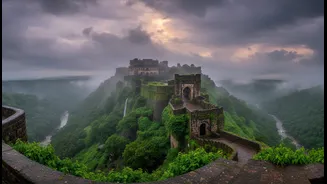
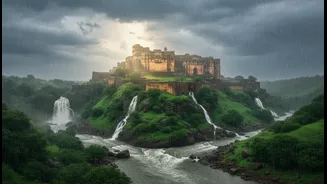
As its name suggests, the Monsoon Palace in Udaipur was built specifically to watch the monsoon clouds. Perched high on a hill in the Aravalli range, this white marble palace offers breathtaking panoramic views of Udaipur's lakes and the surrounding countryside. During the rainy season, the palace is often wrapped in mist, giving it an ethereal quality. The drive up the winding hill road is an adventure in itself, leading you to a vantage point where the parched summer landscape is transformed into a sea of lush green. While Rajasthan is known for its arid climate, Udaipur during the monsoon is a different world, and Sajjangarh offers the best seat in the house to witness this dramatic seasonal change.
Mandu, Madhya Pradesh
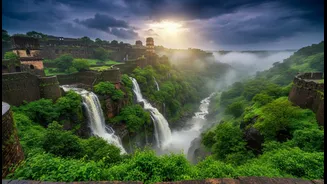
Mandu is not just a single fort but an entire ruined city that comes alive in the monsoon, earning it the name 'Shadiabad' or 'City of Joy'. Located in the Vindhya Range, this historic citadel is dotted with magnificent palaces, mosques, and tombs. During the rains, its reservoirs like Rewa Kund fill to the brim, and structures like the Jahaz Mahal (Ship Palace) appear to float between two artificial lakes. The landscape transforms into a carpet of vibrant green, making the drive from nearby Indore (about 100km away) incredibly scenic. The romance of Mandu is rooted in the legendary tales of Baz Bahadur and Rani Roopmati, whose pavilion offers stunning views of the valley—a view that is at its most poetic when drenched in rain.
Lohagad Fort, Maharashtra
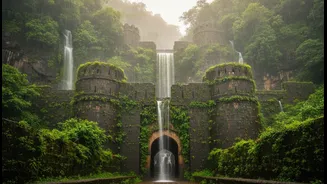
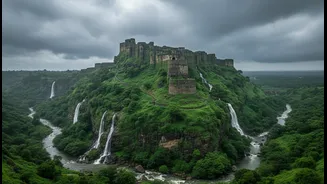
Another gem in the Sahyadris near Lonavala, Lohagad Fort is one of the most popular and accessible monsoon treks from both Mumbai and Pune. Its name means 'Iron Fort', and its history is deeply connected with the Maratha Empire. What makes it a monsoon favourite is the transformation of its trail; the path comes alive with small, gushing waterfalls and lush vegetation. The fort's famous 'Vinchu Kata' or 'Scorpion's Tail'— a long, fortified spur—offers dramatic, misty views of the Pawna Dam backwaters. The relative ease of the trek makes it perfect for beginners and families, offering a high-reward experience of panoramic views and rain-soaked history without an overly strenuous climb.
Gingee Fort, Tamil Nadu
While many monsoon destinations are clustered in the Western Ghats, Gingee Fort in Tamil Nadu offers a spectacular southern alternative. Known as the 'Troy of the East' for its impressive fortifications, this sprawling complex is spread across three hills: Rajagiri, Krishnagiri, and Chandrayandurg. The fort's massive walls, granaries, and temples create a surreal landscape that becomes even more picturesque when the surrounding plains turn green during the rains. The climb up Rajagiri is rewarding, offering panoramic views and a sense of discovery among the ancient ruins. Less crowded than many other monsoon hotspots, Gingee provides a unique road trip opportunity from Chennai or Puducherry for those wanting to mix history with dramatic, rain-washed scenery.