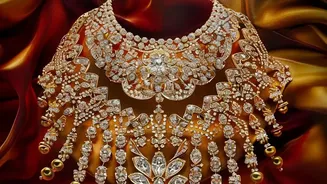








The festive season brings with it the auspicious tradition of buying gold. While the price of gold is non-negotiable, the making charges are not. This hidden cost is where a smart buyer can find significant savings, turning a good purchase into a great
one.
Understanding Making Charges
Before you can negotiate, you need to know what you're negotiating. Making charges are the costs associated with turning raw gold into a piece of jewellery. This includes the designer's fee, the artisan's labour, and other manufacturing overheads. Jewellers calculate this in two main ways: as a percentage of the gold's value or as a flat rate per gram. These charges can range from as low as 3% for simple, machine-made items to over 30% for intricate, handcrafted designs. Since these charges are not recovered upon resale, reducing them is key to a smarter purchase.
Do Your Homework Before Shopping
Knowledge is your best bargaining tool. Before you visit a store, research the typical making charges for the type of jewellery you want. Large brands often have fixed charges, but many independent and family-run jewellers have more flexibility. Compare the rates at a few different stores. This not only gives you a baseline but also provides leverage. When a jeweller knows you've done your research, they are more likely to offer a competitive price. Don't be shy to mention a better offer you've seen elsewhere.
Machine-Made vs. Handcrafted Jewellery
The way a piece is made significantly impacts its making charges. Ornate, handcrafted jewellery requires specialised skill and more time, leading to higher charges, often starting from 15-20%. On the other hand, simple, machine-made items like basic chains or bangles have much lower making charges, sometimes as low as 3-8%. While you might love a complex design, be aware that the room for negotiation on its making charges might be smaller compared to a machine-produced piece.
Leverage Festive Offers and Timing
Festive seasons are flooded with offers like 'flat 50% off on making charges' or even 'zero making charges'. While tempting, read the fine print. These offers might only apply to select items or have minimum purchase conditions. However, you can use these promotions to your advantage. Use a competitor's offer as a starting point for your negotiation. Furthermore, try to shop on a weekday or during off_peak hours when stores are less crowded. A salesperson with more time is more likely to engage in a negotiation.
The Art of a Good Negotiation
When you're ready to buy, be polite but firm. The price of gold itself is fixed, so focus your negotiation entirely on the making charges. Instead of asking for a discount on the final bill, specifically ask for a reduction in the making charge percentage or the flat rate per gram. If you are buying multiple items or a heavy piece, you have greater leverage. Don't hesitate to ask for their 'best and final offer' on the making charges. Even a small percentage reduction can lead to substantial savings on a large purchase.
Always Check the Final Bill
Once you've agreed on a price, insist on a detailed, itemised bill. The invoice should clearly list the gold's weight and purity (karat), the per_gram gold rate, the making charges, and the GST applied to both. The GST on gold value is 3%, while on making charges it can be 5%, so a clear breakup is crucial. Also, ensure the bill has the BIS hallmark and the 6_digit HUID (Hallmark Unique Identification) number, which certifies the gold's purity. This transparency not only ensures you got the deal you negotiated but also serves as a crucial document for future resale or exchange.