



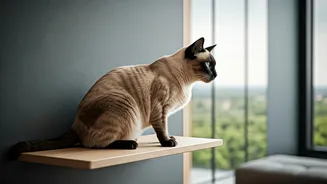


Why Your Cat Needs to Climb
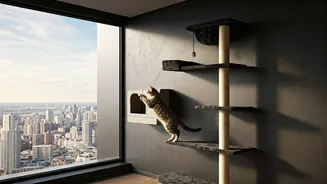
Cats are, by nature, vertical creatures. In the wild, their ancestors climbed trees to survey their territory, escape predators, and hunt prey. This instinct hasn't disappeared just because they now live in your apartment. Providing vertical space isn't
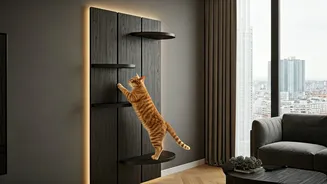
a luxury; it's a fundamental part of feline environmental enrichment. A bored, under-stimulated cat is often a destructive or anxious one. Scratching furniture, excessive meowing, or listlessness can all be signs that your cat needs more engagement. By giving them a way to climb, perch, and explore, you are speaking their natural language and providing a crucial outlet for their innate behaviours.
Introducing the Cat Superhighway
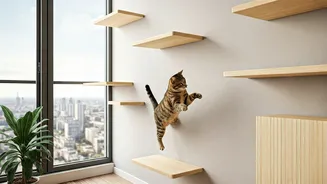
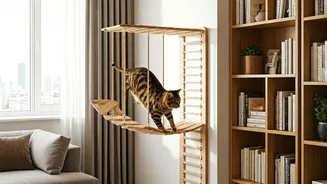
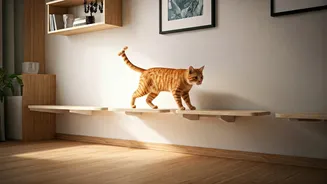
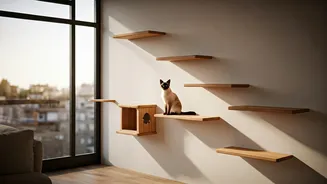
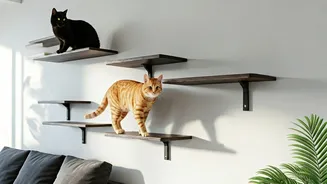
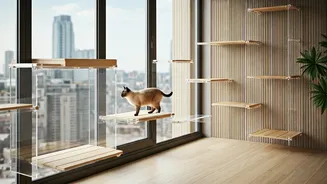
Forget the single, carpeted cat tree in the corner. Multi-tiered hanging walkways, often called 'cat superhighways', are a series of shelves, bridges, and perches mounted on the walls. They create an elevated network that allows your cat to navigate a room without ever touching the floor. This architectural approach to pet care transforms unused wall space into a dynamic, three-dimensional playground. It expands your cat’s perceived territory exponentially, which is especially vital in smaller homes and apartments. For multi-cat households, it also provides crucial escape routes and separate vantage points, helping to reduce conflict and territorial stress between feline residents.
Planning Your Vertical World
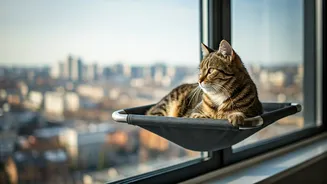
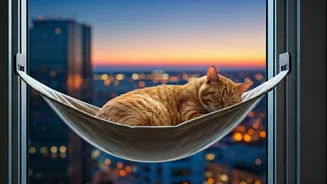
Before you start drilling, think like a cat. The best systems have a logical flow. They should connect key areas of interest, like a favourite window perch, a comfy napping spot, or a path that lets them 'supervise' you in the kitchen. Start with a simple sketch of the room. Identify studs in the wall for secure mounting. Consider the 'launch' and 'landing' points—how will your cat get up and down? A low shelf, the arm of a sofa, or a sturdy cat tree can serve as an access point. Ensure the spacing between shelves is manageable for your cat’s age and agility; a younger cat can leap further, while a senior might need a more step-like progression.
Safety is Non-Negotiable
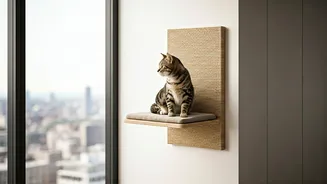
An exciting cat highway is only successful if it’s safe. The most critical factor is secure installation. Always mount shelves and brackets directly into wall studs, not just the drywall. If you can't find a stud, use heavy-duty wall anchors specifically rated to hold significant weight—remember, a cat landing on a shelf exerts more force than one just sitting there. The surface of the shelves is also important. Slick, painted wood can be slippery. Consider adding a non-slip surface, like a thin layer of carpet, cork, or sisal rope, to provide grip. Check all components regularly to ensure they remain tightly secured to the wall.
DIY vs. Store-Bought Systems
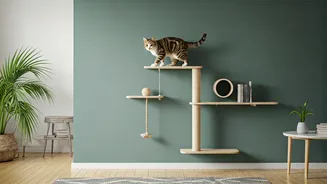
You have two main paths to creating your cat's aerial playground: DIY or purchasing a pre-made system. The DIY route offers maximum customisation and can be more budget-friendly if you're handy with tools. Simple wooden planks from a hardware store, sturdy L-brackets, and some carpet remnants can be transformed into a bespoke creation. However, if you lack the time or skills, many companies now offer beautiful, modular systems. These often feature sleek designs, from minimalist floating shelves to whimsical rope bridges, and come with all the necessary hardware and instructions. While more expensive, they provide a polished look and the peace of mind that comes with professional design and engineering.