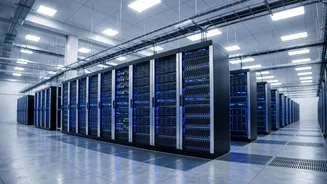







India is in the midst of an unprecedented data centre construction boom, fuelled by a digital-first economy and the global AI race. But this ambition is facing a colossal hurdle: the country's power grid is straining to keep up.
The Scale of the Digital Dream
India's data centre market
is expanding at a breakneck pace. Capacity is projected to triple from around 1.6 GW in mid-2026 to 6 GW by 2029, making it Asia's fastest-growing digital infrastructure market. Bolstered by government incentives and staggering investment commitments—exceeding $200 billion—global and domestic giants are racing to build massive facilities across the country. This growth is driven by rising cloud adoption, data localisation policies, and a surge in digital services. The operational capacity is on track to hit 2 GW by the end of 2026 alone, a significant milestone reflecting the market's rapid maturation. This expansion is no longer confined to major hubs like Mumbai and Chennai; it's a nationwide push to build the backbone of a trillion-dollar digital economy.
The AI Power Paradox
The single biggest accelerator—and complication—in this story is Artificial Intelligence. AI workloads are profoundly power-intensive. A single server rack designed for AI can consume anywhere from 50 to 150 kilowatts (KW) of power, compared to just 10-15 KW for a traditional server rack. A simple query on an AI model like ChatGPT, for instance, can use nearly ten times the energy of a standard Google search. This immense power draw from graphics processing units (GPUs) that run 24/7 means that new AI-ready data centres are creating a demand profile that the grid was not designed for. The Power Ministry recently told Parliament that AI data centres alone could add over 26 GW of demand to the national grid by 2032, a figure that nearly doubled previous estimates and highlights the urgency of the situation.
A Grid Under Unprecedented Strain
India's power grid, which is already working to meet record demand from industry and consumers, faces a monumental task. The primary bottleneck has shifted from acquiring land to securing reliable, scalable power. The constant, high-level demand from data centres puts pressure on transmission and distribution networks, especially in concentrated hubs like Mumbai, Chennai, Hyderabad, and Delhi NCR. Experts warn that existing sub-transmission infrastructure often isn't capable of handling the massive, concentrated loads of new hyperscale facilities, requiring new high-capacity corridors and substations. Furthermore, the fluctuating nature of AI computing loads adds a layer of unpredictability, making it difficult for grid operators to forecast demand and maintain stability.
The Search for Sustainable Solutions
To power this digital expansion sustainably, all eyes are on renewable energy. Data centre operators are increasingly looking to sign longterm power purchase agreements (PPAs) for solar and wind energy to meet their needs and corporate climate goals. The renewable capacity required to power India's data centres is expected to double by 2030. Companies are exploring onsite solar, groupcaptive models, and windsolar hybrid projects to ensure a steady supply of green power. However, this transition is not without its own challenges. The intermittent nature of renewables requires significant investment in energy storage solutions and grid modernisation to guarantee the uninterrupted, 24/7 power that data centres require.
Policy and the Path Forward
Recognising the growing tension, the Indian government has announced plans for a dedicated national data centre policy. The goal is to manage the sector's explosive growth without putting upward pressure on electricity prices for residential consumers. While several states have their own policies offering incentives like cheaper power and tax breaks, a national framework could standardise regulations for energy, water usage, and facility siting. Ideas being discussed include encouraging the development of data centre parks near renewable energy sources to ease strain on urban grids. This forwardlooking strategy, combining energy planning with digital infrastructure expansion, will be crucial for India to realise its ambitions without overloading its most critical infrastructure.