





What Is the 'Base Movement'?
Think of your body as a building. Before you can add complex architecture, you need a rock-solid foundation. In fitness, this foundation is your ability to control 'base movements'. This refers to your mastery of fundamental human movement patterns: squatting,
hinging at the hips, pushing, pulling, lunging, and carrying. These are actions we perform daily, like getting out of a chair (squat) or picking something up (hinge). More importantly, the base relates to what physical therapists call 'proximal stability'—the strength and control of your core, which includes your spine, pelvis, and ribcage. This central hub is where all powerful and precise movement originates. A stable core provides a sturdy platform from which your limbs can operate effectively and safely.
Understanding 'Instability' in Exercise
Instability, in this context, is anything that challenges your balance and control during an exercise. This could mean performing a movement on an unstable surface like a BOSU ball, a stability disc, or even just standing on one leg. It also includes adding complexity, such as performing a unilateral (single-arm or single-leg) exercise, which creates a rotational force your core must resist. The goal of adding instability is often to increase the activation of smaller, stabilizing muscles and make an exercise more 'functional'. While this can be beneficial, it dramatically increases the exercise's difficulty and the demand on your neuromuscular system. Your brain and muscles have to work much harder just to keep you from falling over, let alone perform the movement with good form.
The 'Why': Proximal Stability for Distal Mobility
The rule to control the base before adding instability is rooted in a key biomechanical principle: proximal stability for distal mobility. This means that for your limbs (distal parts, like arms and legs) to move freely and powerfully, your core (proximal part) must be strong and stable. Think about throwing a ball. The power doesn't just come from your arm; it starts in your feet, travels through your stable hips and trunk, and is then transferred to your shoulder and hand. If the core is weak or wobbly—like a loose cannon—that energy transfer is inefficient. Your body is forced to compensate, leading to poor performance, and worse, a higher risk of injury. Your brain is hardwired for safety; it instinctively craves this central stability as a protective mechanism. Without it, movement becomes uncoordinated, and the body cannot produce force effectively.
Practical Application: Build, Then Balance
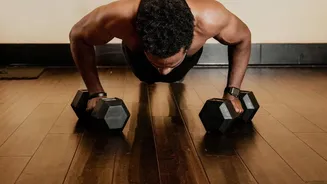
Putting this principle into practice means being honest about your current abilities. It's about earning the right to progress. Before you try a pistol squat on a wobble board, can you perform a perfect bodyweight squat on flat ground? Before attempting push-ups on gymnastic rings, have you mastered standard push-ups? The progression is logical. First, establish control over the basic movement pattern on a stable surface. Focus on form, control, and engaging the correct muscles. Exercises like planks, bird-dogs, and dead bugs are excellent for building foundational core stability that resists unwanted movement. Once you can consistently perform a movement well, you can begin to introduce small, controlled elements of instability. This might mean progressing from a two-legged squat to a split squat, or from a floor plank to a plank with your feet on a low bench. This methodical approach ensures your body has the prerequisite stability to handle the increased challenge safely.
Are You Skipping the Foundation?
Many non-contact injuries in sports and fitness stem from breakdowns in movement mechanics and muscular imbalances—both symptoms of a weak foundation. Chasing flashy, difficult exercises without mastering the basics is like building a house on sand. It might look impressive for a moment, but it's unsustainable and risky. True athleticism and long-term fitness are not just about raw strength, but about control, coordination, and resilience. By focusing on stability first, you aren't limiting yourself; you are making a long-term investment in your body's performance and durability. You build a system that can handle stress, adapt to new challenges, and perform better not just in the gym, but in every aspect of your life.