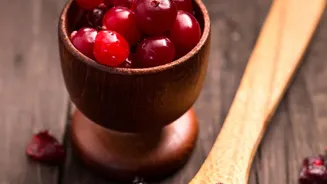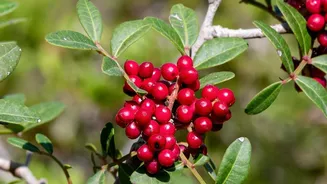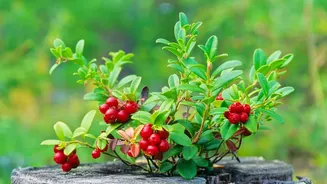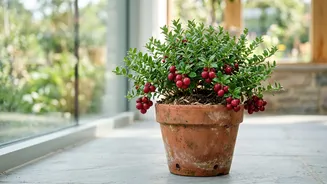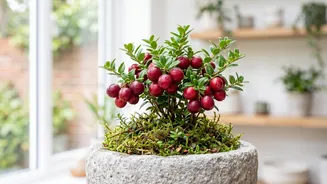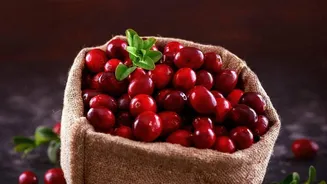

Growing your own cranberries offers a rewarding challenge and a taste of the tart, festive berries straight from home. While often associated with sprawling bogs, cultivating them indoors in containers is entirely possible with the right care.
Understanding Your Cranberry Plant
Before you
begin, it’s important to know that the common cranberry, 'Vaccinium macrocarpon', is a unique plant with very specific needs. Unlike many houseplants, it’s a low-growing, woody perennial vine that thrives in acidic conditions, similar to its relatives, the blueberry and lingonberry. These plants spread via runners and produce fruit on short, vertical stems called uprights. While commercial growers famously flood their bogs for harvesting, this is not a requirement for growth; they do not grow underwater but simply need consistent moisture. For indoor growing, focus on replicating their key needs: intense light, acidic soil, and a cool dormancy period.
The Critical Need for Bright Light
Cranberries are sun-loving plants. For healthy growth and, most importantly, fruit production, they need the equivalent of full sun. Indoors, this means providing at least six to eight hours of direct, bright light each day. The ideal spot is near a south-facing window. If you cannot provide this much natural sunlight, a grow light is essential. A strong, full-spectrum LED light will ensure the plant gets the intensity it needs to photosynthesize effectively and develop flowering buds. Without adequate light, your cranberry vine may survive as an attractive green plant but will likely fail to produce any berries.
The Right Container and Acidic Soil
Cranberries have shallow root systems, so the width of the container is more important than the depth. Choose a pot, trough, or window box that is at least 12 inches wide to give the runners room to spread. Proper drainage holes are non-negotiable to prevent root rot. The most critical element is the soil. Cranberries demand highly acidic soil with a pH between 4.0 and 5.5. Standard potting or garden soil is too alkaline and will prevent the plant from absorbing nutrients. You must use a mix specifically for acid-loving plants, or create your own by combining peat moss with coarse sand or perlite. A self-watering pot can be an excellent choice to maintain consistent moisture without waterlogging the soil.
Watering, Humidity, and Feeding
These plants need consistently moist soil, but they should not be left sitting in soggy conditions. Water regularly to ensure the top few inches of the soil never dry out completely. A key tip is to use rainwater or distilled water if possible. Tap water is often alkaline and can slowly raise the soil's pH over time, harming the plant. Cranberries also appreciate higher humidity. For feeding, use a balanced, slowrelease fertilizer formulated for acidloving plants in the spring. Be careful not to overfertilize, as this can encourage excessive runner growth at the expense of fruitproducing uprights.
Simulating a Winter Dormancy
This is often the most challenging part of growing cranberries indoors. To produce flowers and fruit, the plant needs a cold dormancy period. It requires approximately three months of temperatures between $0°C$ and $7°C$ ($32°F$ to $45°F$). Without this chilling period, the plant will not set buds for the following season. To achieve this, you will need to move your potted cranberry to an unheated garage, a cold basement, or a protected spot outdoors during the winter. The leaves will turn a reddishbrown, which is a normal part of its dormant phase. Once spring arrives and temperatures rise, you can bring it back to its sunny indoor spot.
Pollination and Awaiting Your Harvest
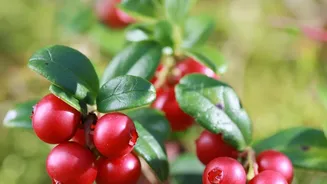
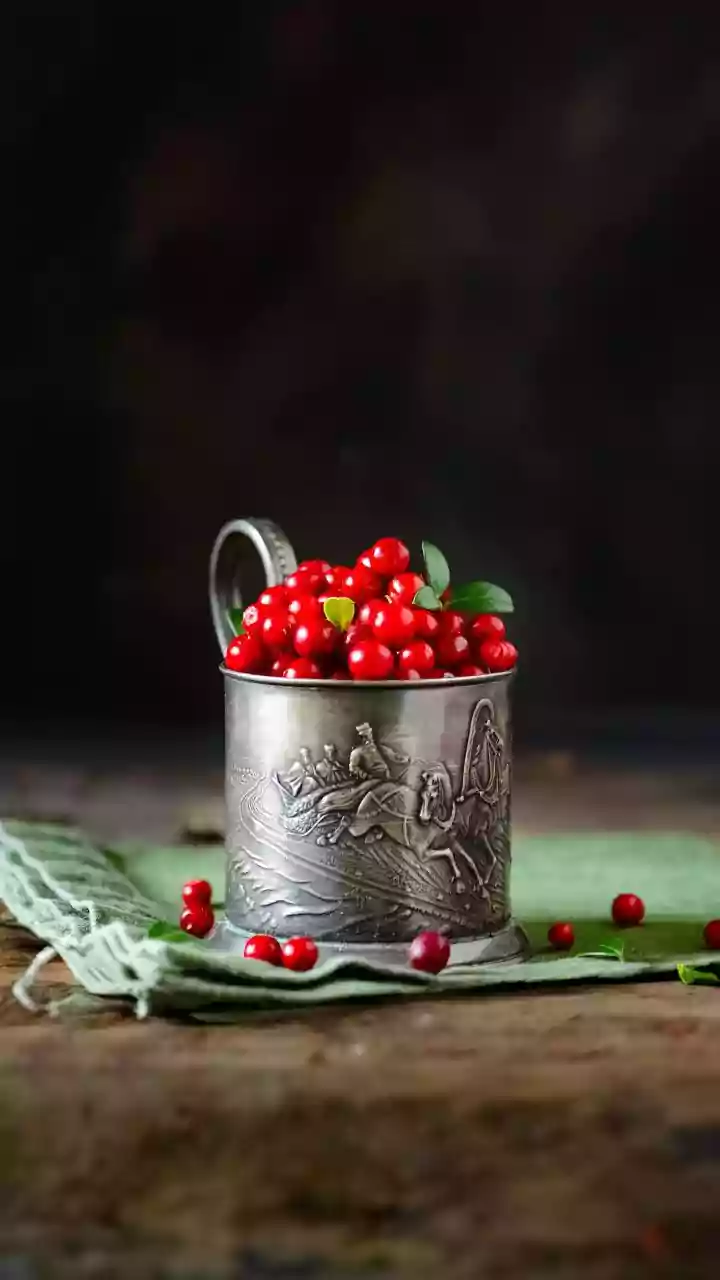
Outdoors,_bees'_and'_other'_insects'_take'_care'_of'_pollinating'_the'_small,_pinkish'_cranberry'_flowers'_that'_appear'_in'_late'_spring._Indoors,_you'll'_have'_to'_play'_the'_role'_of'_the'_bee._When'_the'_flowers'_open,_you'_can'_gently'_transfer'_pollen'_using'_a'_small,_soft'_paintbrush'_or'_a'_cotton'_swab._Lightly'_dab'_the'_inside'_of'_each'_flower'_over_'a_'period_'of_'several_'days_'to_'ensure_'pollination_'occurs._Be_'patient,_as_'it_'may_'take_'two_'to_'three_'years_'for_'a_'new_'plant_'to_'become_'established_'enough_'to_'produce_'a_'significant_'harvest._The_'berries '_'will '_'form '_'over '_'the '_'summer '_'and '_'be '_'ready '_'to '_'pick '_'in '_'the '_'autumn '_'when '_'they '_'have '_reached '_a '_deep,_ rich red colour.'