



The Case for Robots: Our Tireless Martian Scientists
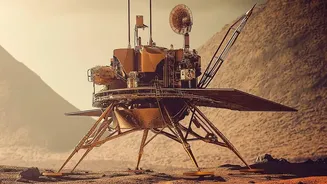
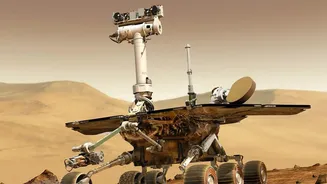
For decades, robotic explorers have been our eyes, ears, and hands on the Red Planet. From the pioneering Spirit and Opportunity rovers to the advanced Curiosity and Perseverance, these machines are marvels of engineering. They can operate for years,
even decades, in a hostile environment without needing food, water, or a return ticket. Just this month, on October 11, 2026, the Perseverance rover broke the all-time off-world driving record, having traveled over 45 kilometers on the Martian surface since landing in 2021. These rovers have fundamentally changed our understanding of Mars, confirming it once had long-standing water and discovering complex organic molecules, which are key ingredients for life. They are our scientific vanguards, tirelessly collecting data and paving the way for future exploration.
The Robotic Advantage: Cost and Safety
The arguments for robots become even stronger when you consider cost and safety. Sending a robotic mission like Perseverance costs under $3 billion. In contrast, estimates for a crewed mission to Mars soar into the hundreds of billions, with some figures suggesting up to $600 billion. This is because humans are fragile. They require a bubble of Earth to survive: a heavy, complex life-support system providing air, water, and food for a journey that could take up to three years. Furthermore, deep space is filled with dangerous radiation, and the long-term effects of microgravity on the human body are a serious concern. Robots, on the other hand, can be built to withstand these harsh conditions, making them a much safer and more economical choice for initial exploration.
The Human Edge: Adaptability and Speed
Despite the undeniable success of rovers, they have significant limitations. They are incredibly slow; NASA's Curiosity rover has a top speed of about 0.14 kilometers per hour. A human geologist could accomplish in a few days what it takes a rover months or even a year to do. Humans possess an unparalleled ability to adapt, problem-solve, and respond to the unexpected. An astronaut can navigate tricky terrain that would trap a rover, use tools in creative ways, and make intuitive leaps based on what they see in real-time. This on-the-spot decision-making and versatility are things even the most advanced AI cannot replicate. When the InSight lander's drill got stuck, it took mission controllers months of careful commands to work on a solution; a human with a simple tool could have fixed it in minutes.
A Partnership, Not a Rivalry
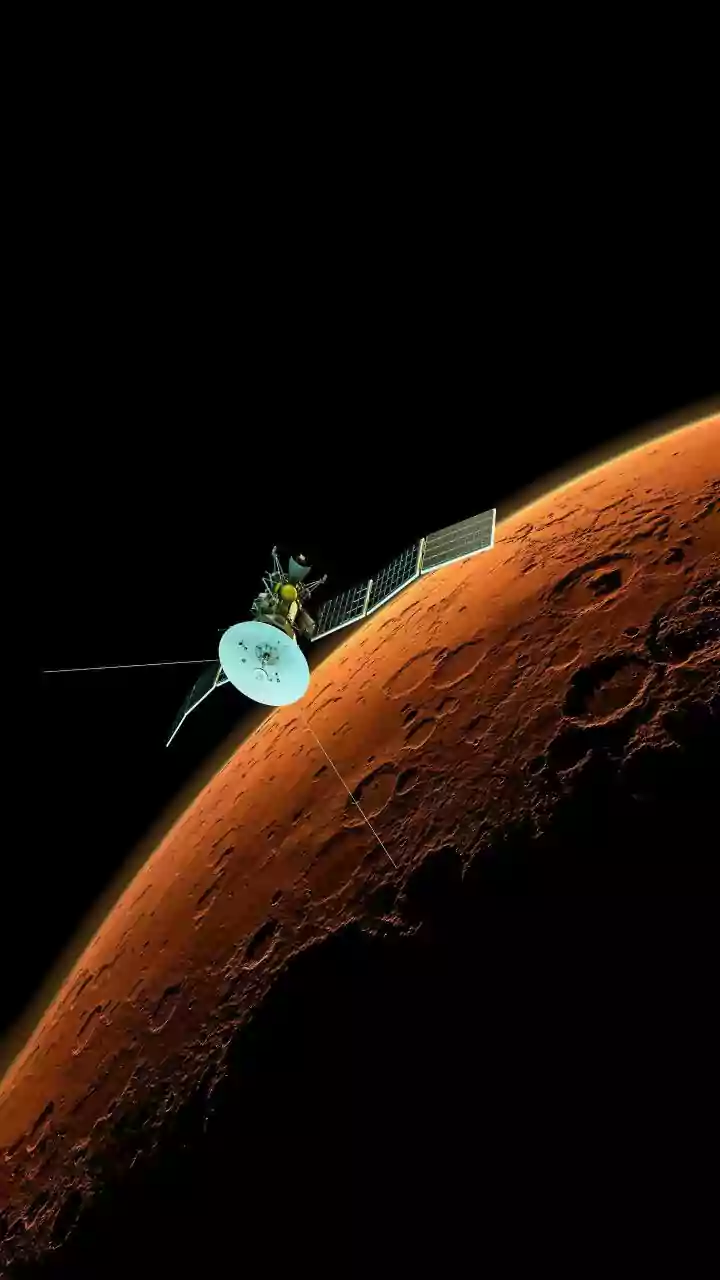
Ultimately, the debate isn't about choosing one over the other. The future of Mars exploration is a partnership. Robotic missions are essential precursors that de-risk and inform future human landings. They map the terrain, analyze the atmosphere, search for resources like water ice, and test key technologies, such as MOXIE's ability to generate oxygen from the Martian atmosphere. NASA's Artemis program, which aims to return humans to the Moon, is explicitly a testing ground for the technologies and procedures needed to eventually send astronauts to Mars in the 2030s. The rovers on Mars today are scouting locations and collecting samples that human crews may one day analyze in a Martian habitat. Robots will handle the dangerous and repetitive work, freeing up human explorers to do what they do best: explore, discover, and make sense of our place in the universe.