






From Disposable to Serviceable
Historically, nearly every satellite launched into orbit was a one-shot deal. Apart from a few exceptions like the Hubble Space Telescope, which was designed to beed by astronauts, most satellites were never meant to be touched again. If a critical system
failed or it simply ran out of propellant, its mission was over. This created a growing graveyard of defunct, expensive machinery in orbit, not to mention a significant business loss. However, this is beginning to change. The concept of On-orbit Servicing, Assembly, and Manufacturing (OSAM) represents a fundamental shift in how we operate in space. It’s the idea that we can refuel, repair, upgrade, and even build structures in orbit, extending the life of our most valuable assets and creating a more sustainable space environment.
The Rise of the Robotic Mechanic
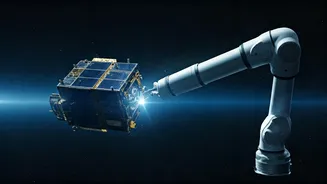
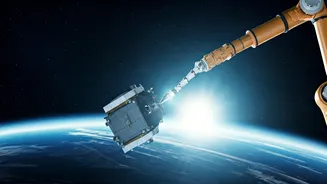
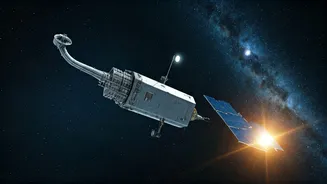
While NASA's ambitious OSAM-1 mission, which aimed to refuel a satellite not designed for it, was ultimately canceled in 2024 due to costs and technical challenges, the dream is far from dead. In fact, the private sector and other government initiatives are picking up the torch. A prime example is the Swift Boost mission, a partnership between NASA and the startup Katalyst Space Technologies. Launched in mid-2026, this mission sent a robotic servicing vehicle called LINK to rescue the Neil Gehrels Swift Observatory, a valuable space telescope whose orbit was decaying. Without intervention, the telescope would have re-entered and been destroyed. LINK’s job is to rendezvous with Swift, latch on, and gently boost it to a higher, more stable orbit, extending its life by another decade.
More Than Just a Tow Truck
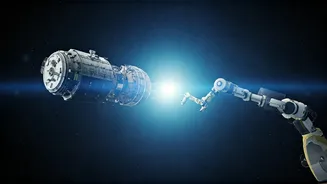
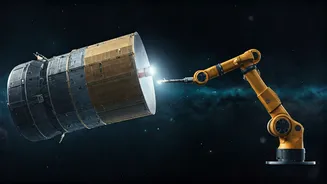
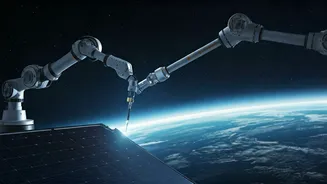
The technology being tested goes far beyond simple life extension. The capabilities being developed are about creating a versatile, in-space logistics infrastructure. This includes robotic arms for delicate repairs, systems to transfer cryogenic fuels for long-duration missions, and even the ability to assemble large structures in space that would be too big to fit in a single rocket fairing. The SPIDER payload, which was part of the OSAM-1 project, was designed to demonstrate the robotic assembly of a communications antenna and the manufacturing of a 10-meter beam in orbit. These technologies are crucial for building future large-scale space stations, deep-space telescopes, and the infrastructure needed for missions to Mars.
The Business of a Second Chance
The economic case for orbital servicing is compelling. For a telecommunications company, extending the life of a GEO satellite by just a few years can generate enormous revenue, easily justifying the cost of a servicing mission. For operators of large satellite constellations, the ability to repair or replace a single failed unit without launching a new one is a game-changer. This creates a brand-new market for in-space services, projected to be worth billions of dollars. It lowers the lifecycle cost of space assets, reduces the financial risk of new ventures, and encourages innovation. Furthermore, this capability is vital for national security, allowing for the inspection, upgrade, and sustainment of critical military space assets.
A Cleaner, More Sustainable Space
Beyond the economic benefits, orbital servicing offers a solution to the growing problem of space debris. Instead of letting dead satellites become uncontrollable hazards, servicing vehicles could actively de-orbit them or move them to a safer graveyard orbit. By extending the operational lives of existing satellites, we also reduce the number of new launches required, lessening the overall environmental impact. This move towards a circular economy in space—where assets are maintained and reused rather than discarded—is essential for ensuring that critical orbits remain usable for future generations. It’s not just about fixing what’s broken; it’s about creating a framework for sustainable and permanent operations beyond Earth.