





The Temptation of the Instant Answer
In the age of instant gratification, the lure of a quick, correct answer is powerful. Many AI tools function like sophisticated search engines, providing complete solutions to homework problems or writing entire essays in seconds. While this might seem
efficient, it encourages a passive approach to learning. When a student simply copies an AI-generated answer, they bypass the essential cognitive struggle required to build real, durable knowledge. This process, known as cognitive off-loading, can prevent students from developing fundamental skills and the ability to think independently. Studies have shown that over-reliance on AI for direct answers can even lead to lower scores in critical thinking. Instead of learning how to solve the problem, the student learns only how to get the problem solved by an external tool, creating a dependency that undermines true academic growth.
Enter the AI Tutor: A Guide, Not a Vending Machine
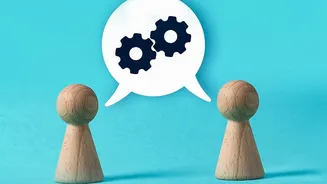
A far more powerful application of AI in education is the AI tutor. Unlike an answer generator, an AI tutor is designed to replicate the dialogue and guidance of a human teacher. These systems are built on pedagogical principles, using the Socratic method to guide students. Instead of providing a direct solution, the AI tutor asks probing questions, prompting the student to think through the problem step-by-step. For instance, if a student is stuck on a math problem, the AI might ask, "What have you tried so far?" or "What formula do you think applies here?". This approach encourages active participation, reflection, and self-explanation, which are crucial for deep learning.
The Science of Deeper Learning
The superiority of the tutoring model is rooted in established learning science. The act of being questioned forces students to retrieve information, identify gaps in their knowledge, and construct their own understanding. This process of 'productive struggle' is where learning actually happens. AI tutors facilitate this by personalizing the learning path for each student. They can adapt the difficulty of questions in real-time and provide targeted hints, ensuring the student remains challenged but not overwhelmed. Research has shown that this kind of interactive, guided learning leads to better retention and a greater ability to apply knowledge to new and unfamiliar problems. It shifts the focus from merely finding an answer to understanding the 'why' behind it.
Beyond Homework: Building Skills for the Future
The ultimate goal of education is not just to pass exams, but to prepare students for a complex, ever-changing world. An AI that simply provides answers fails at this mission. It may help complete an assignment, but it does little to build the critical thinking, problem-solving, and analytical skills necessary for future success. In contrast, an AI tutor actively fosters these higher-order skills. By engaging in a dialogue, students learn to analyse information, evaluate different perspectives, and articulate their reasoning. They are trained to become active participants in their own learning process, a skill that is invaluable in higher education and the modern workplace. Using AI as a thinking partner, rather than a crutch, prepares students to engage with technology responsibly and effectively.