

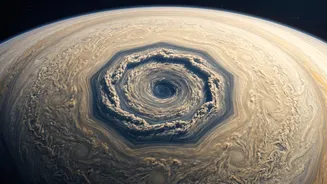

More Than Just A Hexagon
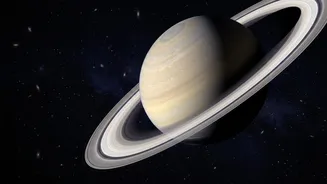
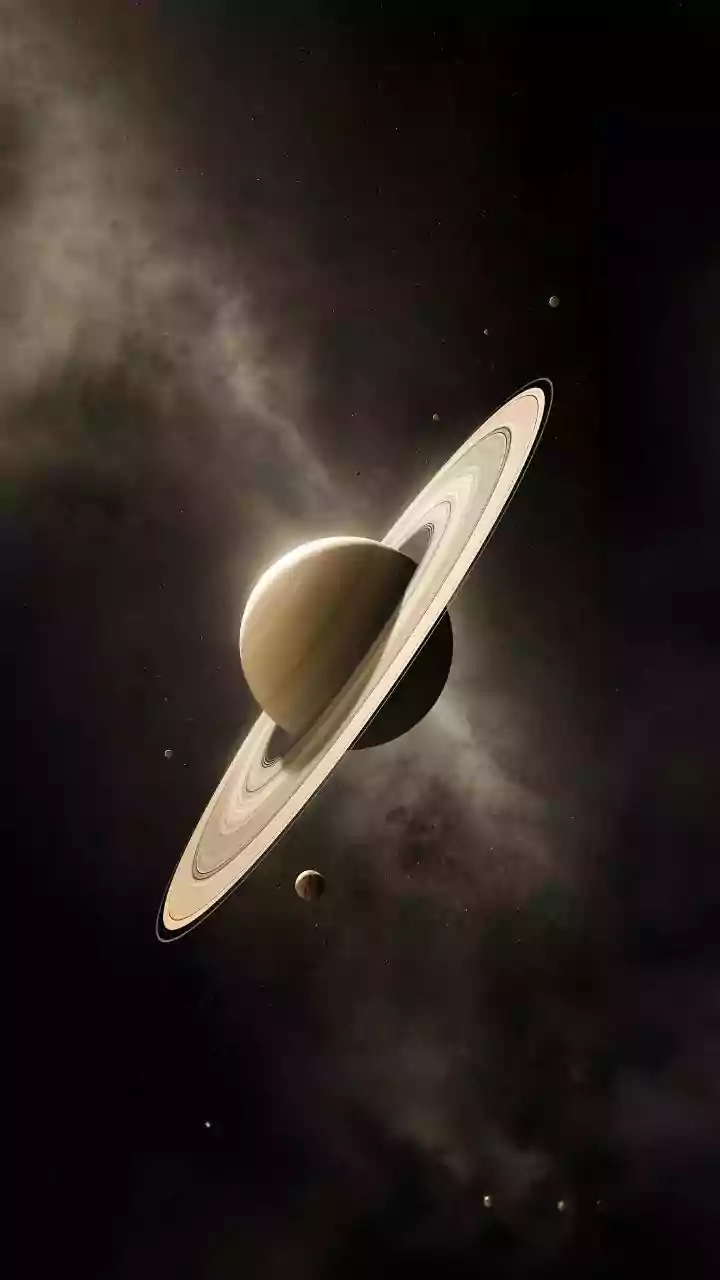
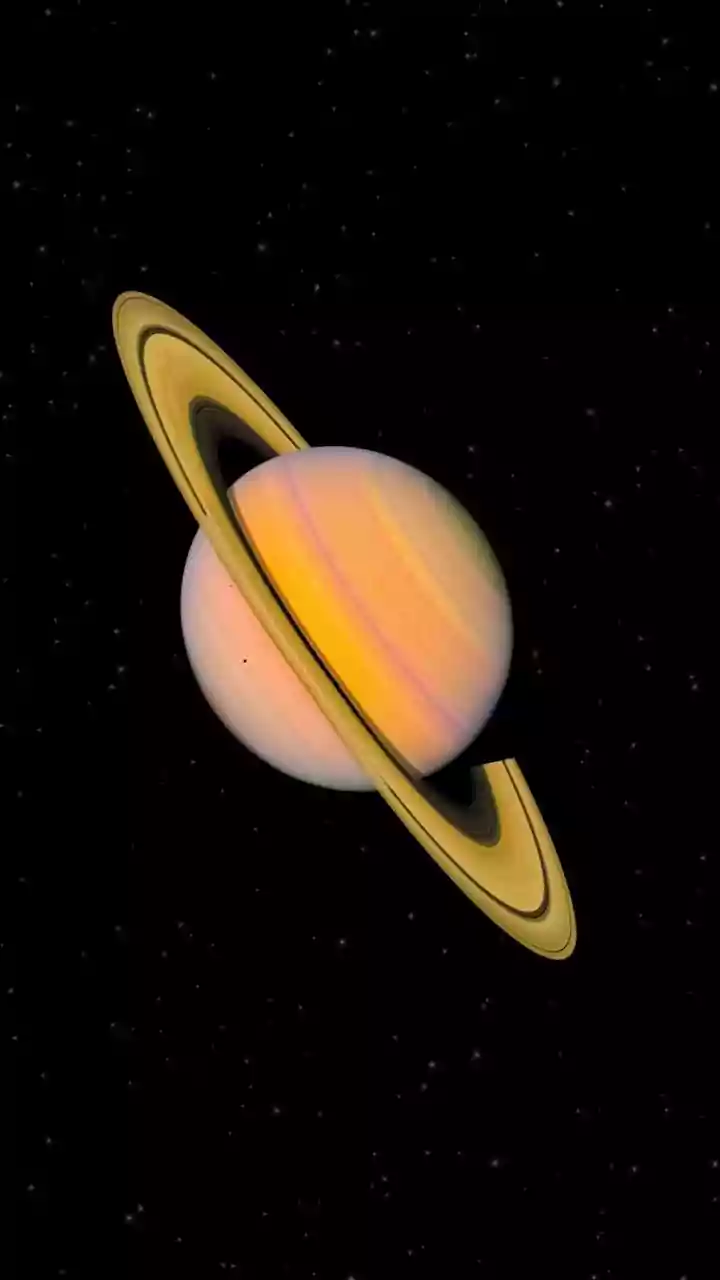
For decades, scientists have been fascinated by a bizarre, six-sided jet stream at Saturn's north pole, known as the hexagon. It’s a remarkably stable weather pattern, spanning thousands of kilometres, that has been observed for over 40 years. Astronomers
have long wondered if a similar feature might exist at the planet's south pole. For years, searches came up empty, with observations from missions like NASA's Cassini spacecraft showing no signs of a long-lasting, symmetrical pattern in the southern hemisphere. That has all changed thanks to recent, detailed images from the Hubble Space Telescope, which have revealed an entirely new and unexpected shape emerging from the clouds.
A New Shape Appears
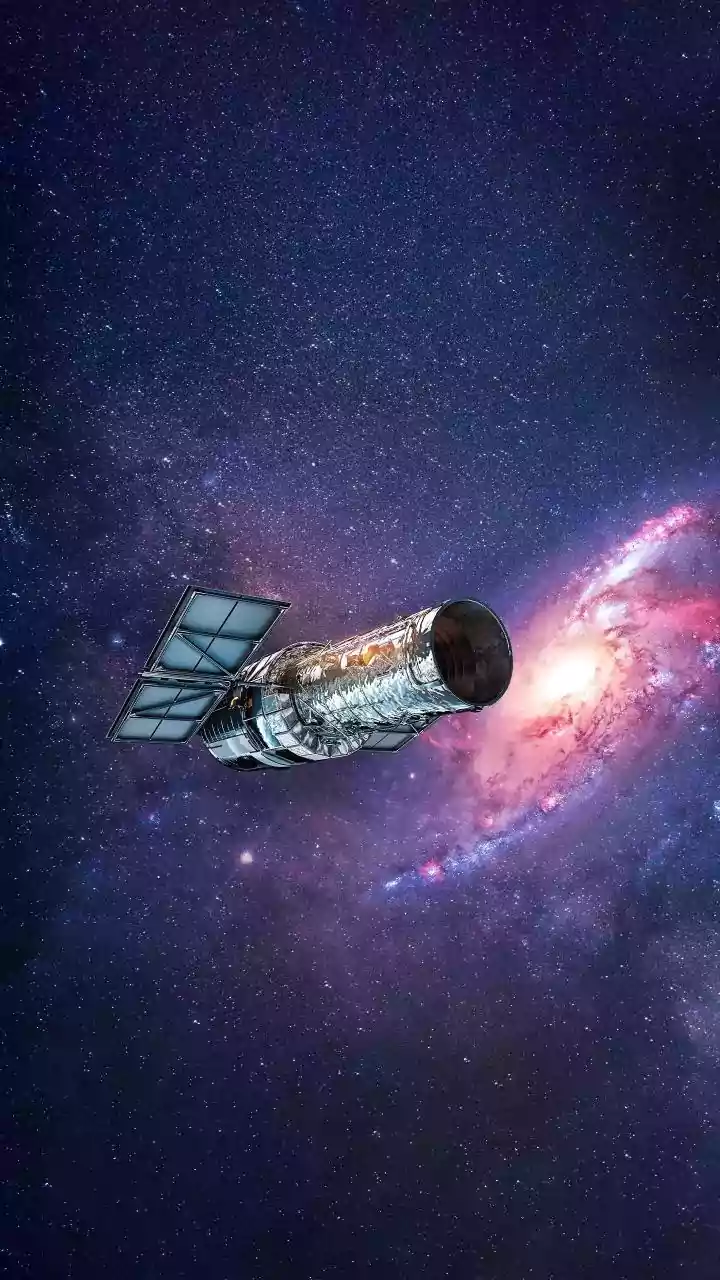
The new clue to Saturn’s atmospheric behaviour is a massive, 10-sided atmospheric wave encircling the planet’s south pole. Dubbed a 'decagon' by astronomers, this is the first time such a large, regular-sided jet pattern has been spotted in the planet's southern hemisphere. The discovery was made using data from Hubble's Outer Planet Atmospheres Legacy (OPAL) program, which annually monitors weather changes on the solar system's gas giants. By analysing images taken since 2023, scientists were able to trace the feature's development from faint hints into a clearly defined and strengthening pattern, offering a rare opportunity to watch a giant atmospheric phenomenon being born.
A Puzzle in the Making
The sudden appearance of the decagon has presented a fascinating puzzle. While it bears some resemblance to the northern hexagon, it is also distinctly different, suggesting it might be a new type of atmospheric event. According to Amy Simon, a senior scientist at NASA's Goddard Space Flight Center, the most intriguing part is that it seems to have formed so recently. The question driving the research now is why it formed so suddenly when nothing like it had been seen before. The wave isn't just a surface-level feature; observations show it extends deep into Saturn's atmosphere, through multiple cloud layers, indicating it's a significant, vertically-extended structure tied to one of the planet's powerful jet streams.
Hubble's Patient Watch
This discovery highlights the importance of long-term observation in planetary science. Saturn has seasons, just like Earth, though they last for more than seven years each. The planet is currently approaching its autumnal equinox in the northern hemisphere, which will occur in May 2025. This seasonal shift is also bringing the southern hemisphere, and its new decagon, into better view for telescopes on and around Earth. The continuous monitoring by Hubble, and future observations by the James Webb Space Telescope, will be crucial. Scientists hope to understand the forces that generate and sustain these massive geometric patterns and whether the southern decagon will persist for decades like its northern counterpart.