








Beyond the Black Death
When we hear 'plague', our minds often go straight to the Black Death, the pandemic that wiped out a massive portion of Europe's population in the 14th century. While its historical impact is undeniable, focusing only on the horror story misses the point.
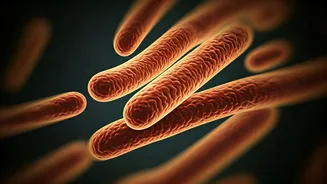
The bacterium responsible, Yersinia pestis, has a history stretching back thousands of years, long before the medieval pandemic. In fact, recent discoveries from ancient DNA found in human remains show plague outbreaks occurred in hunter-gatherer communities as far back as 5,500 years ago in Siberia. These early plagues weren't spread by rats and fleas in crowded cities but likely from person to person after initial contact with infected animals like marmots. Studying these ancient forms of the disease provides a much richer, more complete picture of how pathogens evolve and interact with human populations.
The Modern Plague Detective
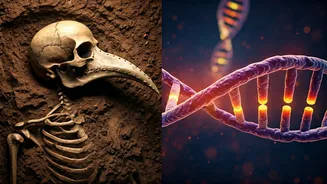
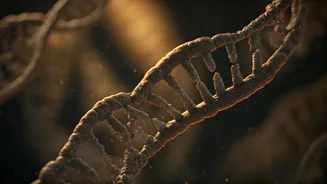
Today’s plague research looks less like a medieval history lesson and more like a high-tech detective story. Scientists are now able to extract and sequence the full genome of Yersinia pestis from the dental pulp of skeletons thousands of years old. This incredible technology allows researchers to create a family tree for the bacterium, tracing how it mutated over millennia. For instance, studies have shown that the earliest strains of plague lacked the specific genes that allowed them to be transmitted efficiently by fleas. The evolution of these genes was a key step that turned it into the agent of devastating pandemics like the Black Death. By comparing ancient and modern strains, scientists can pinpoint the exact genetic changes that make a pathogen more virulent or transmissible, providing a blueprint for understanding how new diseases might emerge.
A Blueprint for Future Pandemics
This historical detective work has very modern applications. Understanding how plague evolved and spread offers critical lessons for confronting today's public health challenges. Research on past pandemics reveals patterns in how societies respond to mass illness, from economic disruption to the dangerous impulse to find scapegoats. Studying the genetic changes in Yersinia pestis over time can help scientists predict how other pathogens might evolve. For example, researchers have learned that a relatively small number of genetic tweaks can transform a mild gut bacterium into a deadly systemic pathogen. This knowledge is crucial for surveillance of current diseases, helping public health officials identify potential threats before they escalate. The study of plague also shows how human and animal populations, environmental factors, and pathogen genetics all interact to create the conditions for a pandemic.
Debunking Modern-Day Myths
Crucially, all this research takes place against a reassuring reality: the plague is no longer the unstoppable force it once was. Today, it is a rare and, most importantly, treatable disease. While Yersinia pestis still exists in animal populations around the world, particularly in parts of Africa, Asia, and the Americas, human cases are infrequent. When infections do occur, they can be effectively cured with common antibiotics like doxycycline and ciprofloxacin, especially when caught early. The forms of plague that caused historical terror, such as pneumonic plague, can be fatal if untreated, but rapid diagnosis and antibiotic therapy have dramatically reduced mortality rates. Understanding this context is key. Modern medicine and public health surveillance have transformed a once-devastating pandemic into a manageable infectious disease, which is perhaps the most important lesson of all.