
A Treasure Map for the Modern Space Race
The dream of a permanent human presence on the Moon has taken a giant leap forward. Recent data from a new generation of lunar orbiters has produced the most detailed map of water ice on the lunar surface to date. These maps focus on the Moon's south
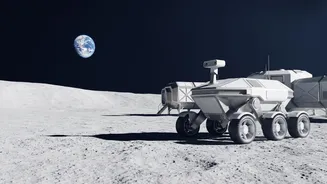
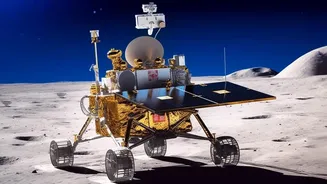
pole, a region of intense interest where permanently shadowed craters have kept ice frozen for potentially billions of years. Unlike previous surveys, the new maps offer unprecedented resolution, revealing that water ice may be more widespread than previously thought, though it is distributed in patchy deposits within the dark, frigid craters. This is a game-changer for space agencies around the world, including India’s ISRO. While India's Chandrayaan programme was instrumental in the initial discovery of water on the Moon, this new level of detail transforms the search from a question of 'if' to a question of 'where' and 'how much'. It provides a crucial roadmap for future robotic and human missions, including the joint Indian-Japanese LUPEX mission, which aims to prospect for these very resources.
Why Water Is Lunar Gold
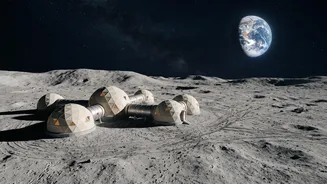
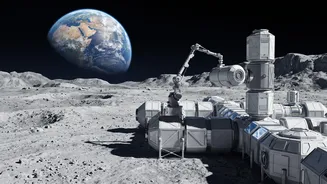
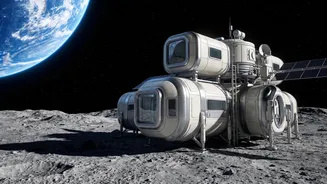
The high cost of space exploration is driven by one key factor: gravity. Launching anything from Earth, especially heavy resources like water and fuel, is incredibly expensive. This is why finding water directly on the Moon—a concept known as In-Situ Resource Utilization (ISRU)—is so critical. Water ice isn't just for drinking. Its two core components, hydrogen and oxygen, are the primary ingredients for rocket propellant. By harvesting lunar ice, future Moon bases could essentially live off the land. Astronauts would have a local source for breathable air (oxygen) and life-sustaining water. More importantly, they could create a refuelling station for rockets. This would make missions to Mars and beyond significantly cheaper and more feasible, as spacecraft could launch from Earth with less fuel and top up their tanks at a lunar 'petrol pump' before heading into deep space.
From Frozen Ice to Rocket Fuel
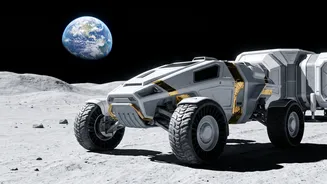
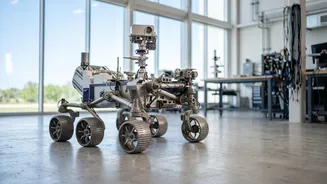
The process of turning lunar ice into rocket fuel sounds like science fiction, but it's based on a well-understood scientific principle: electrolysis. First, robotic rovers would be dispatched to the ice-rich craters identified by the new maps to mine the frozen regolith (the Moon's soil). This material would then be heated in a contained facility to sublimate the ice directly into water vapour, which would be collected and condensed into liquid water. The next step involves passing an electric current—likely generated by solar panels placed on crater rims that receive near-constant sunlight—through the water. This splits the water molecules (H₂O) into their constituent elements: hydrogen and oxygen. Both gases would be captured, super-cooled into their liquid forms, and stored as powerful, ready-to-use rocket propellant. NASA is already testing technologies like the CryoFILL project specifically designed for this liquefaction and storage process on the lunar surface.
India's Role in the Lunar Economy
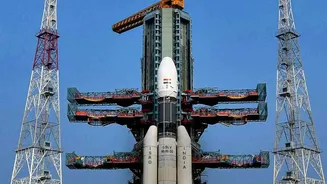
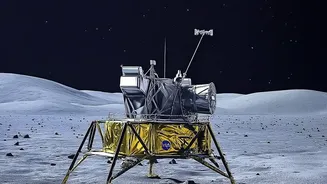
This global push for lunar resources puts India in a prime position. With the historic landing of Chandrayaan-3 near the south pole in 2023, ISRO has demonstrated its capability to operate in this strategically vital region. Data from Chandrayaan missions has already provided key insights into the thermal environment of the south pole, helping scientists understand how and where water ice could remain stable. The upcoming Lunar Polar Exploration (LUPEX) mission, a collaboration between ISRO and Japan's JAXA, is designed to directly build on this progress. It will carry instruments, including a NASA-provided neutron spectrometer, specifically to hunt for and analyse hydrogen concentrations, which are a strong indicator of water. These efforts ensure that India is not just a participant but a leader in the emerging lunar economy, contributing vital science and technology as humanity prepares to turn lunar water into the fuel for our solar system ambitions.